Muscovites and visitors to the capital, and not only them, will be able to observe an interesting astronomical phenomenon this week. The Moon will eclipse Saturn first, and then Neptune. These eclipses, as noted in the Moscow Planetarium, can be seen in Moscow and in the western part of Russia.
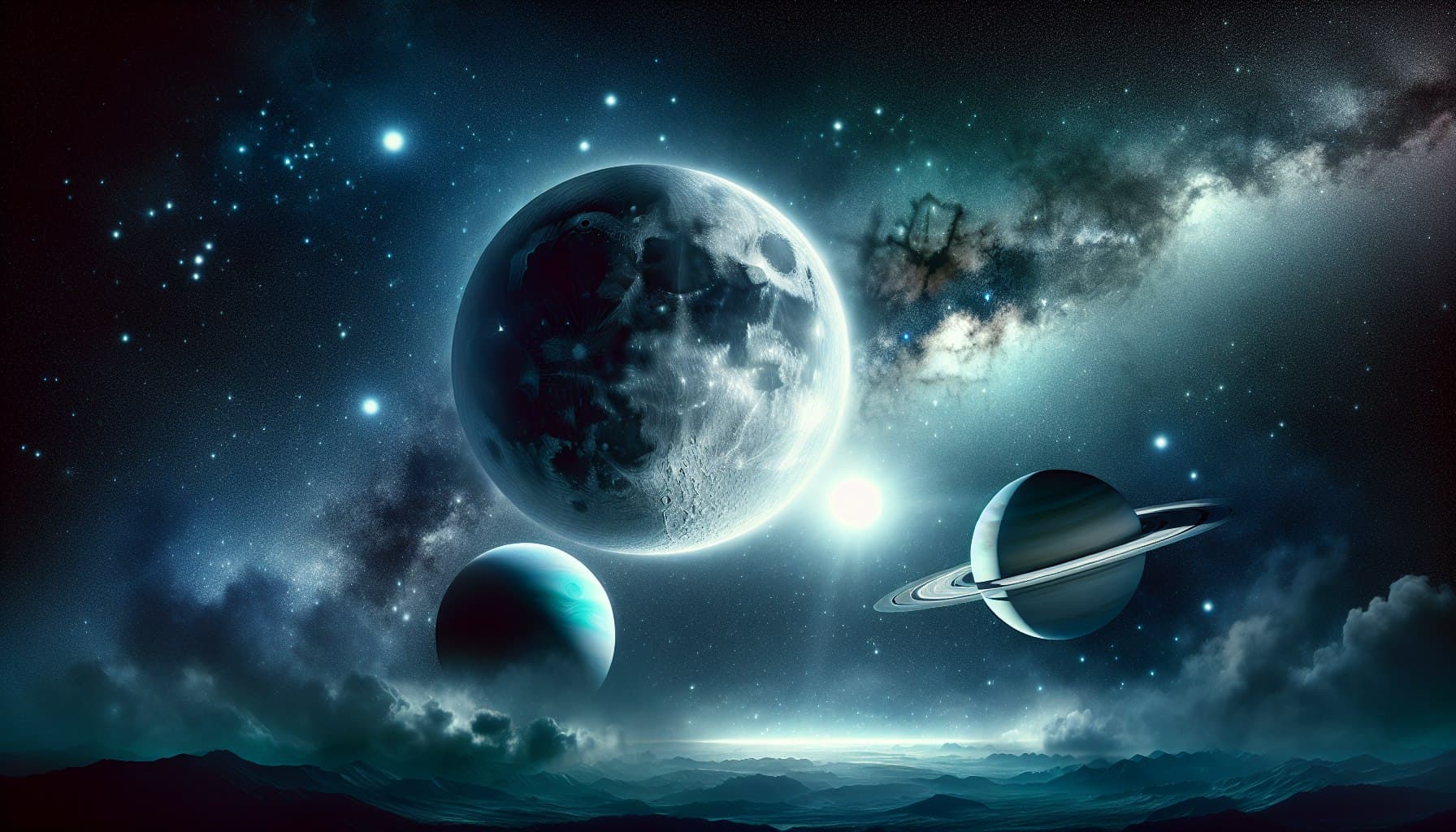
According to astronomers, on August 21, the Moon will cover the planet Saturn with visibility in the western regions of Russia, Western Europe, America, and Africa. The Moon will pass in front of Saturn, creating a lunar eclipse visible from Latin America and the Caribbean, Africa, and Europe.
The eclipse will be visible from Moscow in the daytime sky. It will begin with Saturn's disappearance behind the Moon at 06:39 Moscow time in daylight and at a low altitude of only 3.3 degrees in the western part of the sky. Its reappearance will be visible at 07:21 Moscow time in daylight and at a low altitude of -2.5 degrees.
Extreme caution is needed when pointing binoculars or a telescope at the sky when the Sun is above the horizon, as even a fleeting glance at the Sun through such a device can lead to permanent blindness.
Also, on August 21 and 22, the Moon will pass in front of Neptune, creating a lunar eclipse visible from Africa, Asia, western Russia, and Europe.
The beginning of the coverage is August 21 at 22:59 Moscow time, the end is 02:37 Moscow time. The eclipse will be visible from Moscow in the night sky. It will begin with Neptune's disappearance behind the Moon on August 22 at 00:55 Moscow time in the southeast of the sky at an altitude of 29.8 degrees. Its reappearance will be visible at 01:36 Moscow time at an altitude of 31.8 degrees. The dim Neptune should only be observed with a telescope.
It should be noted that in August, astronomy enthusiasts could already observe the peak of the Perseid meteor shower and a fairly rare conjunction of Mars and Jupiter.
Read more on the topic:
Once every 10-20 years: a supermoon and a "Blue Moon" will meet in the sky above the Earth
"Scenarios are not defined": The Sun is increasing its flare activity after a month of calm