Serial production of vacuum chambers for the Shared Resource Center "SKIF" (SRC "SKIF") has begun in Novosibirsk. These chambers are key elements inside the synchrotron magnetic ring and are critical to the operation of the accelerator machine. Their main task is to maintain the ultra-high vacuum required for efficient circulation of electron beams with high brightness.
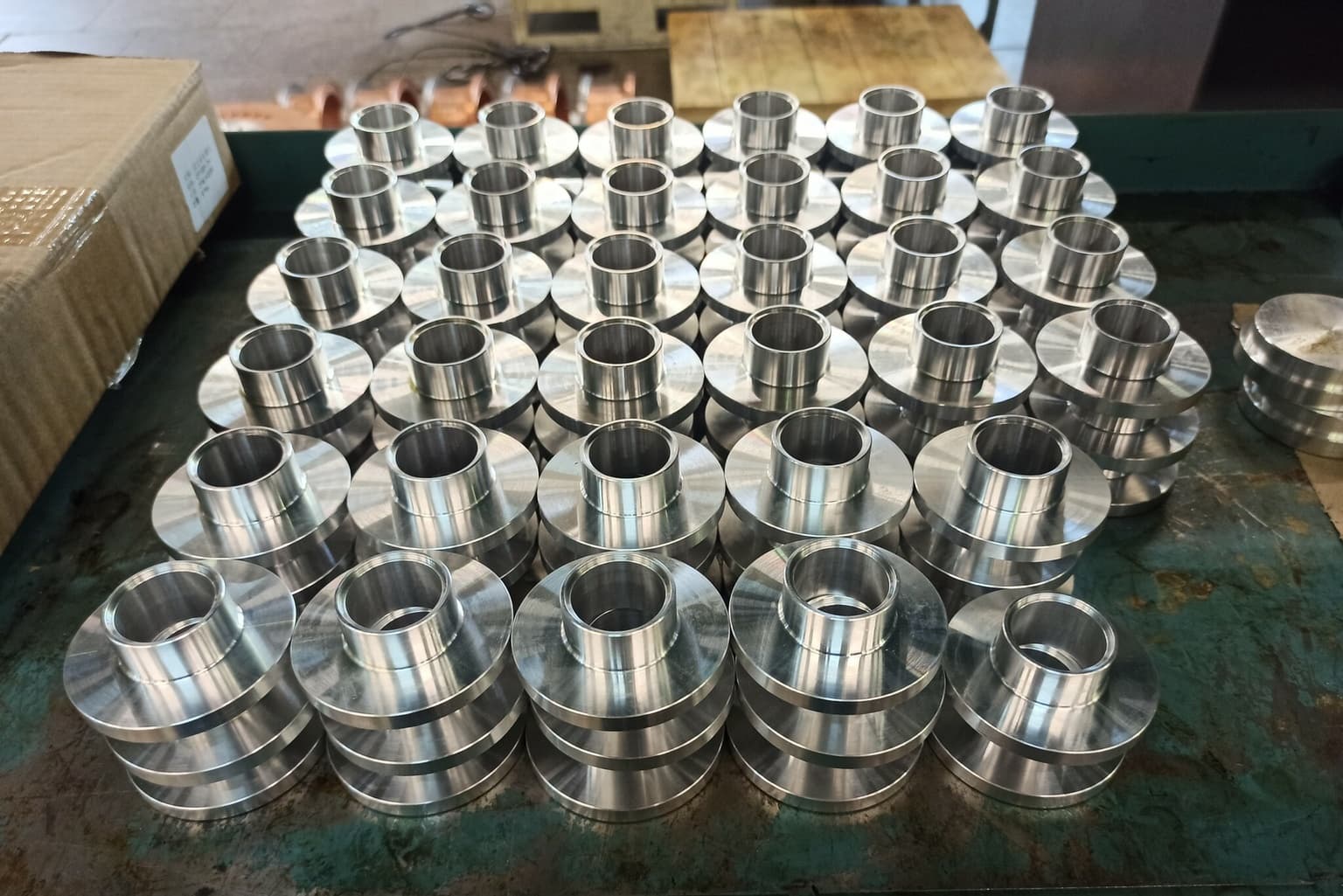
Vacuum chambers must be super-sealed, as the concentration of molecules inside them must be 12 orders of magnitude lower than in a normal room. The Budker Institute of Nuclear Physics SB RAS (BINP SB RAS), with the necessary experience and production facilities, manufactures more than two hundred such chambers for the SRC "SKIF" storage ring. The production involves the use of special aluminum alloys that provide high strength and thermal conductivity, necessary to withstand synchrotron radiation.
The process of creating vacuum chambers involves many complex steps. The main elements of the chamber are made of aluminum profile, which is bent on a precision machine. All seams are joined by electron beam welding in an inert atmosphere to avoid micro leaks. Vacuum chambers are equipped with a cooling system and absorbers for the removal of synchrotron radiation.
During operation, the chambers will be cleaned using the synchrotron radiation itself, which will help to improve the vacuum and increase the lifetime of the electron beam. This process can take up to six months, after which the system should reach its operating mode.
The Siberian Ring Photon Source (SKIF) is a "4+" generation synchrotron radiation source with an energy of 3 GeV being built in Siberia, with completion scheduled for 2024. The project is being implemented within the framework of the national project "Science and Universities".
Read related materials:
Parts of the "Siberian Ring Photon Source" Arrive for Assembly
Accelerate Research by 300 Times: TPU Creates Software for Studying Rocks Using SRC "Skif"
New Radiation Protection for Scientists Developed in Russia at the Siberian Ring Photon Source