Translated with AI from the Russian original.
A new high-precision, sharp-eyed device on the ISS was developed by specialists from MIPT and NPO Lepton.
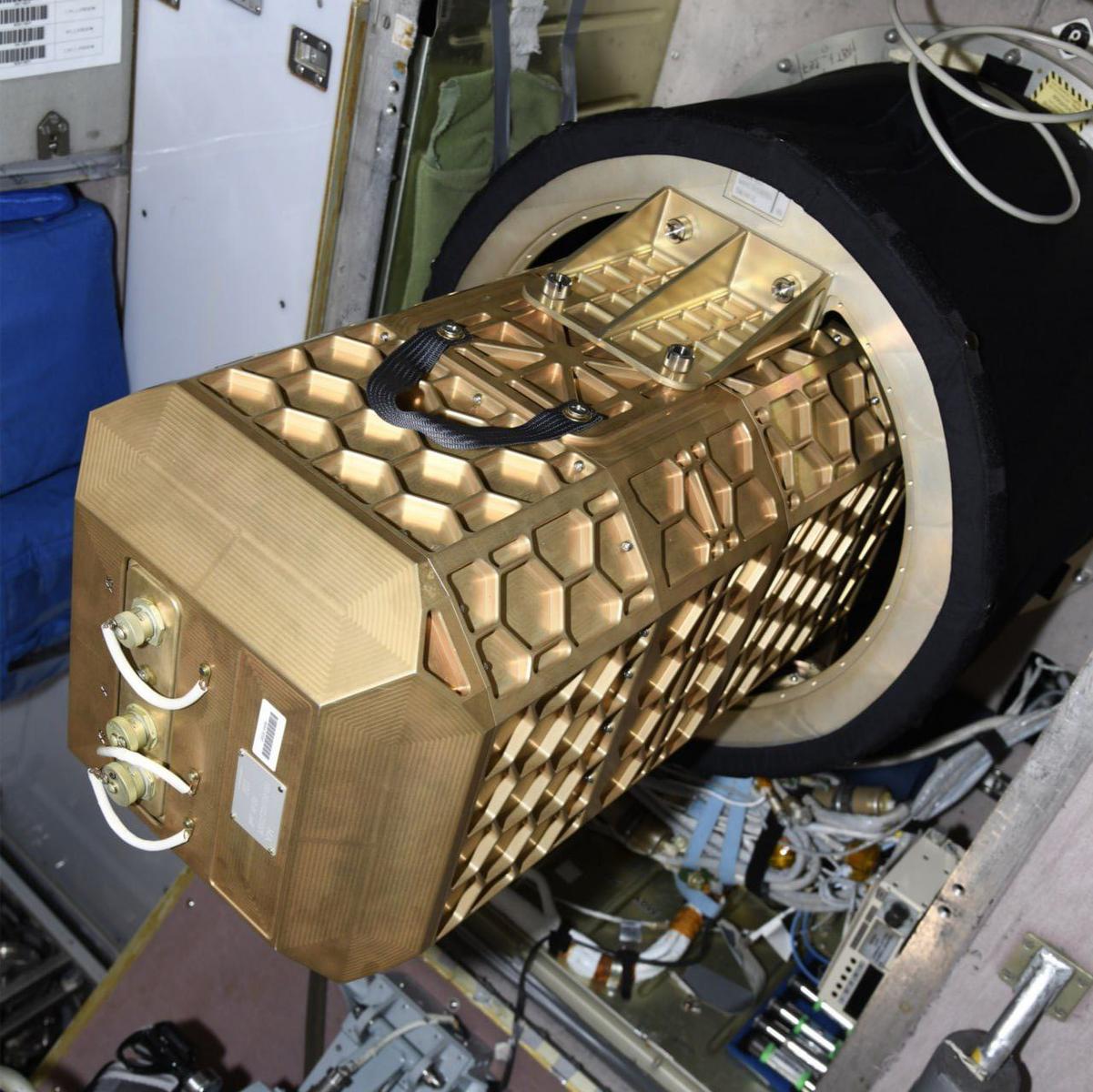
Unlike a regular camera, a hyperspectrometer can capture objects in the near-infrared range of the spectrum.
The equipment was first turned on on July 30. And it was quite successful - the researchers made sure that the device was working, and it was possible to proceed with its further "calibration" and analysis of a large amount of data. A survey of the territory of the Russian Federation was carried out, including the ground test site of the Institute of Geography of the Russian Academy of Sciences. In the pictures, we see clouds, bodies of water, forest areas, and fields.
The hyperspectrometer provides an idea of the internal structure of objects - their chemical composition and properties. Scientists hope that the device will help bring the monitoring of the state of forests, water bodies and agricultural land to a new level.
It will be used in several space experiments. This is not only "Hurricane", aimed at controlling potentially dangerous and catastrophic phenomena, but also the "Scenario" and "Dubrava" studies.
Read materials on the topic:
A Russian hyperspectrometer has arrived at the ISS: what is it and what will it do
Soyuz MS-26 at Baikonur, cosmonauts in a centrifuge: how the new launch to the ISS is being prepared
It became known why the SPIN-X1-MVN X-ray spectrometer is being brought to the ISS
Never miss our newsAdd this site to your preferred sources to see us more oftenAdd on Google

















