Specialists from the Moscow Aviation Institute have developed the "Aurora-1MT" unmanned aerial vehicle (UAV), capable of processing information about ground objects in flight. The press service of the "Priority 2030" program of the Ministry of Education and Science of the Russian Federation reported that the designers plan to make the "Aurora-1MT" capable of continuing flight and calculations even in the event of a loss of satellite signal.
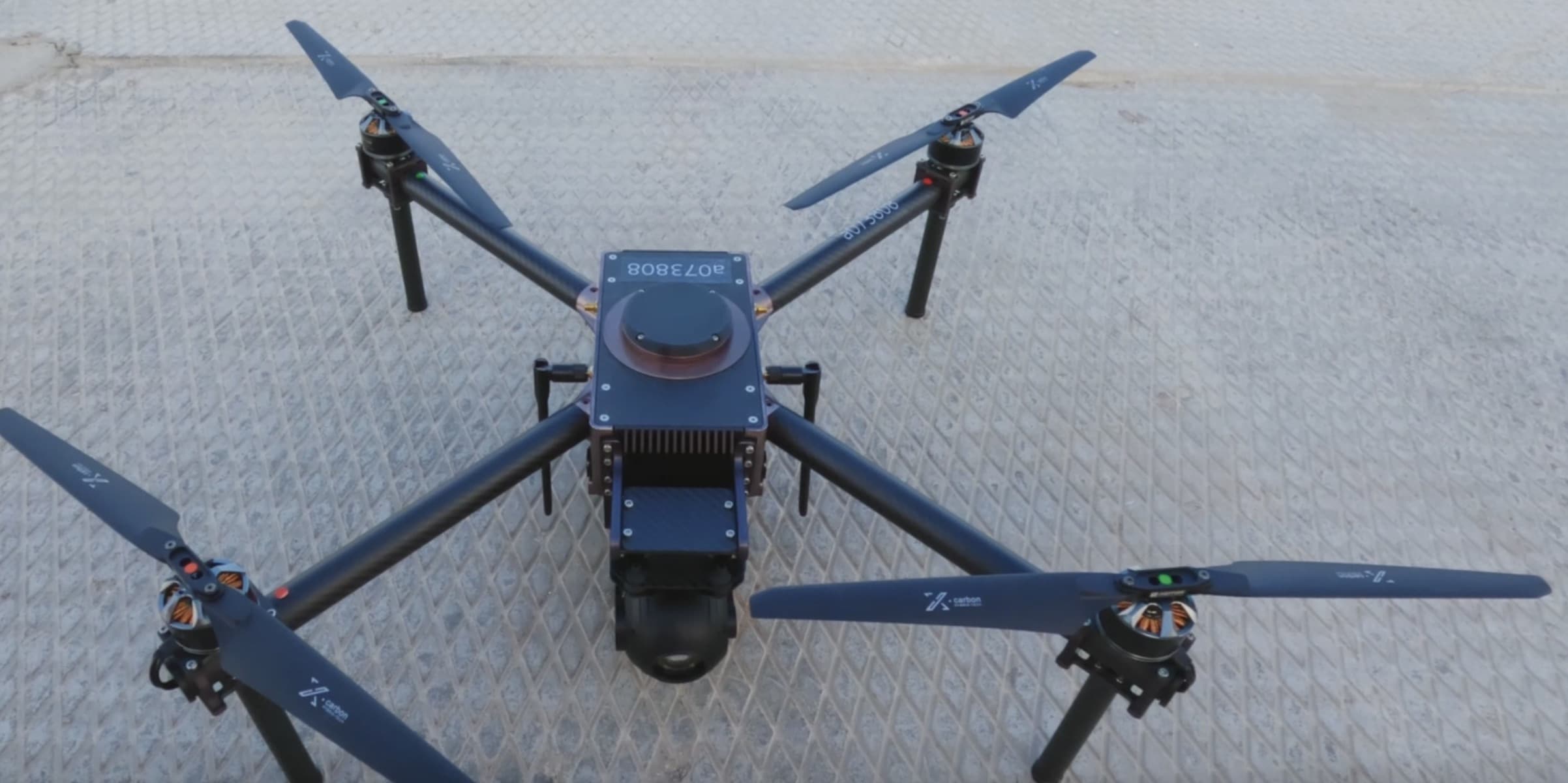
For the "Aurora-1MT", scientists have developed a flight controller with a tensor processor and a control board, trained a neural network, and programmed modules that allow performing object monitoring tasks in autonomous mode with information processing in flight. As part of the "Archipelago-2024" project-educational game, the "Aurora-1MT" successfully performed tasks of searching for and photo and video shooting of typical objects, such as cars and people. Algorithms for autonomous control and object detection on board the aircraft were developed, taking into account the loss of control signals.
A representative of the IT Center of MAI, Petrukhov, said that the developers' immediate plans include creating a navigation algorithm that corrects the operation of the UAV using video signals and an inertial navigation system. This will allow the device, in the event of loss of satellite signals, to calculate the coordinates of its location based on the previous flight path, autonomously perform the tasks and return to the point of departure or the zone of the last signal.
Read materials on the topic:
Drones with artificial intelligence will appear in the Russian army