The company "Sinara-Development" presented a project for the construction of a complex of enterprises for the creation of trains and high-speed trains at the International Industrial Exhibition "Innoprom-2024". It is planned to be implemented on the basis of the transport engineering enterprise "Ural Locomotives" in Verkhnyaya Pyshma (Sverdlovsk region).
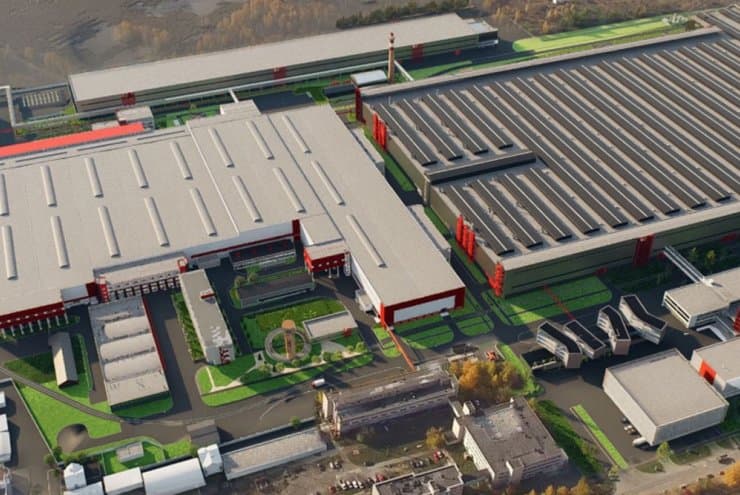
Representatives of the company noted that it is planned to create new production buildings and reconstruct old facilities. The total area of the complex will be 60 thousand square meters.
For us, the construction of modern industrial buildings of a large engineering enterprise is a new challenge. Thanks to the unique competencies that the company's employees have developed during the construction of complex infrastructure facilities, I am sure that the company will successfully implement the project on time.
Work has already begun, and by 2026 it is planned to create a workshop for the manufacture of large components, a test building for traction equipment and a commissioning area. The project also involves the reconstruction of existing production facilities, a central warehouse and the repair of internal railway tracks.
High-speed trains will be built at the future plant. They are capable of moving at a speed of 350-400 kilometers per hour on special high-speed lines.
It is worth noting that an agreement on the construction of the first branch of the Moscow - St. Petersburg high-speed railway (HSM-1) has already been signed. It is planned to be completed by 2028.
Read materials on the topic:
Faster than Sapsan: trains capable of accelerating up to 400 km/h will appear in Russia
Putin was shown a model of the Russian high-speed train: what is known about the HSM project
Now on home

The model's price starts from 10.7 million rubles
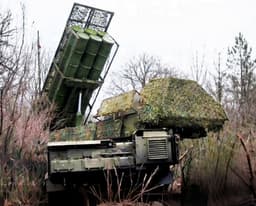
Self-propelled launchers now carry three times more missiles - production of 9M317M has reached a new level

Zala to bring the drone to UMEX 2026 exhibition

The development is based on hydrogel with the secret of mesenchymal stem cells

The plant has completely replaced the import of critical components

Engineers are testing engines, avionics, and hydraulics in extreme temperatures
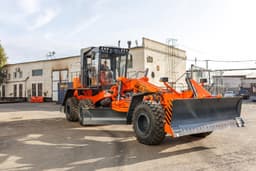
The machine's operating weight has been increased from 23.5 t to 29.0 t

The use of components from Logan and "Niva" simplifies operation and reduces costs

The development will allow the production of new generation high-voltage pulse generators

The limit of 150 km/h is considered more than sufficient

The vehicle will reach speeds of up to 140 km/h and dozens of functions due to interchangeable modules

University scientists have created new polymeric materials to replace metal structures