Translated with AI from the Russian original.
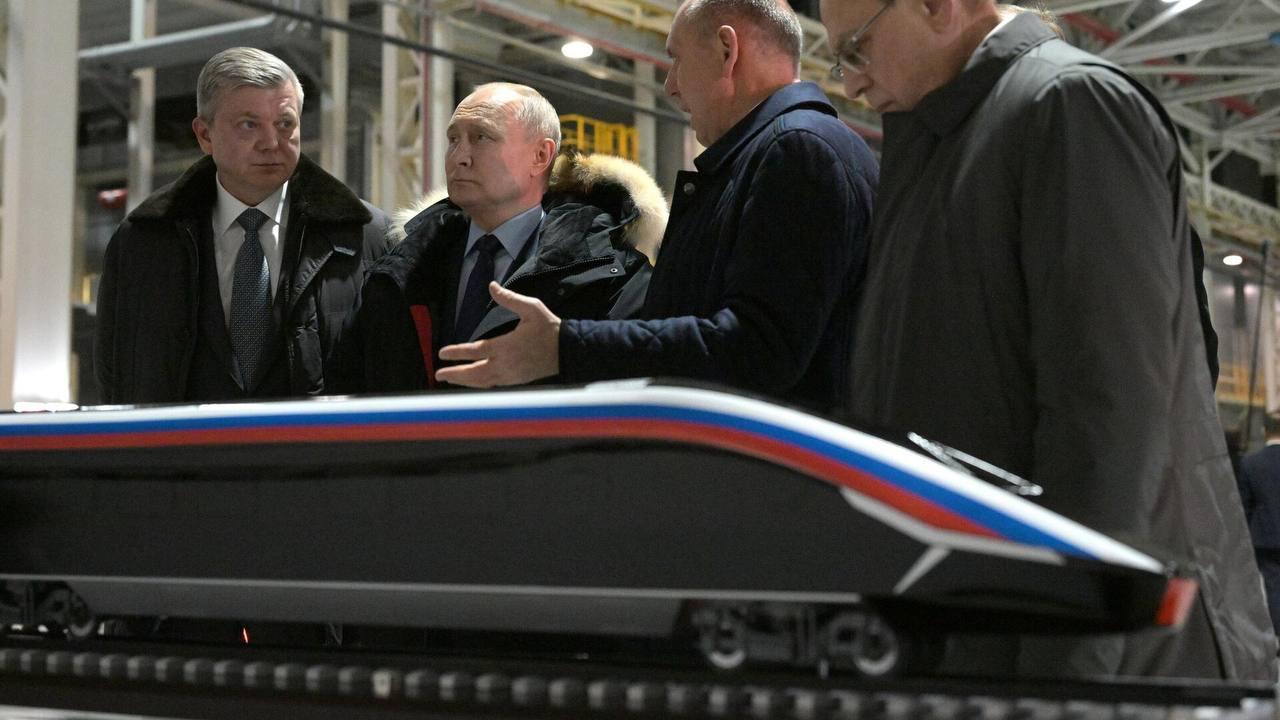
Russian President Vladimir Putin visited the "Ural Locomotives" plant in Verkhnyaya Pyshma, Sverdlovsk Region. There he was shown a model of a Russian high-speed train. The future line connecting Moscow and St. Petersburg will require 44 such trains.
On the implementation of high-speed railway lines in Russia
After visiting the plant, Putin took part in a meeting dedicated to the development of high-speed railway lines. The main speaker was the Minister of Transport of Russia, Vitaly Savelyev.
It is expected that high-speed trains will connect 6 federal districts. This will significantly reduce travel time:
- between Moscow and St. Petersburg – up to 2 hours 15 minutes (the interval between trains will be 15 minutes)
- between Moscow and Tver - up to 39 minutes
- between Veliky Novgorod and St. Petersburg - up to 29 minutes
The project envisages the construction of two railway sections from St. Petersburg to Zelenograd and exits from Moscow. According to Savelyev, in 2026 it is necessary to create a prototype train and proceed to certification tests.
The Money Question
It is expected that the creation of HSR will have a large economic effect. In particular, domestic transport engineering will be developed, new jobs will be created, and the connectivity of regions will increase, which will affect the development of territories adjacent to the line.
However, its implementation requires a lot of funds. The section from St. Petersburg to Zelenograd costs 1 trillion 755 billion rubles, and the creation of exits from Moscow costs another 221.5 billion rubles.
The first batch of 28 trains will cost 148 billion rubles. In total, more than 250 trains are needed.
Read the material on the topic:
AI-based control, speed up to 400 km/h: characteristics of the Russian electric train for HSR are named
Never miss our newsAdd this site to your preferred sources to see us more oftenAdd on Google

















