Translated with AI from the Russian original.
The project is being implemented by Rosoboronexport (part of Rostec Group) under the Make In India program. The 125 mm 3VBM17 "Mango" shells are used for firing from the guns of T-72 and T-90 tanks.
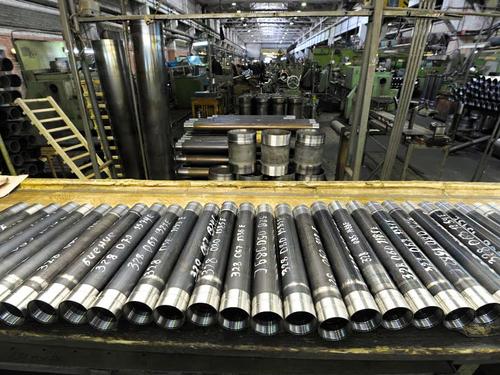
The Indian Army has many of these combat vehicles in service, and the new plant's products are intended for the Indian military. The 3VBM17 "Mango" shells include a 3BM42 armor-piercing fin-stabilized discarding sabot projectile. It allows engaging modern tanks equipped with combined protection.
Another important stage of Russian-Indian cooperation has been completed, meeting the requirements of the Make In India and "Self-Reliant India" programs. Rosoboronexport has prepared key production facilities for the production of Mango tank rounds for launch on the basis of the Indian defense holding. This allows the Indian side to begin mastering the technology transferred to it and organize production. Rosoboronexport's work in India is a striking example of a comprehensive industrial partnership, within which joint projects have been mastered for all types of armed forces with a degree of cooperation between the enterprises of the two countries that is unique for the world market.
To ensure the highest degree of localization of Mango production, it is also planned to launch the production of gunpowder in India.
The production of "Mango" is far from the only project of cooperation between Moscow and New Delhi in the direction of the defense industry. In particular, the Russian MIC "NPO Mashinostroyenia" and the Defense Research and Development Organization of the Indian Ministry of Defense are actively working on a hypersonic version of the BrahMos-2 anti-ship cruise missile.
Also, the production of T-90MS tanks, Su-30MKI multi-purpose fighters, and a lightened version of Ka-226T helicopters from Russian vehicle kits has already been launched at Indian factories. Russian engineering and design experience is also used by India in the development of Indian submarines and the navy.
India not only jointly produces military equipment with Russia, but also actively purchases it from Russia: before the coronavirus pandemic, Russia had been the leader in the supply of weapons and military equipment to this country for many years. One of the relatively recent major acquisitions of New Delhi from Moscow is five S-400 systems worth $5 billion. To service the S-400, according to some experts, the countries may even soon create a joint venture.
Read more on the topic:
KRET Received New CNC Machines with CPUs for Military and Civilian Aircraft Parts
"State Defense Order Will Not Be Affected": Vysokotochka Reacted to EU Sanctions
Protection from Heat, Cold, Fire and Moisture: What Russian Special Forces Wear
Rostec Increased Production of Ammunition for Artillery and Air Weapons by Five Times
Lukashenko's Favorite Aircraft: What is Known About the Russian Su-30SM2 Fighter
Never miss our newsAdd this site to your preferred sources to see us more oftenAdd on Google

















