Space conditions are simulated by a special radio-absorbing material that covers the inside of the anechoic chamber.

An ISS part simulator is installed on one of the chamber walls. It checks how the Progress' Kurs-NA rendezvous system works, which is activated when the cargo ship reaches orbit.
The conditional ISS and the Russian cargo ship exchange signals in the chamber.
The ferrite alloy coating absorbs the radio signal. This provides accuracy in equipment settings. Such materials are mainly made of iron oxides and other metals. They absorb electromagnetic waves well and are able to "convert" them into heat. So the signal is not reflected, but rather "sinks" into the walls. That's why it's an "anechoic" chamber. As a result, the ship can safely "communicate" with the device that simulates the ISS equipment.
Progress MS-28 will be checked by Roscosmos specialists, after which it will return to its workplace for further preparation for pneumatic vacuum tests.
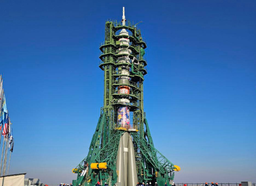
The launch of the space truck will take place in August.
Read more on the topic:
1000 days in space: Russian cosmonaut Oleg Kononenko is the first in the world to achieve this
Russia launches the first network of private remote sensing satellites "Stilsat" into orbit