Collaborative robots, or cobots, are used where routine production processes cannot be fully automated, or where some hazardous work is carried out. Cobots can be used in tandem with humans in the assembly of aircraft fuselages, helicopters, airplanes and other equipment, painting, drilling, riveting and other operations.
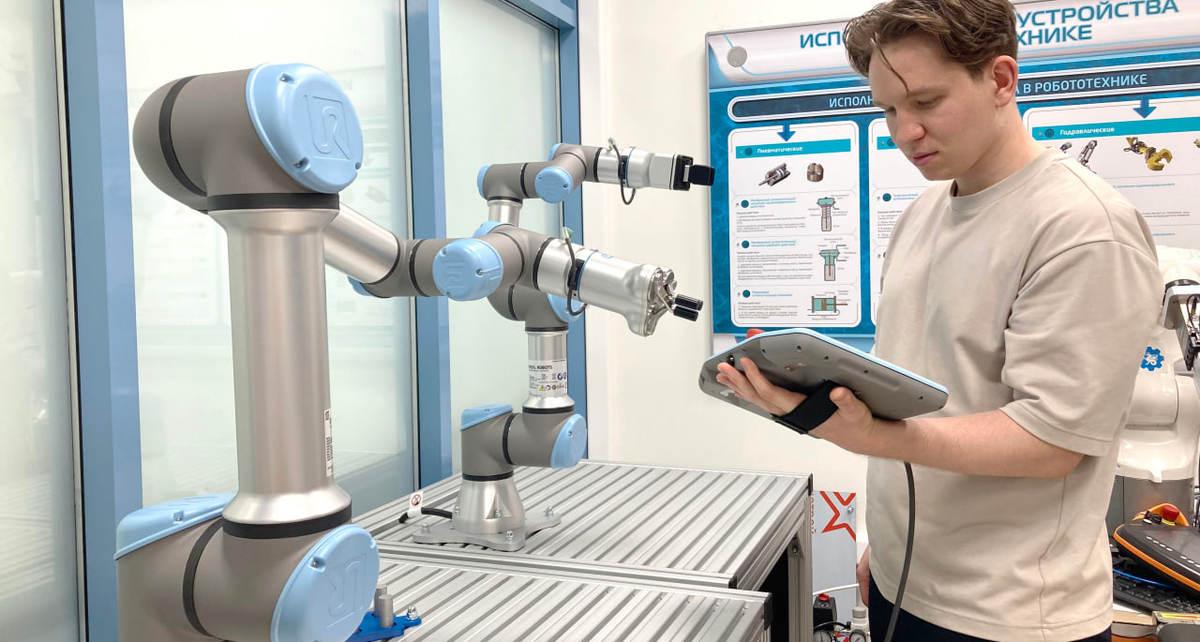
In Russia, they are created on the basis of the Kazan Federal University (KFU) and a number of other educational institutions. Kazan cobots, in fact, are being tested at the facilities of PJSC KAMAZ.
According to Dmitry Chikrin, Director of the Institute of Artificial Intelligence, Robotics and Systems Engineering at KFU, one cobot costs 3-5 million rubles, which is cheaper than a standard industrial robot.
A new workshop is now opening at PJSC KAMAZ, where the operation of collaborative robots is being tested. Here we are working with our industrial partner, Eidos. And this year, a pilot implementation of a number of collaborative robots is planned at several defense enterprises of the republic
By 2026-2027, Kazan cobots are planned to be launched into mass production. It is expected to produce up to 50-100 units per year.
Read materials on the topic:
Russian Perekrestok stores hired cleaning robots
Guards, surveyors, data collectors - where robot dogs work in Russia
Russia overtook the EU in robotization: 19% of manufacturing enterprises use robots
Never miss our newsAdd this site to your preferred sources to see us more oftenAdd on Google