Specialists from the Russian company Smart Engines have created a new bipolar morphological neural network (BM-network) with accelerated computing power. The use of bipolar morphological neurons will halve the energy consumption of artificial intelligence (AI) chatbots.

BM-networks are a new paradigm in which developers have eliminated multiplications from calculations inside a neuron, replacing them with additions and taking the maximum. This will make neurons simpler from a computational point of view. This will create an accelerator for neural network models, improving hardware characteristics by 30-40%.
In the future, BM-neural networks will replace classic analogues due to their efficiency, scientists believe.
We are on the verge of an era of personal AI that fits entirely into your gadget. No one will take it away or block it. Unlike Chat GPT, which is located on servers.
The development was presented and patented in the USA.
Earlier www1.ru reported that Moscow scientists will create the first artificial neuron in Russia for integration into UAVs and robots.
Read materials on the topic:
Scientists from NNSU have created a powerful AI that works on the principle of the human brain
Organs on demand: an innovative bioreactor will be created at Sechenov University
Now on home

Герой России Гарнаев: никто из профессионалов о возобновлении производства на КАЗ всерьёз не говорит
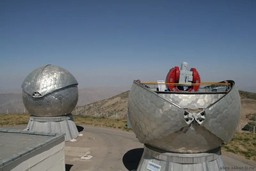
Система отслеживает спутники на высотах до 50 000 км и ведёт за ними наблюдение

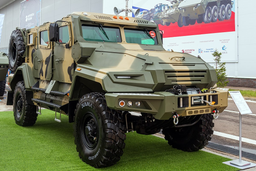
The armored vehicle is equipped with a KamAZ-740.35-400 diesel engine with a power of 400 hp.
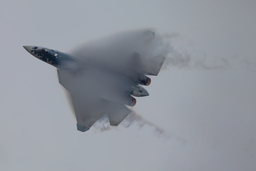
Constant improvements in avionics, weapons and tactical capabilities will make the aircraft a flexible response to future challenges

The exterior of the KamAZ-54901 features fairings on the cab and chassis for fuel economy
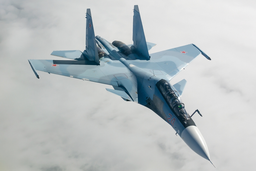
Fighters are in demand both domestically and abroad

Tyazhpromexport and Venezuela Agree on Plant Revival
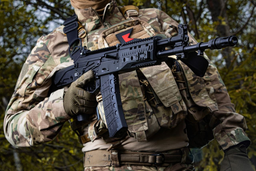
The company not only completed the state order, but also quickly mastered the production of AK-12K for special forces
Experts have developed a photogrammetric complex with a resolution of less than 1 cm