In the European part of Russia, units of the Air and Space Forces' anti-aircraft missile forces are deploying 96K6 Pantsir-S1 anti-aircraft missile and gun systems (SAM systems) on specialized farm towers for low-altitude detection and interception. Footage of SAM systems on towers has appeared online.
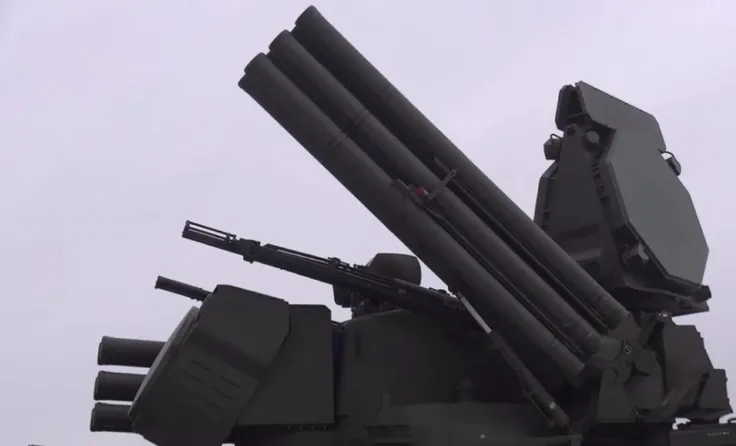
Rossiyskaya Gazeta notes that more modernized Pantsir-SM SAM systems may also be installed on the towers. Placing the Pantsir-S1 at a height of 25-30 meters helps its RLM SOC circular view radar detector and 1RS-3E target tracking and guidance radars become more effective.
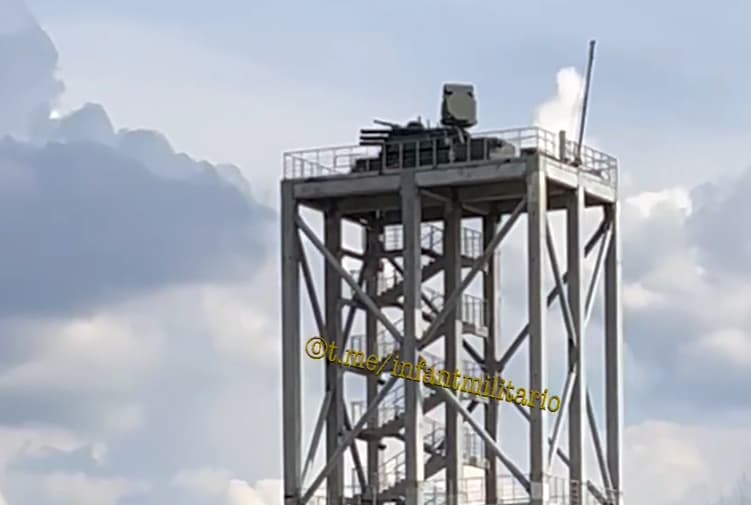
In this position, the SAM system gains a 35% greater radio horizon range (45 kilometers instead of 30 kilometers for objects flying at altitudes of 35 meters). In addition, it gains the ability to intercept ultra-low-altitude targets over complex forest landscapes.
It is assumed that Russian SAM systems will be able to effectively counter the Lyuty kamikaze drones and Jet-80+ Banshee, as well as the low-observable SCALP-EG and R-360 Neptune cruise missiles.
Previously, it was known that more than 50 combat-ready Pantsirsprotect Russian cities from enemy attacks. It was also recently proposed touse them to counter attacks on major strategic facilities and oil refineries.
Pantsir-S1 SAM System
Like other members of this SAM system family, it was created by the Tula KBP Instrument Design Bureau named after Shipunov, which is part of the High-Precision Systems of the Rostec State Corporation. It is assembled on a modular principle and can be located on any chassis, aim and fire while on the march, on the move.
The characteristics of the Pantsir-S1 SAM system include:
- frost resistance - it is on combat duty in the temperature range from +50°С to -50°С;
- ability to work 360 degrees on types of air targets of different sizes: from drones to missiles and aircraft. The Pantsir-S1 is configured for high-speed targets up to 1000 m/s at a distance of up to 20 km and has its own thermal imagers;
- powerful phased array antennas that allow you to destroy objects in a radius of 200 m to 20 km and at an altitude of up to 15 km without external support.
The complex's reaction time is about 5 seconds, and it can simultaneously fire at four targets. Twelve anti-aircraft missiles and two twin-barreled 30 mm cannons with a ammunition load of 1400 rounds work on them.
Read materials on the topic:
Now on home

Start of deliveries scheduled for 2027

Over 51,000 new motorcycles were sold in Russia in 2025

The car will take at least a year to assemble

The application's audience has reached 20 million users

The model will be included in the list of cars for taxis, price - from 2.25 million rubles

All parking lots of the "Administrator of the Moscow Parking Space" are connected to the service

The cars will be supplied to the Moscow Transport Service Directorate
Deliveries to India may begin in 2028

The technology provides automated search for all types of defects in power units
The plane flew 500 km, accelerating to 425 km/h

The plant stated that the information about the termination of purchases for models 6 and 8 is not true

Scientists are using the "Ekran-M" installation
Articles
-
Russian An-124 "Ruslan" Stuck in Canada for 4 Years and Accrues Millions in Fines
26 Jan 2026
-
Coaxial Propellers: How Counter-Rotation Increases Turboprop Engine Efficiency
25 Jan 2026
-
Kazan Aviation Plant Breaks Old System: Tu-214 to be Assembled Like Cars
25 Jan 2026
-
How Engineers and Technicians Are Paid Today in the Russian Aviation Industry: An Overview with Figures
24 Jan 2026