The Ministry of Education and Science of Russia is allocating 300 million rubles in 2024-2026 to create a system for generating and storing energy in space. A consortium of scientists from the Federal Research Center for Chemical Physics and Medical Chemistry of the Russian Academy of Sciences, Ural Federal University, Institute of Synthetic Polymer Materials of the Russian Academy of Sciences, and Moscow Institute of Electronics and Mathematics of the Higher School of Economics won a grant for this major scientific project. They will be allocated 100 million rubles each year.
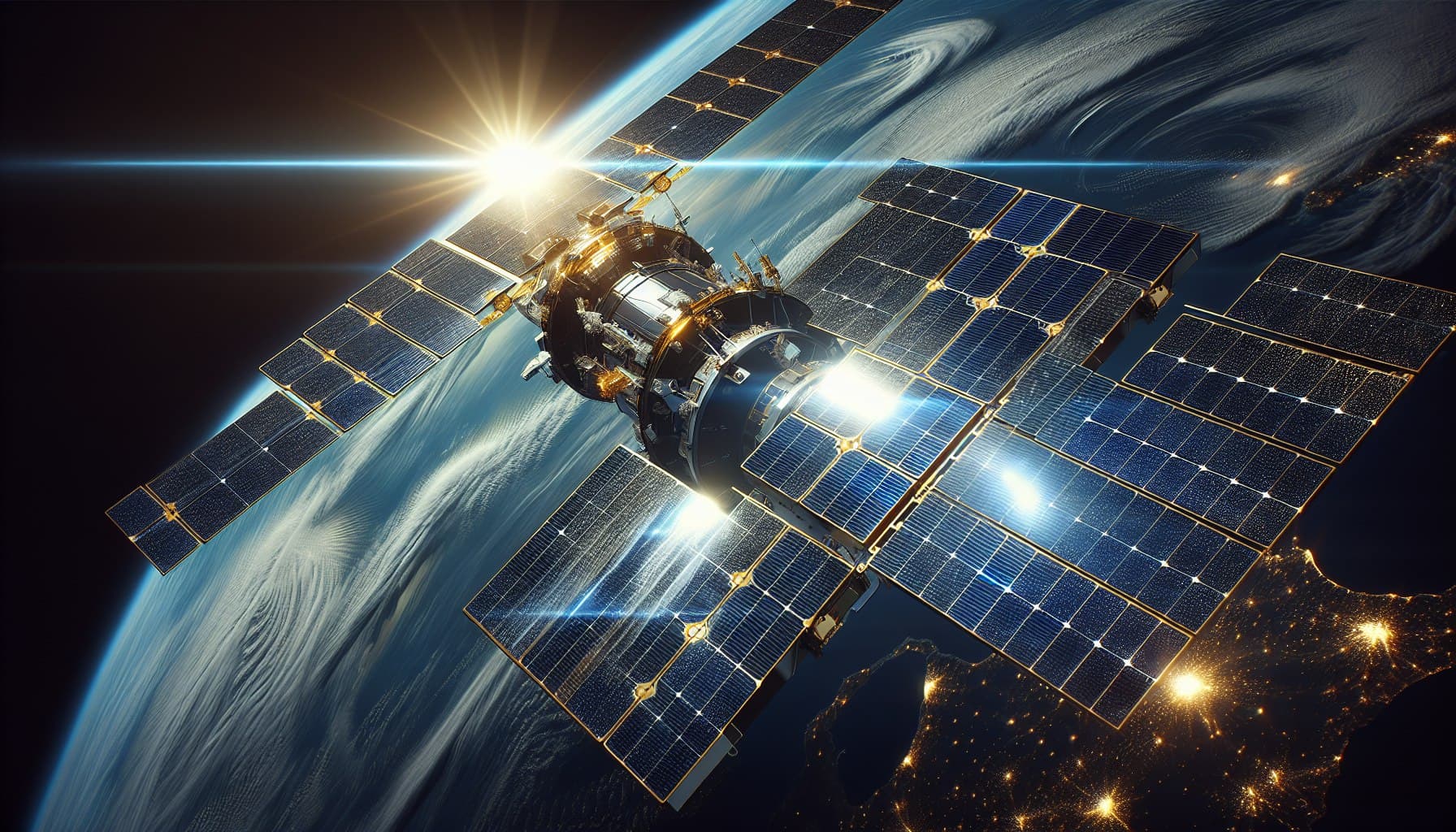
In addition to space, the new solar panels will also be useful on Earth. They are planned to be used for the development of territories with extreme cold (Arctic and North), and for work in territories with very hot climates, where modern batteries do not work.
Therefore, there are a number of conditions for new solar panels:
- high efficiency and energy performance;
- lightness and flexibility;
- resistance to radiation;
- resistance to low temperatures;
- long service life — at least 20 years in near-Earth orbits.
Colleagues in Moscow will work on creating new materials and perovskite modules on a plastic basis, as well as on creating batteries. Our task is to investigate the radiation resistance of both batteries and accumulators to different types of radiation. After it becomes clear that we have managed to create solar panels with the necessary properties, they will be tested in real conditions — on a small spacecraft in low Earth orbit.
To conduct the necessary tests, considerable funds, qualified specialists and expensive equipment are required. For example, to study the performance of batteries and accumulators in space conditions.
The Russian project will be a breakthrough not only for Russia, but also for world science. During the implementation of the project, scientists will conduct a comprehensive study of the influence of many damaging factors on the stability of organic or perovskite solar panels.
Currently, according to Zhidkov, such studies are carried out only for one type of radiation — accelerated electrons, protons, neutrons or gamma rays. Therefore, the consortium of Russian scientists expects to receive «breakthrough results that significantly outpace current world work».
Read materials on the topic:
Russian plasma engines SPD-70M on xenon and krypton will be launched into mass production
A new method for processing irradiated nuclear fuel was invented in Russia
Russia has learned to extract rare and non-ferrous metals from old lithium-ion batteries
Engineers of "Reshetnev" came up with how to make the production of Russian space technology cheaper