RBU-6000 Smerch-2 reactive naval rocket launchers are widely used by the military. Dmitry KORNEV, a military expert and founder of the MilitaryRussia website, pointed out the system's shortcomings compared to the Grad multiple launch rocket system (MLRS) when used as land-based installations.
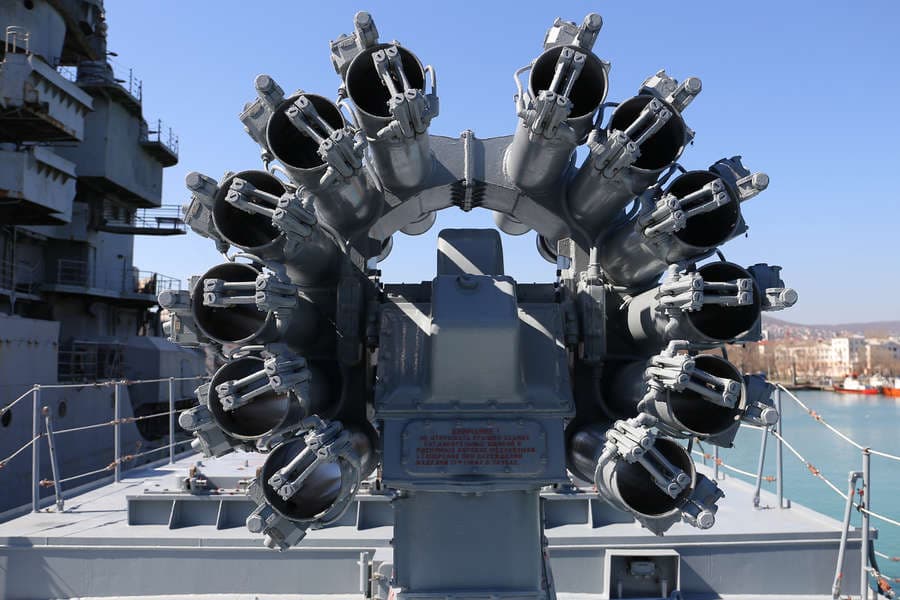
The Smerch-2 shipborne system was designed to destroy submarines and torpedoes. Today, the system is also used to combat ground targets. The Smerch-2 is installed on MT-LB chassis (multi-purpose tractor), T-80 tanks, and Ural-4320.
In naval practice, this system has long been and remains the main anti-submarine armament of cruisers, destroyers, anti-submarine ships, frigates, corvettes, and patrol vessels. Its main task is to destroy enemy submarines at their location using reactive depth charges. However, if the depth charges are improved to explode on contact with any surface, this system can also be used to engage ground targets.
The RBU-6000, adopted in 1961, is equipped with a package of 12 guides for 212 mm rockets. It can be aimed in a 180-degree sector and has a range of 300 to 5800 meters. The projectile weighs 113 kg, of which 23 kg is explosives. This is a powerful weapon capable of causing serious damage to fortifications, lightly armored vehicles, and enemy personnel.
Kornev notes that although the Smerch-2 projectiles have greater destructive power than the 122-millimeter rocket of the Grad MLRS, the accuracy of the naval rocket launcher is significantly lower than the Grad MLRS, which was designed to engage manpower, unarmored vehicles, and armored personnel carriers.
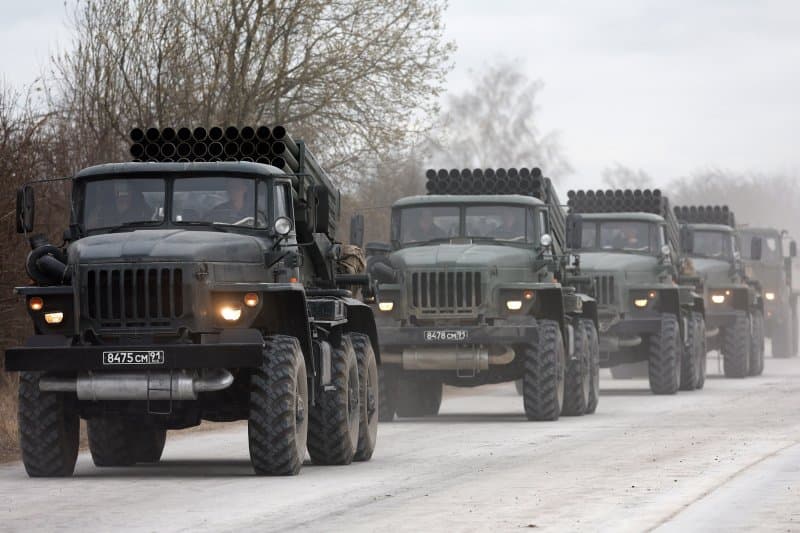
According to the military expert, the main problem with the land-based version of the installation is the inaccuracy of the guidance system.
When used on a ship against a submarine, the installation fires at an area target because the exact location of the submarine is unknown. When used on land, aiming requires calculating the vertical aiming angles of the installation or aiming «by eye»
In any case, Smerch-2 rocket launchers will continue to be used by the military due to their availability and large stocks of projectiles and rocket launchers. Ammunition is being modified by front-line soldiers: the mass of the explosive substance is increased, and fragmentation elements are added. The result is a heavy projectile, more powerful than, for example, the 122-millimeter Grad MLRS. The MLRS received the nickname "Dragon" for its unusual appearance, a spray of rocket powder sparks, and a powerful damaging effect. However, the question of mastering and accurately aiming such equipment remains open.
Earlier, www1.ru reported that it became known what the new Russian Vozrozhdenie MLRS looks like.
Read more on the topic:
Descendants of Smerch: Russia may launch new robotic multiple launch rocket systems
Su-35, Tornado, Msta-S — named the Russian military equipment that is most often bought abroad
Now on home

Герой России Гарнаев: никто из профессионалов о возобновлении производства на КАЗ всерьёз не говорит
Система отслеживает спутники на высотах до 50 000 км и ведёт за ними наблюдение


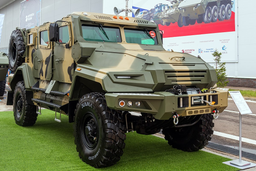
The armored vehicle is equipped with a KamAZ-740.35-400 diesel engine with a power of 400 hp.
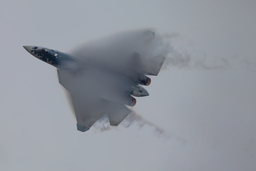
Constant improvements in avionics, weapons and tactical capabilities will make the aircraft a flexible response to future challenges

The exterior of the KamAZ-54901 features fairings on the cab and chassis for fuel economy
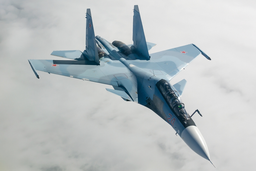
Fighters are in demand both domestically and abroad
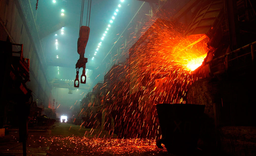
Tyazhpromexport and Venezuela Agree on Plant Revival
The company not only completed the state order, but also quickly mastered the production of AK-12K for special forces
Experts have developed a photogrammetric complex with a resolution of less than 1 cm