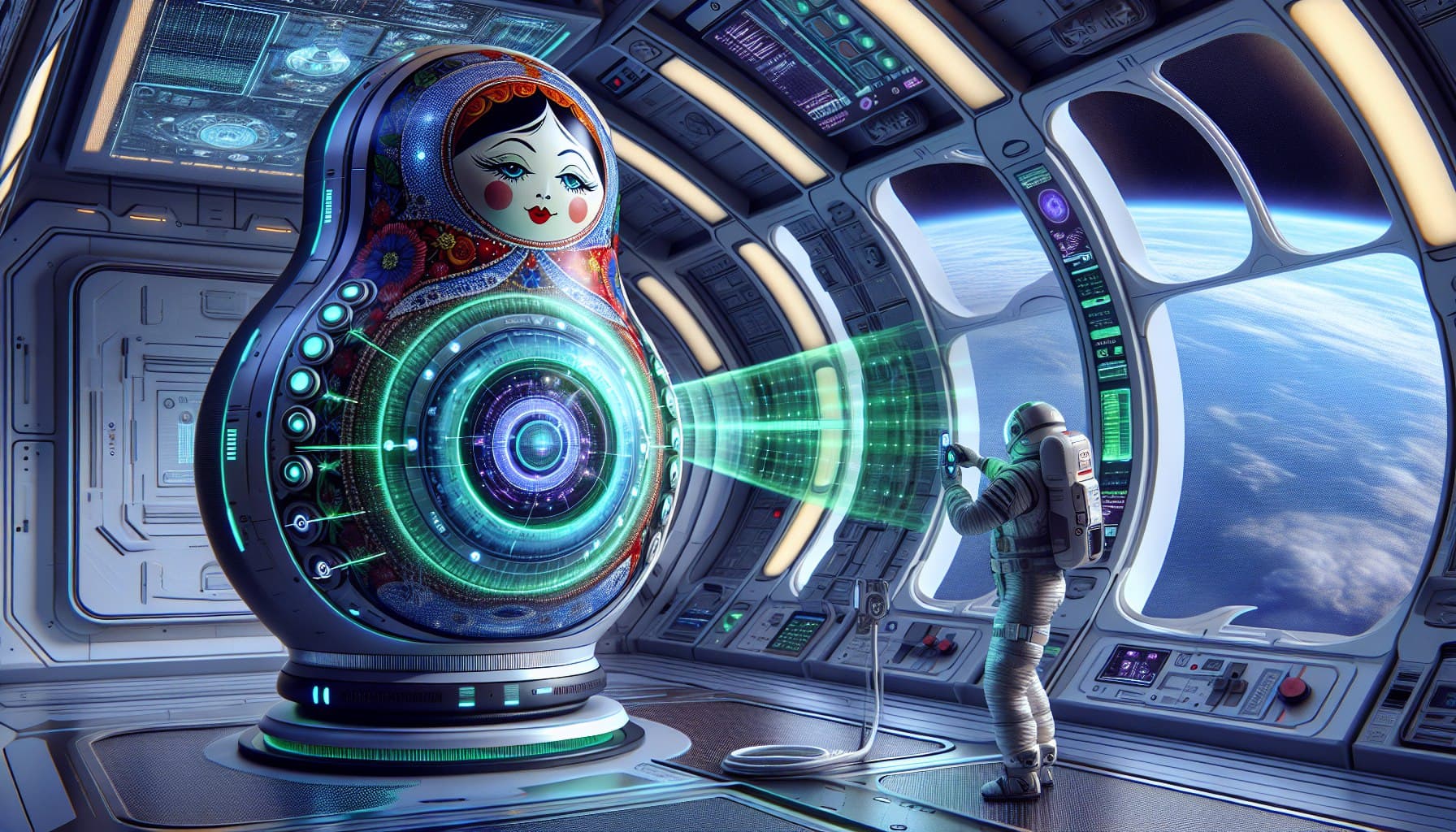
The ISS carried out the Russian scientific experiment "Matryoshka-R", which is related to measuring radiation in space and its effect on various internal organs and human life support systems. It started on board the ISS in 2004, and during this time scientists have collected a database of information that will be useful in space exploration, ROS operation and long-term flights.
Roscosmos cosmonaut commander Oleg Kononenko, special correspondent of IA "TASS" on the ISS, spoke about how the experiment is progressing. According to him, it is not enough for a cosmonaut to simply carry a dosimeter to account for radiobiological effects. Thus, the device will not be able to determine how radiation is distributed inside the human body and in its critical organs. These organs include the hematopoietic system, the lens of the eye, the skin, the gastrointestinal tract, and the central nervous system.
Therefore, tissue-equivalent spherical and anthropomorphic phantoms that simulate the cosmonaut's body are used for dosimetric studies. They are made from specially developed substances that are closest in composition to the standardized model of human tissues.
The data obtained in the framework of the Matryoshka-R space experiment allows us to assess the radiation levels of the organs of the cosmonauts' bodies for comparison with the standards for permissible radiation doses determined for various periods of exposure: day, month, year and in total for the entire period of professional activity of cosmonauts.
The phantoms simulated the conditions of self-shielding of human body organs, inside which various radiation sensors were placed. Measurements were carried out inside and outside the station in calm and disturbed conditions, taking into account the contribution to the dose of both charged particles and neutrons. The study was carried out by specialists from the Institute of Biomedical Problems of the Russian Academy of Sciences.
Read materials on the topic:
The launch dates of the new Russian Soyuz-5 rocket have become known
Russia plans to build cosmodromes and rockets for export
Russia successfully tested the first hyperspectrometer for cubesats in space
Ten years with "Pilot-T": cosmonauts are preparing for long-distance flights on the ISS [updated]