Russian scientists from RUDN (Peoples' Friendship University of Russia) have created a unique cryopreservation technology. The method allows maintaining all the living properties of artificial organs for an unlimited time.

Today, they can only preserve relatively simple biological elements such as sperm, eggs, or tissue fragments. At the same time, they remain viable. Problems arise when trying to freeze something of a large volume, because cryoprotectors (substances that protect living objects from the damaging effects of freezing) must penetrate all parts of the organ. The largest thing that has been cryopreserved so far is a small rabbit kidney. In experiments in the laboratory and on animals, we were able to prove that it is possible to preserve larger objects as well.
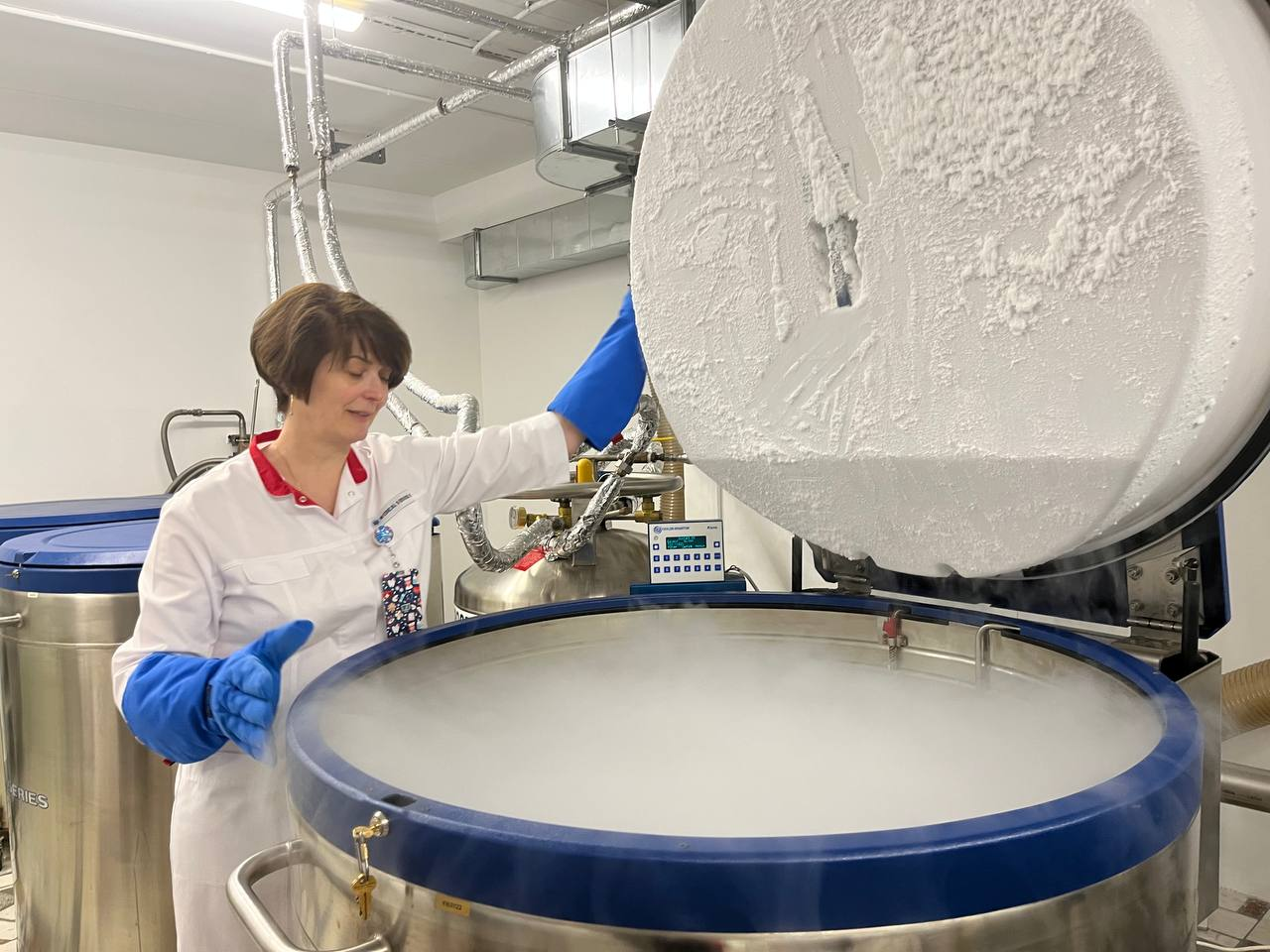
For the experiment, a three-dimensional matrix made of polylactoglycolide polymer was taken. The structure of the material was supplemented with stem cells. During cryogenic preservation, the object is placed in liquid nitrogen at a temperature of –150℃ to –169℃.
The experimental implant was frozen at low temperatures and then thawed. By comparison, scientists were able to find out that the artificial organ did not lose its important vital properties and retained cell activity. After transplantation, the thawed implant took over cells from the surrounding tissues and the regeneration process was started.
Experts note that the technology of scientists from RUDN will allow preserving their own stem cells in the future and growing biomaterial from them later for treatment. Currently, transplantology uses biomaterials from another person, and this is associated with the risk of rejection. The patient has to undergo additional treatment with immunosuppressants.
For transplantation, you can take your own stem cells in the spinal cord, which are continuously produced, or primary cells that have managed to differentiate into one of the types of tissue. For example, we conducted studies when the patient took similar samples and implanted them in the heart in the area of the heart attack. This made it possible to restore up to 80% of the damaged area
Earlier www1.ru reported that Sechenov University will create an innovative bioreactor.
Read materials on the topic:
Skin, cornea, cartilage - human organs and tissues began to be grown in Bashkiria
A technology for 3D printing of human tissue from living cells has been developed in Russia
The future is already near: polymers that mimic living tissue are being developed in Russia
Now on home

Герой России Гарнаев: никто из профессионалов о возобновлении производства на КАЗ всерьёз не говорит
Система отслеживает спутники на высотах до 50 000 км и ведёт за ними наблюдение


The armored vehicle is equipped with a KamAZ-740.35-400 diesel engine with a power of 400 hp.

Constant improvements in avionics, weapons and tactical capabilities will make the aircraft a flexible response to future challenges

The exterior of the KamAZ-54901 features fairings on the cab and chassis for fuel economy

Fighters are in demand both domestically and abroad

Tyazhpromexport and Venezuela Agree on Plant Revival

The company not only completed the state order, but also quickly mastered the production of AK-12K for special forces
Experts have developed a photogrammetric complex with a resolution of less than 1 cm