The autonomous deep-sea manned vehicle "AS-30" of the search and rescue detachment of the Pacific Fleet was tested in Kamchatka. According to the terms of the exercise, the bathyscaphe had to rescue the crew of an emergency submarine at a depth of 200 meters, going on a mission in conjunction with its rescue vessel "Georgy Kozmin."
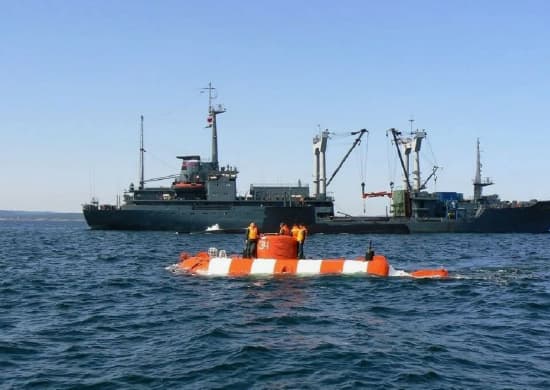
In the dive area, the crew of the vehicle searched for a mock-up stand lying at a depth of 200 meters.
Within the time frame set by the regulations, the deep-sea vehicle approached it, secured itself to the coaming platform and simulated rescue operations to evacuate the crew of the emergency submarine. A robotic vehicle was located at depth in tandem with the manned bathyscaphe, which monitored and ensured the safety of underwater operations. The deep-sea diving activities were also monitored by the personnel of the diving vessel "VM-919".
All tasks were completed, and the crew of the "AS-30" showed that they are ready to perform tasks as intended at sea.
What is known about the "AS-30"
These are autonomous manned deep-sea vehicles built according to Project 1855 of the Lazurit Central Design Bureau at the Krasnoye Sormovo USC plant between 1982 and 1989. "AS-30" are in service with the search and rescue services of the fleets of the Russian Navy, and have been modernized in accordance with the requirements of the time.
The AS-30 bathyscaphes have several tasks, the main ones being the rescue of crews of emergency submarines and the performance of various works at depths of up to 1000 meters. The working diving depth for a bathyscaphe is considered to be 500 meters.
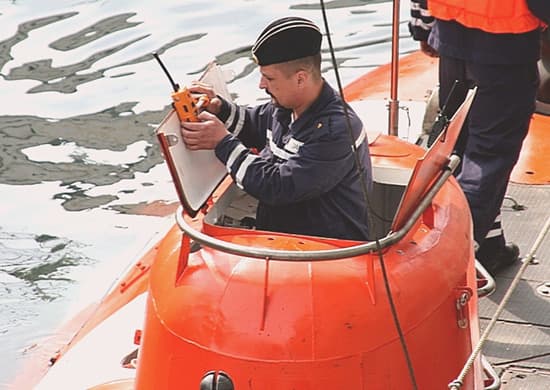
The length of each vehicle is 13.5 meters, the width is 3.8 meters, and the height is 5.7 meters. The bathyscaphe's crew consists of four people and can take on board up to 20 rescued submariners in an emergency.
It is usually delivered to the dive site by a carrier ship, but in emergency cases the bathyscaphe can do without a rescue ship, as it is able to travel up to 39 kilometers on its own. The life support autonomy of each vehicle with a crew is 120 hours, with a rescued submarine crew included - only 10 hours.
All "AS-30" vehicles have long had their original internal components replaced. They received new digital generation systems as special equipment, new positioning, sonar search and television monitoring systems.
After the modernization, the bathyscaphes became more maneuverable, more efficient in searches and dives, and began to transmit data to the board of their rescue vessels faster. It is known that robotic vehicles have been added to them in pairs in missions, one of which took part in the exercises.
Read materials on the topic:
Icebreakers, container ships, crab boats, ships: USC will build almost 600 ships for Russia
Now on home
Герой России Гарнаев: никто из профессионалов о возобновлении производства на КАЗ всерьёз не говорит
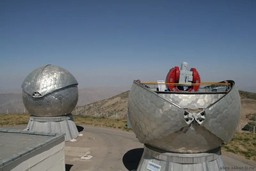
Система отслеживает спутники на высотах до 50 000 км и ведёт за ними наблюдение
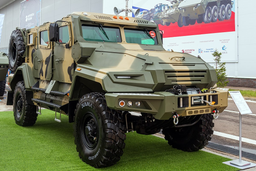
The armored vehicle is equipped with a KamAZ-740.35-400 diesel engine with a power of 400 hp.
Constant improvements in avionics, weapons and tactical capabilities will make the aircraft a flexible response to future challenges
The exterior of the KamAZ-54901 features fairings on the cab and chassis for fuel economy
Fighters are in demand both domestically and abroad
Tyazhpromexport and Venezuela Agree on Plant Revival
The company not only completed the state order, but also quickly mastered the production of AK-12K for special forces
Experts have developed a photogrammetric complex with a resolution of less than 1 cm