Scientists from Samara University named after Academician S.P. Korolev, together with the "Special Technological Center" from St. Petersburg, are testing a new small spacecraft called "Aist-ST". This is the first Russian nanosatellite with a radar installation.
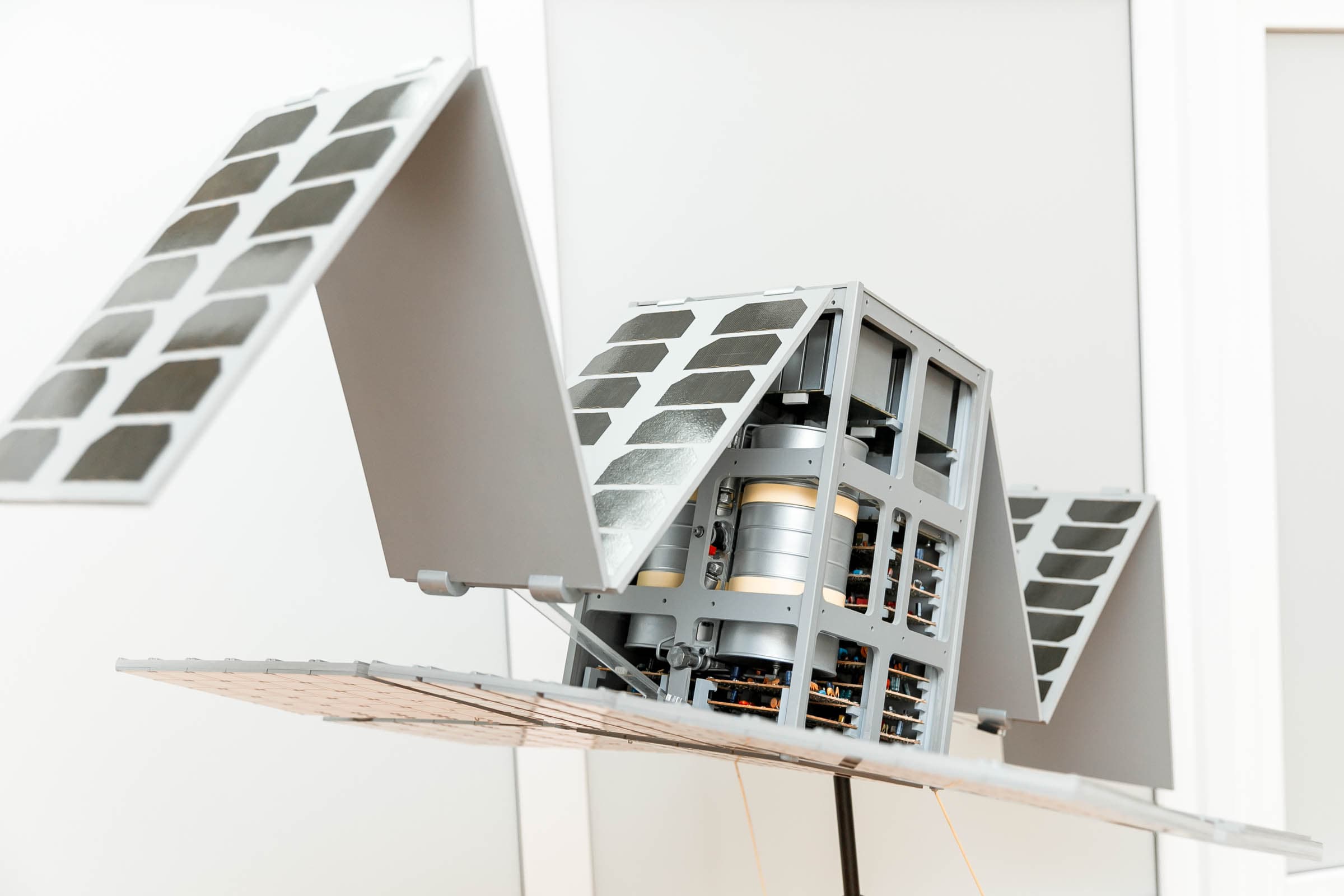
The satellite is planned to be sent into orbit in the second half of 2024, and therefore, simultaneously with the testing of the engineering model, the satellite builders are assembling a space copy of the "Aist-ST". The university developed the satellite's space platform and a set of scientific equipment, and STC helped them with the target radar equipment and propulsion system.
The characteristics of the "Aist-ST" satellite are as follows:
- the satellite itself is a cubesat with a size of 12 units, that is, 12 "cubes" of 10x10x10 cm;
- the satellite's radar is in the X-band, which is a range from 8 to 12 GHz and a wavelength from 3.75 to 2.5 cm;
- the calculated altitude of the working orbit is from 450 to 500 km;
- the resolution of the synthetic aperture radar from the calculated altitude in route mode is about 10 meters, and in detailed mode – at least 2 meters;
- the maximum slant observation height is 500 km, the capture bandwidth is 70 km;
- the active service life is at least a year.
Thanks to its radar equipment, "Aist-ST" will be able to monitor the Earth's surface regardless of the time of day and level of illumination, in any weather conditions, through any dense clouds. As noted in the press service of the developing university, ordinary satellite optics cannot cope with such tasks.
It will help to obtain accurate data on the Earth's surface relief through radar sounding, effectively monitor the melting of glaciers in the mountains, and identify polluted areas of the water surface. In addition to environmental tasks, it has other tasks: for example, to find objects hidden in forests and determine the thickness of ice from space for ice reconnaissance and the operation of icebreakers in the Arctic and Antarctic.
Work on the creation of the "Aist-ST" apparatus is being carried out within the framework of the "Priority-2030" program.