Material updated on March 13, 2024 at 14:28
An Il-76 military transport plane crashed in the Ivanovo region.
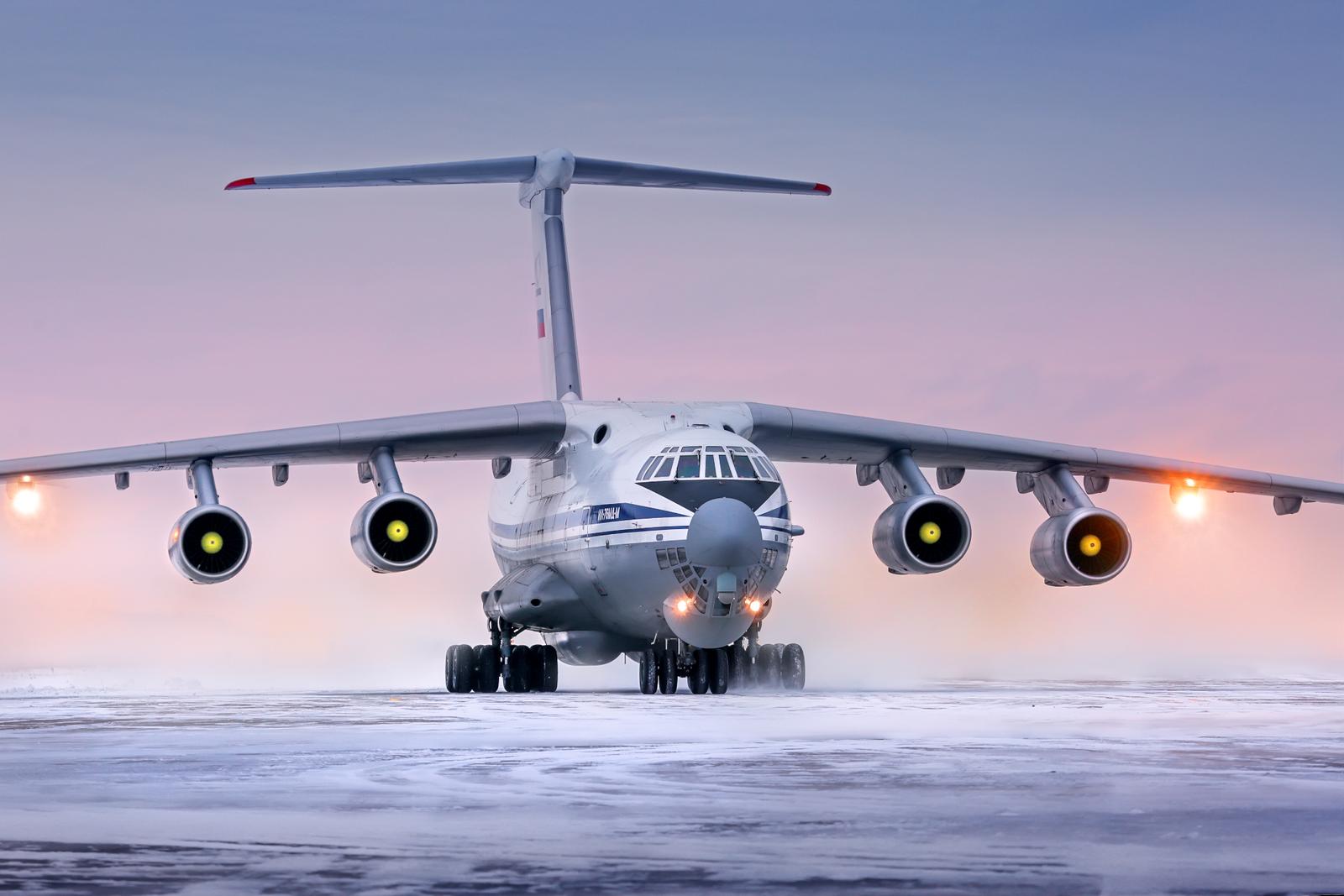
According to IA "TASS", which refers to data from the Ministry of Defense, the tragedy occurred at about 13:00 Moscow time. The aircraft was taking off to perform a scheduled flight when one of its engines caught fire, after which the crash occurred. The crew died. The cause of the engine fire is still unknown. A commission from the Main Command of the Aerospace Forces of the Russian Federation has been sent to the crash site.
The government of the Ivanovo region confirms the disaster. According to its press service, the Governor of the Ivanovo region, Stanislav Voskresensky, arrived at the scene. He expressed his condolences to the families of the deceased pilots of the Il-76 crew and instructed to provide all necessary assistance.
No settlements were affected as a result of the incident, and the fire at the crash site has been extinguished. An operational headquarters has been organized, and all relevant services are working.
Meanwhile, footage of the last flight of this Il-76 has appeared online.

Added:
What engine was on the crashed plane?
In the day since the crash, it has not yet been officially announced which modification of the Il-76 the aircraft belongs to. Also, the preliminary causes of the engine failure, which could have led to the fire and the tragedy, have not yet been announced - the commission investigating the crash has not yet announced them.
However, it is known that all more than twenty modifications of the Il-76 have two types of engines. They are developed and manufactured in Russia and have completely domestic components.
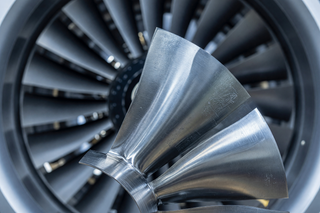
The first option is the D-30KP engines, the very first for this type of aircraft, representatives of the family of turbofan engines for mainline passenger and transport aircraft. They were produced in Soviet times at factory No. 36 in Rybinsk, later it became known as NPO "Saturn", now it is PJSC "ODK-Saturn".
Characteristics of the D-30KP engine:
- take-off mode — H=0, M=0, MSA;
- thrust (remains constant up to tн=+21°С) — 12,000 tons;
- maximum gas temperature in front of the turbine — 1,427K;
- cruising mode — H=11 km M=0.8, MSA;
- thrust — 2,750 kg;
- specific fuel consumption — 0.7 kg/kgf h;
- bypass ratio — m=2.36.
Its weight without reverse is 2,305 kg, the length with reverse — 5,700 mm, and the fan diameter —1,455 mm.
Later, a modified version of the D-30KP-2 was developed. It has much smaller dimensions: only 5448 x 1560 mm. The engine has:
- thrust in take-off mode — 12 tons;
- specific fuel consumption in take-off mode — 0.51 kg/kgf · h;
- specific fuel consumption in cruising mode — 0.71 kg/kgf · h;
- bypass ratio — m=2.24.
Another "heart" for the Il-76MD-90A and a number of other vessels are the PS-90A-76 engines from "ODK-Aviadvigatel". They are developed on the basis of PS-90A — a turbofan two-circuit low-noise engine.
Characteristics of the PS-90A-76 engine:
- thrust in take-off mode —16 tons;
- thrust in cruising mode — 3500 tons;
- specific fuel consumption —0.595 kg/kgf·h;
- flight altitude — up to 13,100 meters;
- bypass ratio — m=4.4;
- maximum gas temperature TSA — 1640K;
- start altitude in flight — 7,000 meters;
- air temperature at the ground for starting and operation — from –47 to.+45°C;
- altitude of airfields — up to 3500 meters.
In dry weight, the engine weighs 2950 kilograms, its delivery weight is 4300 kilograms. The PS-90A-76 is 4964 mm long, and the diameter of its fan is 1900 mm.
Never miss our newsAdd this site to your preferred sources to see us more oftenAdd on Google