Translated with AI from the Russian original.
Climate models compiled in the West since 2022 without taking into account data from Russia are a waste of time, as they are unreliable. This was stated by climatologists from Denmark, Finland, Great Britain and the USA, participants in the INTERACT research project.

How climate models work
A climate model, which helps to judge climate change, is compiled on the basis of data from all over the globe. They are included in a digital model for forecasting. Indicators of the atmosphere, hydrosphere, land, soil cover, and glaciers are taken into account. With the help of complex mathematical calculations, changes are calculated in certain time intervals.
Arctic Monitoring
The Arctic is called the "weather kitchen" of the Earth. Cyclones are formed here, melted ice feeds the Atlantic, and ice cover cools the entire planet. The accuracy of data for climate models depends on understanding the processes that occur in the Arctic region. These issues are also dealt with by the Arctic Council, an international forum promoting cooperation in the Arctic. Since 2023, Russia has not been invited to council events.
Today, there is not a single joint international project in the Arctic with the participation of universities or scientific organizations from Russia
She explained that 21 of the 95 ground stations of the INTERACT project are located in Russia. Against the background of sanctions, Western scientists do not receive data from the Russian side.
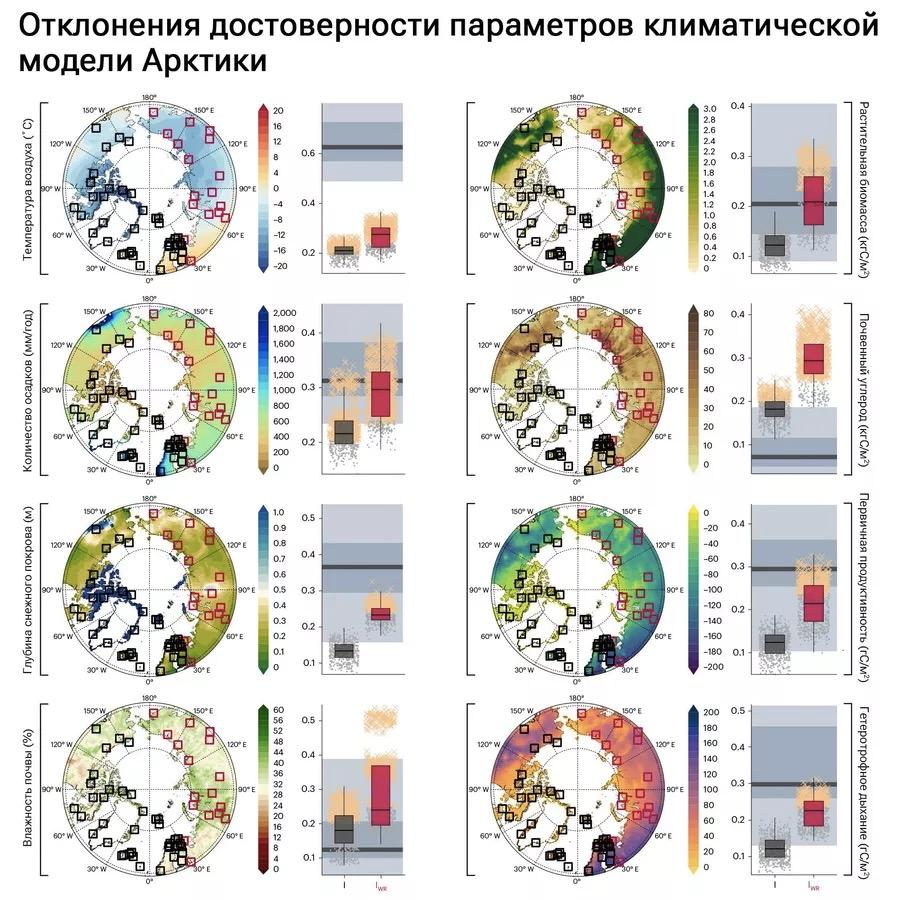
In fact, INTERACT is doing useless work. Their unreliable conclusions are used by specialists from the World Meteorological Organization, the International Council for Science and other departments. Climatologists from Denmark, Finland, Great Britain and the USA, involved in INTERACT, emphasized that the international scientific community should create monitoring programs that are representative of the entire Arctic, and this cannot be done without data exchange with all countries, including Russia.
Roscosmos receives information about the situation in the Arctic from the new hydrometeorological satellite "Arktika-M" No. 2, launched into space in mid-December 2023.
Never miss our newsAdd this site to your preferred sources to see us more oftenAdd on Google

















