Translated with AI from the Russian original.
[News updated at 17:04 24.01.2024]
The new Russian Orbital Station (ROS) will become a stepping stone for the exploration of deep space. It will not be used as a transit base for flights, but technologies for flights to the Moon and Mars will be tested here. This was stated by the chief designer of ROS, Vladimir Kozhevnikov.
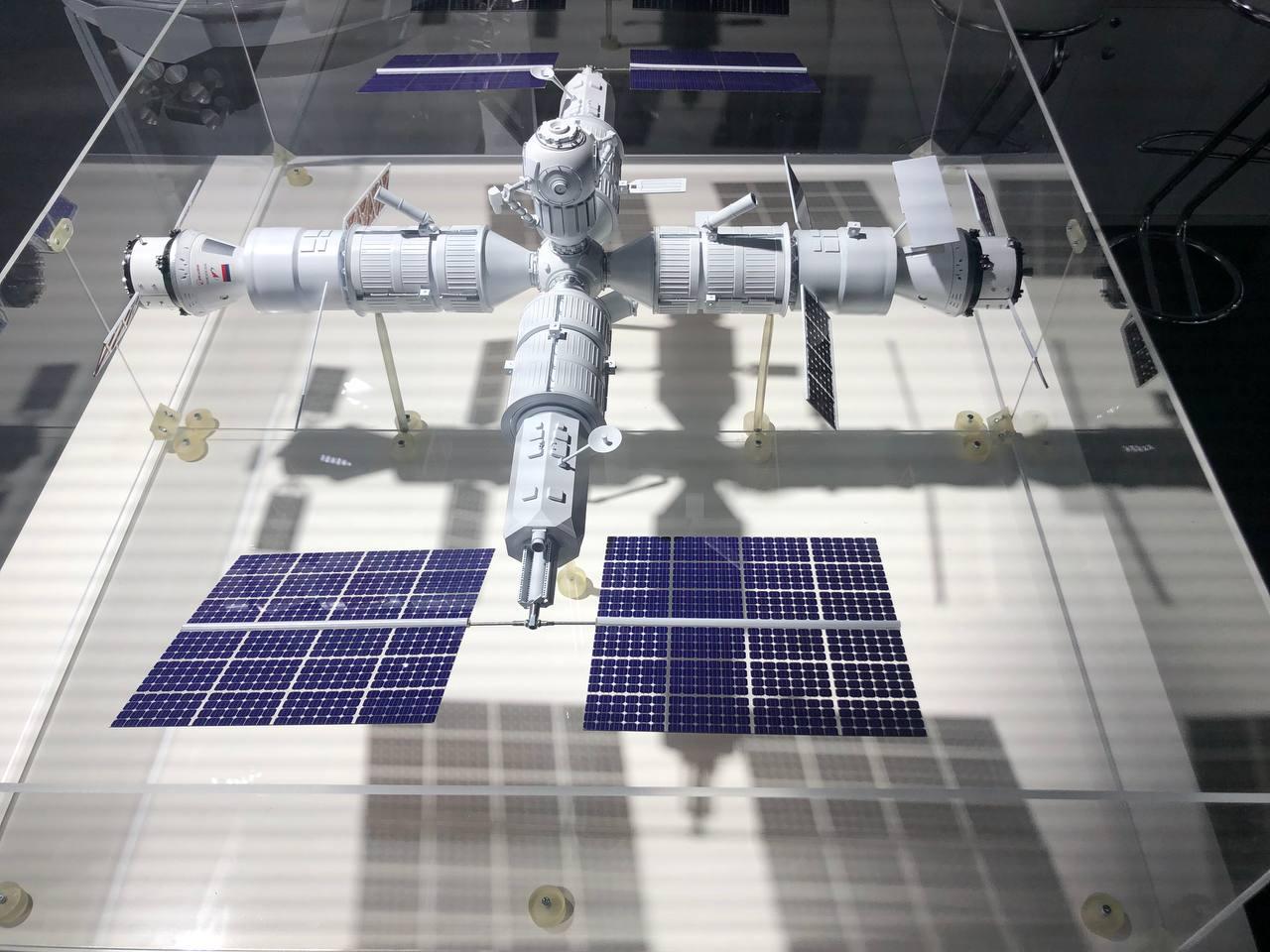
ROS can become a testing ground for checking equipment and developing technologies for long-range space flights
According to the engineer, this is due to the fact that the station's flight path passes through radiation belts near the North and South Poles of the Earth. The situation in these areas resembles the conditions of deep space.
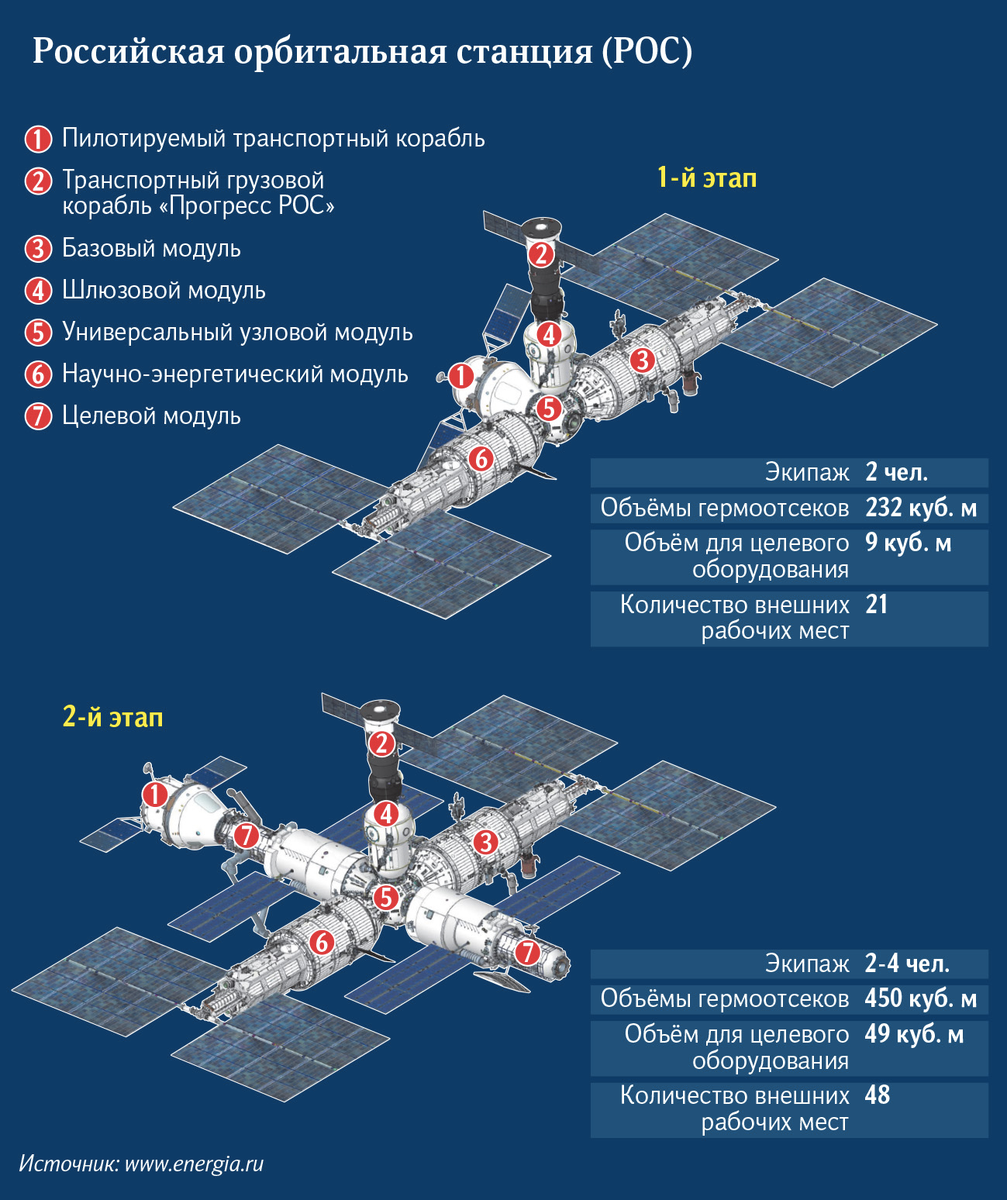
In addition, ROS is a place for conducting scientific experiments. In particular, growing crystals, 3D printing in zero gravity, or creating medicines. Russian and foreign specialists are involved in the implementation of large projects.
Addition:
The plane of the ROS orbit will allow sending spacecraft to the Moon every 15 days, said Nikita Chudinov, a flight support specialist at RKK Energia. Presumably, ROS will fly in a high-latitude orbit with an inclination of 97°, which will allow observing the entire territory of Russia.
The developers also foresaw a potential threat of ROS colliding with space debris. According to Rafael Murtazin, head of the department at RKK Energia, the average number of deviations of the station from debris in space will not exceed two times a year.
The first ROS module is planned to be sent into orbit at the end of 2027. In subsequent years, a nodal, gateway, basic and target modules will be added to it. Roscosmos expects the station to operate for at least 50 years.
Earlier, Roscosmos showed a model with commercial modules of ROS at the Airshow in Dubai.
Never miss our newsAdd this site to your preferred sources to see us more oftenAdd on Google

















