Translated with AI from the Russian original.
The new Russian hydrometeorological satellite "Arktika-M", launched into a highly elliptical orbit over the weekend, has received enhanced equipment protection against space exposure and radiation.
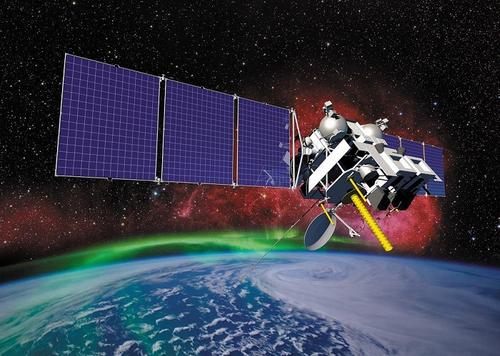
The on-board control complex from "Rosatom's" subsidiary, the Moscow Design Bureau "Mars", therefore received an electronic component base and circuit solutions to increase the radiation resistance of the devices.
Currently, only Russia has meteorological devices that operate in a highly elliptical orbit with an inclination of about 63 degrees. The shooting area of spacecraft of this series is in operation at an altitude of up to 40 thousand km from Earth, above the GLONASS navigation systems. This is a unique perspective of the Arctic region, and it cannot be obtained from any other satellite.
"Mars" is already working on on-board control systems for the modernized "Arktik-M" (№ 3, 4, 5, 6), and for the fifth geostationary spacecraft "Elektro-L", which will be launched in 2025.
A network of "Elektro-L" and "Arktika-M" satellites will help to continuously obtain operational data for weather forecasts on a planetary scale.
Never miss our newsAdd this site to your preferred sources to see us more oftenAdd on Google

















