Translated with AI from the Russian original.
The Lavochkin Research and Production Association (NPO), part of Roscosmos, is developing the Russian interplanetary station project "Boomerang" to extract soil from Mars' moon Phobos. The mission is scheduled to launch after 2030 using the Angara launch vehicle from the Vostochny Cosmodrome.
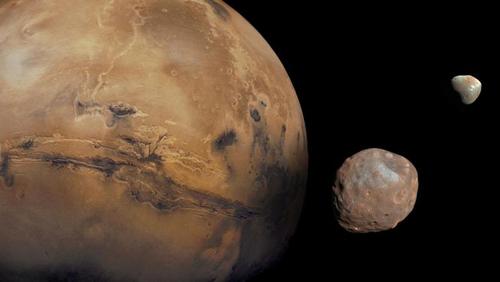
According to NPO materials, the Boomerang mission will be the first stage of the Expedition-M project, aimed at exploring Mars and its satellites - Phobos and Deimos. The main tasks of the mission will be landing on these celestial bodies in zero gravity and delivering soil samples from Phobos back to Earth.
As early as 2016, the terms of reference for the preliminary design spoke of plans to deliver about 600 grams of soil from Phobos to Earth. It was then argued that such a mission would only be possible in cooperation with the European Space Agency. However, in November last year, Roscosmos CEO Yuri Borisov announced that the European Space Agency had refused to work with Russia.
It is planned that the Boomerang spacecraft, weighing 6.5 tons, will be able to reach Mars, enter its orbits of Phobos and Deimos, and then conduct their remote study. The task will also be a soft landing on the surface of Phobos and the collection of soil samples. After that, the return vehicle will go with samples to Earth and land on the territory of Russia.
Yesterday it became known that flight tests of the latest Russian Angara-A5 launch vehicle will be completed in 2024.
Never miss our newsAdd this site to your preferred sources to see us more oftenAdd on Google

















