Artificial intelligence is planned to be more actively integrated into schools, colleges, universities, and scientific laboratories. More than 40 pilot projects were launched at the "Digital Days of Innopolis" forum in Tatarstan. Among them are a teacher's assistant, personalized math learning programs, and AI for predicting chemical reactions. The launch of the projects was announced by Deputy Prime Minister of Russia Dmitry Chernyshenko. The plenary session "Artificial Intelligence for a Breakthrough in Education and Science" was also attended by Minister of Education Sergey Kravtsov, head of the Ministry of Science and Higher Education Valery Falkov, and Rais of Tatarstan Rustam Minnikhanov. The forum organizer is Innopolis University. Read more in the article from "Pervy Tekhnichesky".
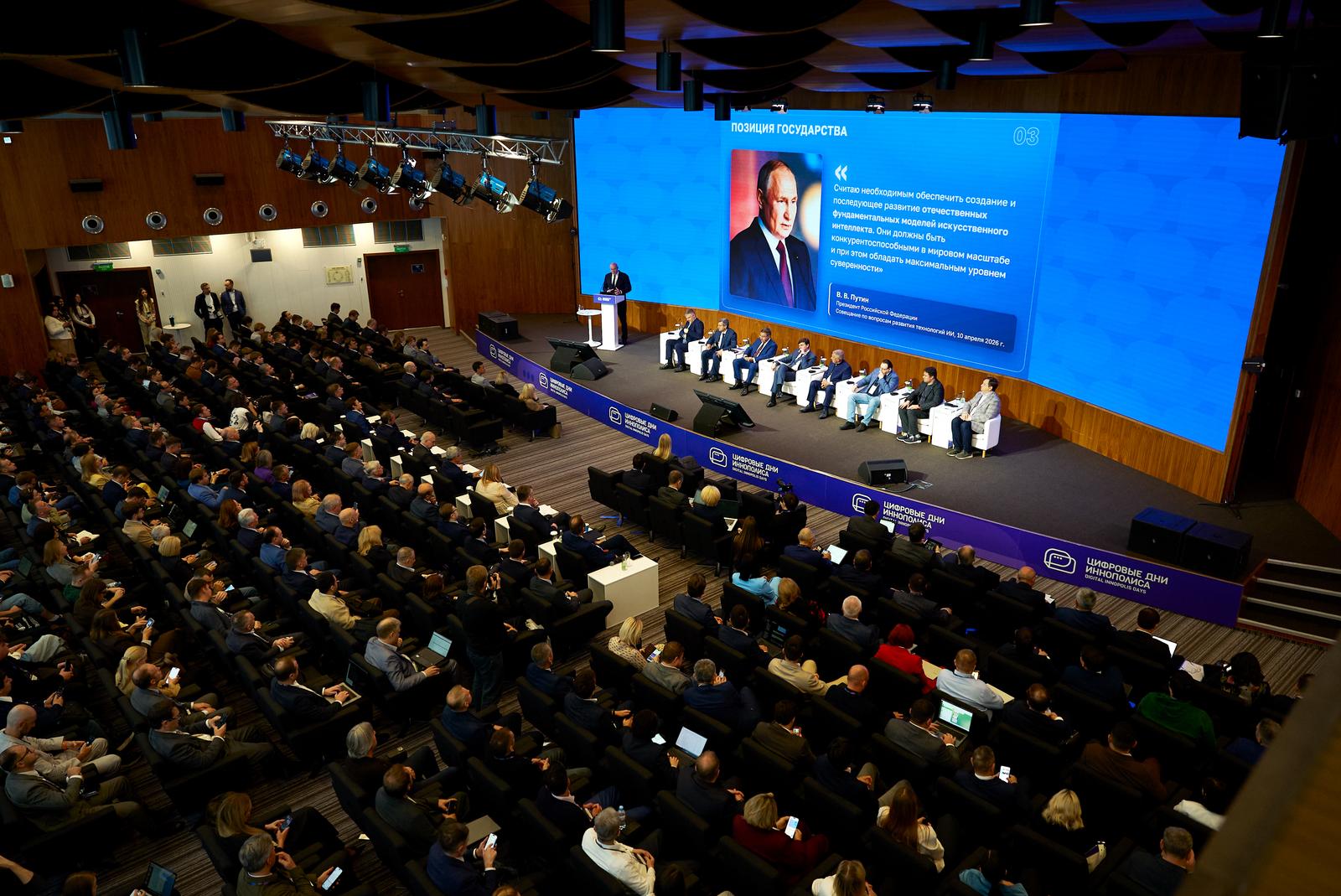
The Deputy Prime Minister reminded that the development of artificial intelligence has been identified by President Vladimir Putin as one of the priorities. In July, the head of state signed a law supporting the development of AI technologies. By order of Prime Minister Mikhail Mishustin, separate projects for the implementation of artificial intelligence in education and science were launched.
The authorities also intend to establish rules for the use of neural networks in education. Working groups, having studied international experience, have identified four principles:
- preserve students' critical thinking;
- reduce inequality in education;
- increase the reliability of assessment;
- consider traditional values.
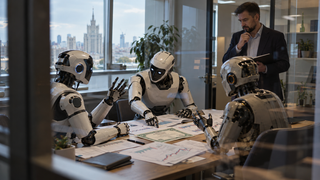
Dmitry Chernyshenko specifically emphasized that AI should not displace the teacher. The teacher should be engaged in teaching children, and students should understand the subject. Neural networks are intended to be used as an auxiliary tool, preserving the role of the educator and live communication.
From school mathematics to chemical research: where AI will be implemented in Russia
Among the school developments, the platform "01Matematika" was presented. It analyzes test and control work results, helps identify knowledge gaps, and builds an individual learning trajectory. The system can also analyze the progress of problem-solving from draft notes.
Another project, "Gipermatika+", is designed for teaching algebra in grades 7–11. It helps identify and fill knowledge gaps, as well as prepare for the Unified State Exam in mathematics and physics. Another development is the AI platform "Assistant Teacher". It helps teachers prepare for lessons, plan, and conduct classes.
Innopolis University presented an AI textbook for high school students with interactive illustrations in mathematics, physics, optimization, and machine learning.
For universities, services were prepared, in particular, for identifying texts written by neural networks, an AI curator who monitors changes in each student's results, and a tool for navigating the university. Among the exhibition participants were Innopolis University, RANEPA, MIREA — Russian Technological University, and MISIS University of Science and Technology.
For secondary vocational education, solutions from the College of Information Technologies "IT.Moscow" were shown, as well as an AI mentor from the Orenburg College of Economics and Informatics. It helps students master professional skills, taking into account the competency matrix.
In scientific projects, artificial intelligence will be used to work with chemical compounds, molecular structures, and research data. For example, Spectralix AI, developed at Innopolis University, analyzes mass spectra, including those of unknown compounds, determines the molecular formula, and predicts the structure of the substance.
The AI chemist assistant, created by Innopolis University in collaboration with Skoltech, is designed to predict chemical reactions, retrosynthesis, and interpret mass spectra. Retrosynthesis is the selection of a possible path to obtain a desired substance from other compounds.
ITMO presented the multi-agent platform CoScientist. It automatically forms teams of AI agents for research tasks and helps structure data from scientific organizations. Sberbank showed the cloud platform "AI for Science".
The exhibition also included a service from Bauman Moscow State Technical University, which allows training, uploading, and launching AI models directly on a machine. The system adjusts equipment operating modes in real-time, using signals from sensors.
Lomonosov Moscow State University, St. Petersburg Polytechnic University, Kurchatov Institute National Research Center, Roscosmos, and Rosatom presented their projects. A separate direction is related to research centers in the field of artificial intelligence. The government supports centers that have passed competitive selection, by order of the president. Their work is carried out within the framework of the national project "Data Economy and Digital Transformation of the State".
The "AI in Science" project covers all nine national technological leadership projects
As Dmitry Chernyshenko noted, the introduction of new tools will require not only technical solutions but also changes in the organization of research. According to him, verifying the reliability of scientific results is of particular importance.
Valery Falkov, head of the Ministry of Science and Higher Education, said that the new model of higher education will include two mandatory modules on artificial intelligence. The basic one will be common for all students, and the professional one will be adapted to a specific specialty.
Falkov also emphasized that the widespread use of AI in science will require a review of the funding system, publication evaluation, and academic remuneration. Scientists will need new approaches to verify results obtained using neural networks.
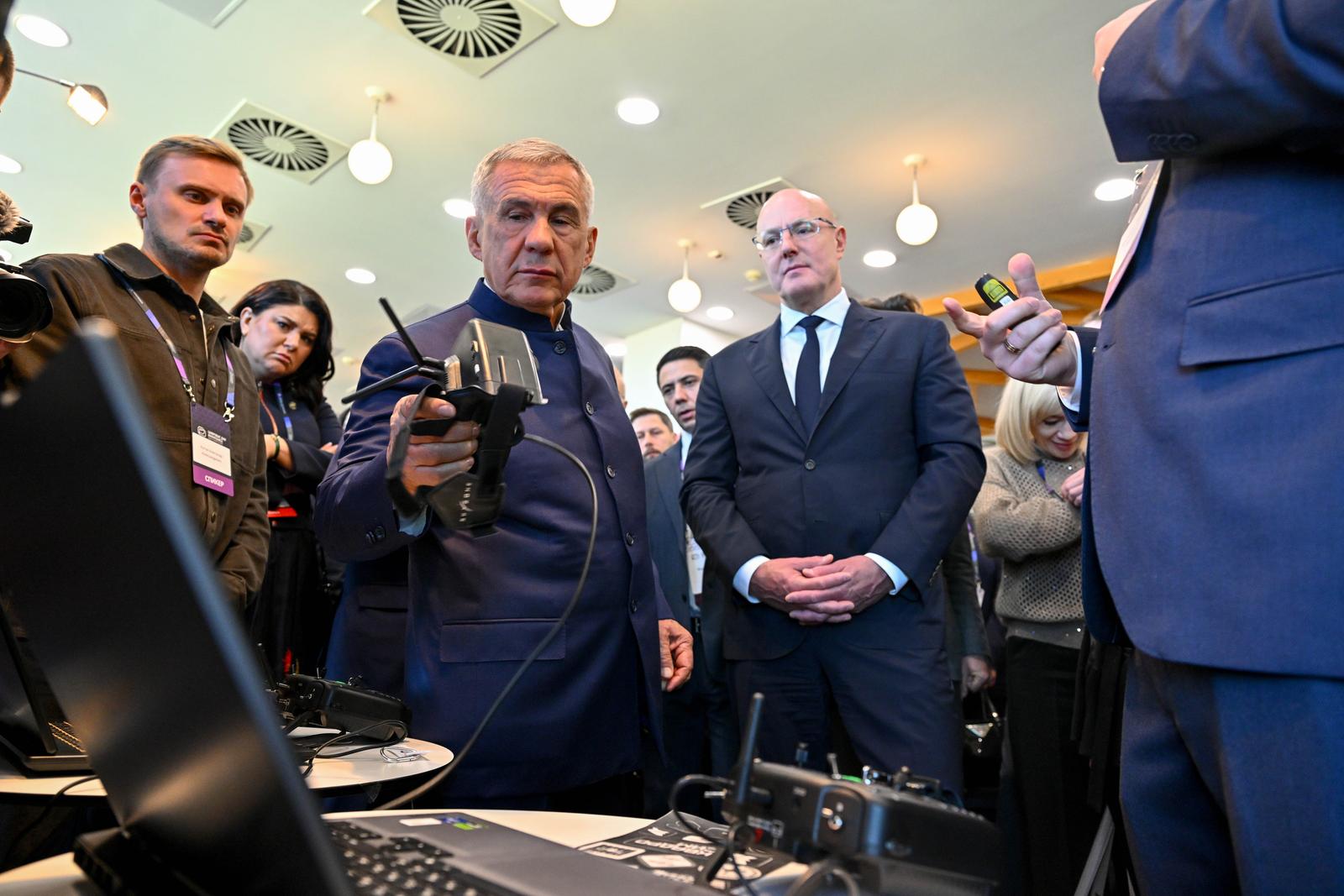
Tatarstan expects to become one of the platforms for testing and further dissemination of AI solutions
Tatarstan has adopted its own artificial intelligence development program and plans to invest 5 billion rubles in this area over the next five years, said Rustam Minnikhanov. The money will be directed to personnel training, scientific research, and infrastructure.
The republic is also training future specialists from school age. Since 2024, the "Physics and Mathematics Breakthrough" program, supported by the President of Russia, has been in effect. During this time, 40 physics and mathematics classes have been opened, where about a thousand schoolchildren study, and 200 clubs, covering more than two thousand children. This year, a similar program for natural science disciplines — "Physics and Chemistry Breakthrough" — was launched.
Minnikhanov noted that leading universities in the republic are also conducting AI research. Kazan Federal University analyzes DNA databases for use in medicine and pharmaceuticals, and Kazan National Research Technical University named after A. N. Tupolev works on information security tasks. Research centers also operate at industrial enterprises.
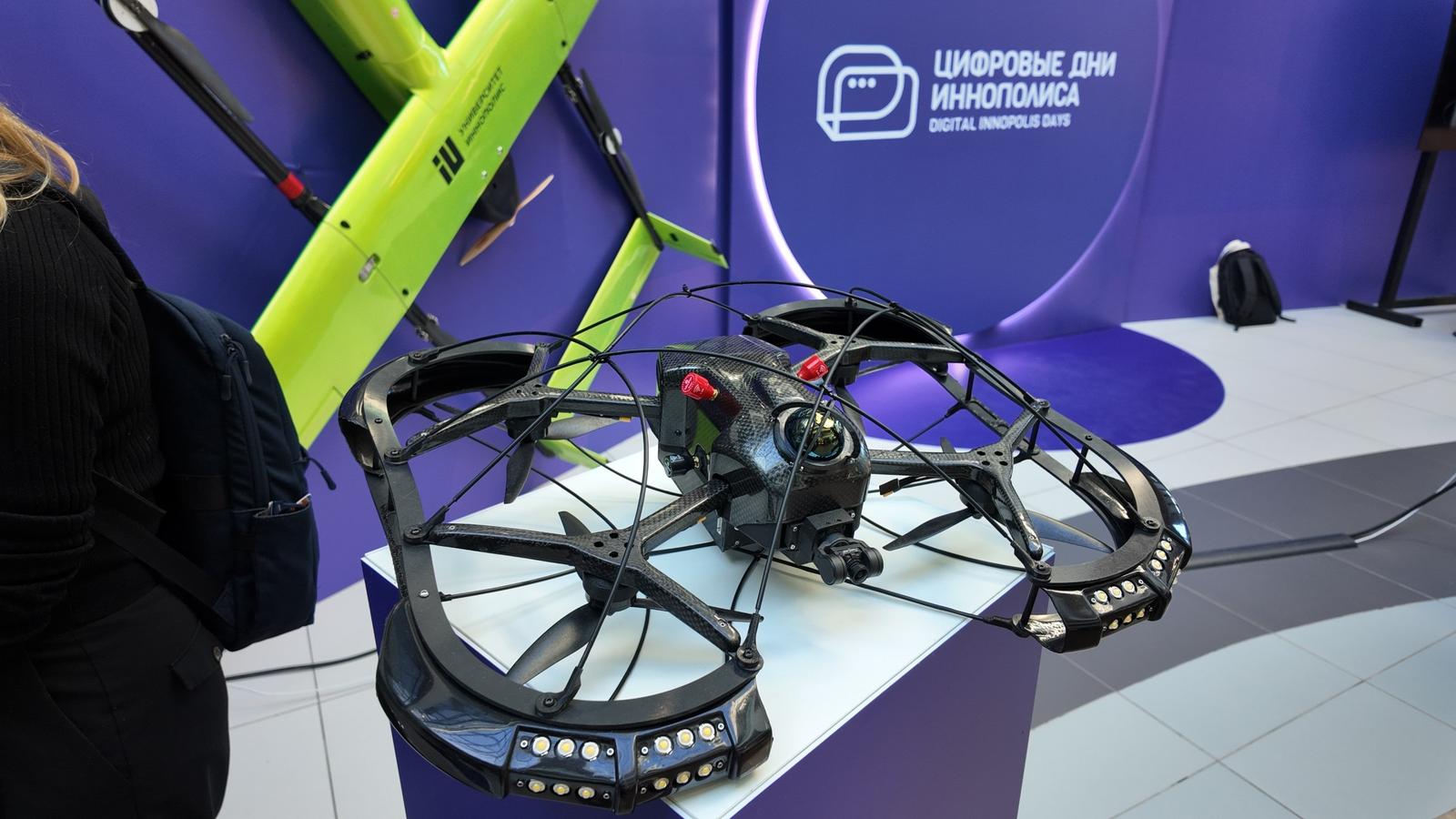
The "Digital Days of Innopolis" forum has been held since 2021
Over five years, the forum has gathered 15,107 in-person participants from more than 500 cities in Russia and 30 countries. 1,325 experts gave educational lectures. This year, the event was attended by more than 2.3 thousand people.
The exhibition also showcased the project "Na Vysote!" by the All-Russian Popular Front, dedicated to the civilian application of drones and training in piloting and engineering skills. Its official launch took place on October 7 with the participation of First Deputy Head of the Presidential Administration Sergey Kiriyenko and Dmitry Chernyshenko.
Based on the results of pilot project testing, the best solutions are planned to be scaled. Chernyshenko stated that this work should take into account global trends and help Russian developments compete with solutions from other countries.
Read more on the topic:
Never miss our newsAdd this site to your preferred sources to see us more oftenAdd on Google