The Afipsky Refinery in Krasnodar Krai, after the first stage of large-scale modernization, reached a production capacity of 9.1 million tons per year. The main change was the launch of the vacuum gas oil hydrocracking complex: now the enterprise can process heavy oil fractions more deeply, increasing the yield of light oil products. In March 2025, a complex with a total capacity of 3 million tons per year was commissioned at the plant, and investments in the project exceeded 217 billion rubles.
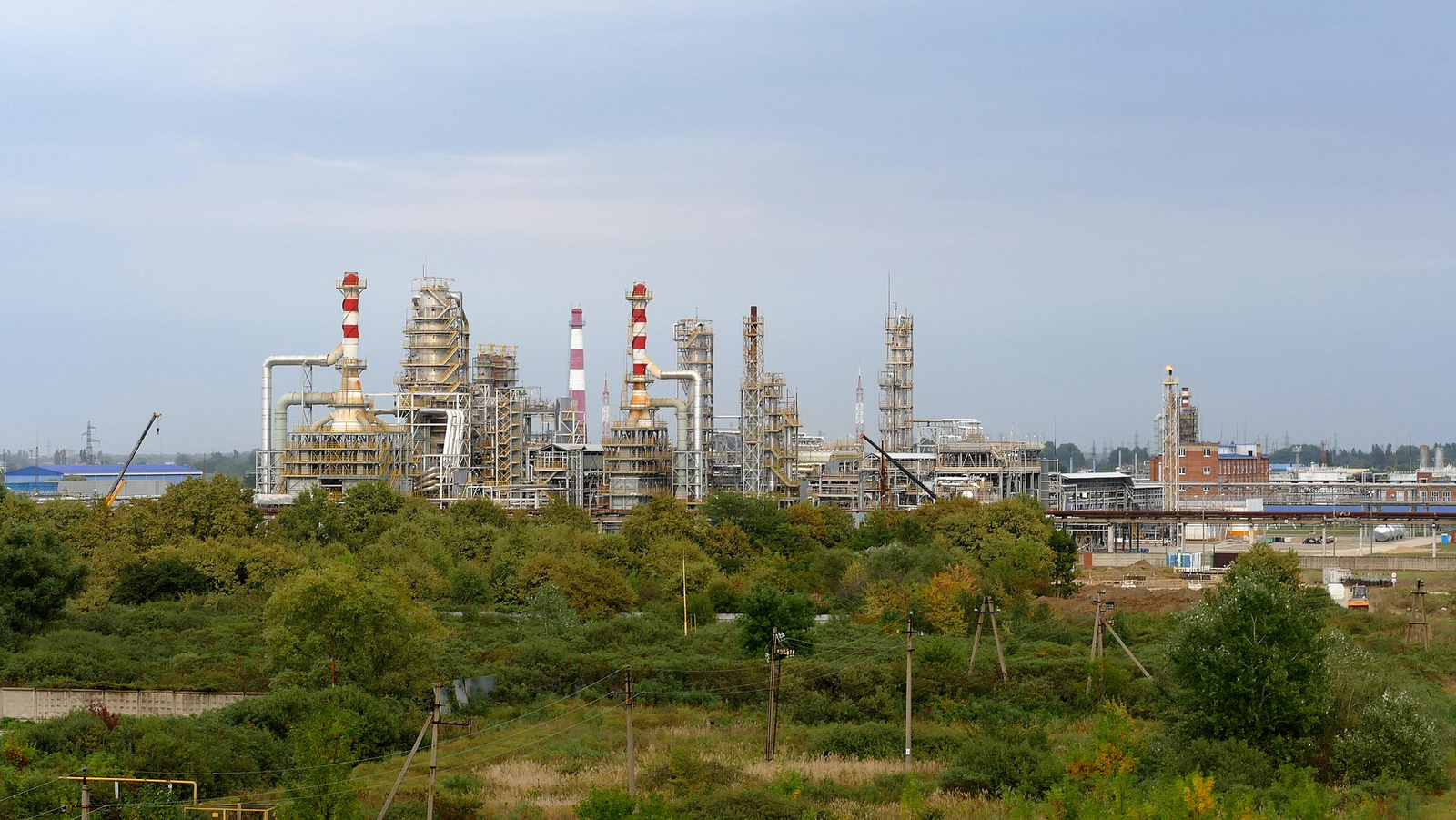
The Afipsky Refinery has been operating since 1963 and is one of the largest oil refining enterprises in southern Russia. The production structure includes two sites: Afipskaya, where deep processing processes are concentrated, and Krasnodarskaya, designed for primary processing with a capacity of 3 million tons of oil and condensate per year. The enterprise's nomenclature includes gasoline fractions, diesel fuel, vacuum gas oil, and technical sulfur.
The main result of the reconstruction is not so much related to the increase in the volume of raw materials, but to what can be obtained from it. The vacuum gas oil hydrocracking complex includes a hydrocracking unit with a capacity of 2.5 million tons per year, hydrogen production, gasoline stabilization, and elemental sulfur production. After the launch of new facilities, the declared processing depth should reach 93%, and the share of light oil products – 82%.
For the enterprise, this means a transition from simple extraction of individual fractions to more complete processing of raw materials. Vacuum gas oil, which previously remained one of the processing products, becomes a raw material for further fuel production. In Krasnodar Krai, after the launch of the complex, they announced the possibility of producing up to 3 million tons of diesel fuel and gasoline per year, and the Afipsky Refinery became the first enterprise in the region and the North Caucasus to produce diesel fuel of environmental class K5.
Modernization does not end there. The next stage of the program will be the construction of a deep oil processing complex with a delayed coking unit and hydrotreating with a capacity of 1.6 million tons per year. Its task is to additionally process heavy residues and further increase the yield of light oil products.
Read more on the topic:
Never miss our newsAdd this site to your preferred sources to see us more oftenAdd on Google