A tank and an aircraft use a turbine in completely different conditions. In cruise flight, an aircraft engine operates in a much cleaner airflow than a tank engine on rough terrain.
'Pervy Tekhnichesky' explains why two parallel branches emerged in the domestic school of tank building: the gas turbine T-80 and the diesel T-90M, which traces its lineage from the T-72.
Turbine provides power, but requires air
A gas turbine engine wins in terms of specific power and provides rapid acceleration. The T-80BVM is equipped with a GTD-1250 with 1250 hp — approximately 10% more than the V-92S2F diesel of the T-90M.
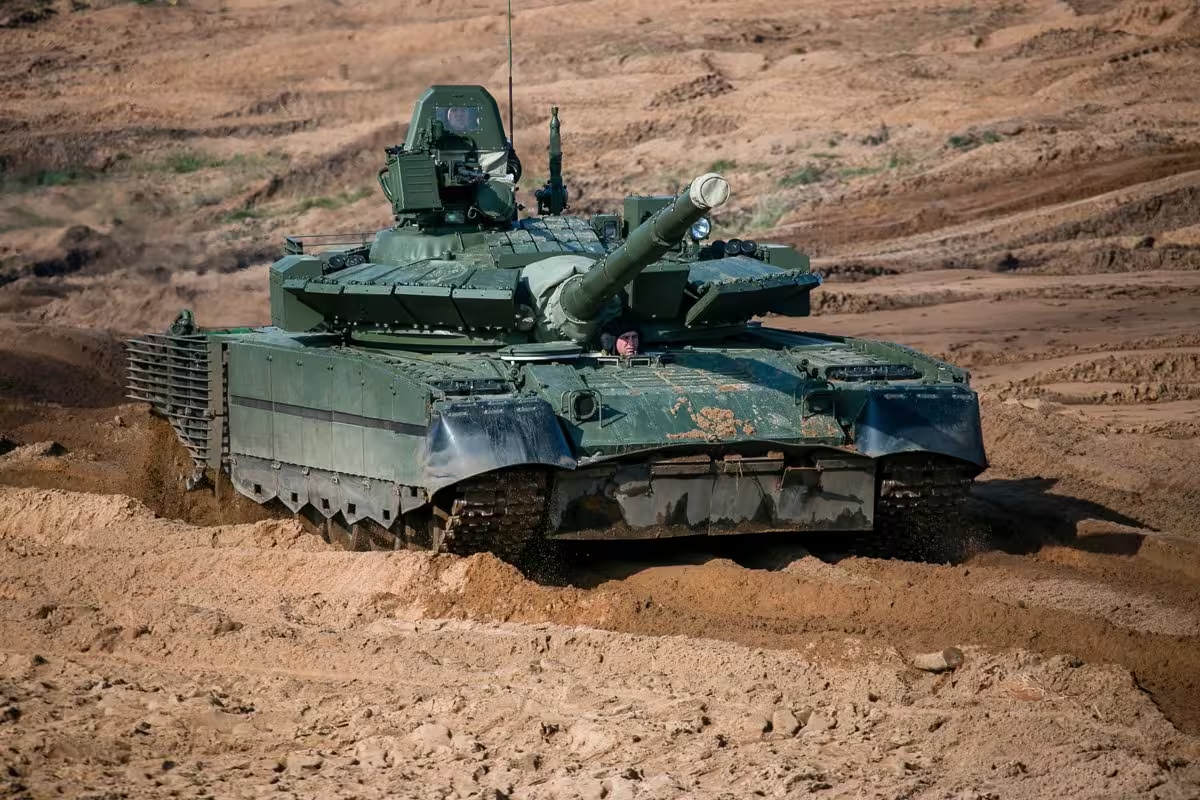
But there is a price. For the same power, a gas turbine engine requires significantly more air consumption than a diesel engine.
For an aircraft in cruise flight, this is a much smaller problem: the air intake is far from the ground. For a tank, the situation is the opposite — the tracks themselves turn the soil into an aerosol.
Sand becomes an enemy
For example, on the American Abrams, the air intake is located in an area where the tracks raise a particularly large amount of dust. The problem also manifested in practice: after the Gulf War, M1A1 crews complained about sand entering the air purification system. After that, the American military conducted additional tests at the Yuma Proving Ground and refined the system.
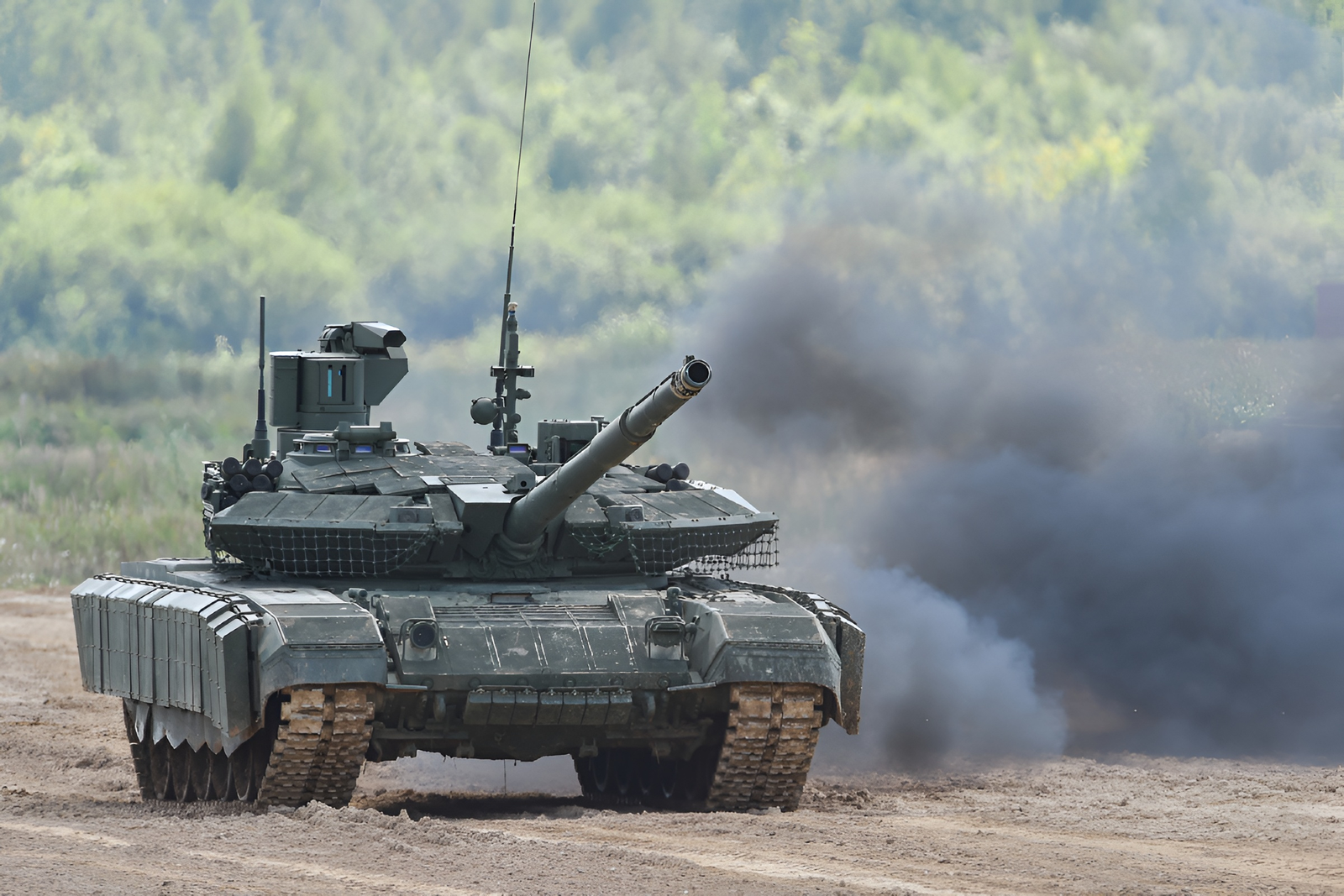
Soviet designers faced a similar problem with the T-80. The original air intakes were located in the upper part of the hull, but after studies of dust flows, they were moved to the upper rear turret space, where air was drawn further from the ground.
The T-80 used self-cleaning filters, vibro-cleaning, and compressed air engine purging. For hot and dusty conditions, there was a special operating mode with fuel supply limitation.
Why diesel remains an alternative
The V-92S2F for the T-90M develops 1130 hp and maintains the compact dimensions of the V-2 family. Rostec indicates a long fuel range for the 'Proryv'.
Diesel loses to the turbine in specific power and acceleration rate, but requires significantly less air for the same power. This means it is easier for it to operate where tracks constantly kick up sand, dust, and fine soil into the air.
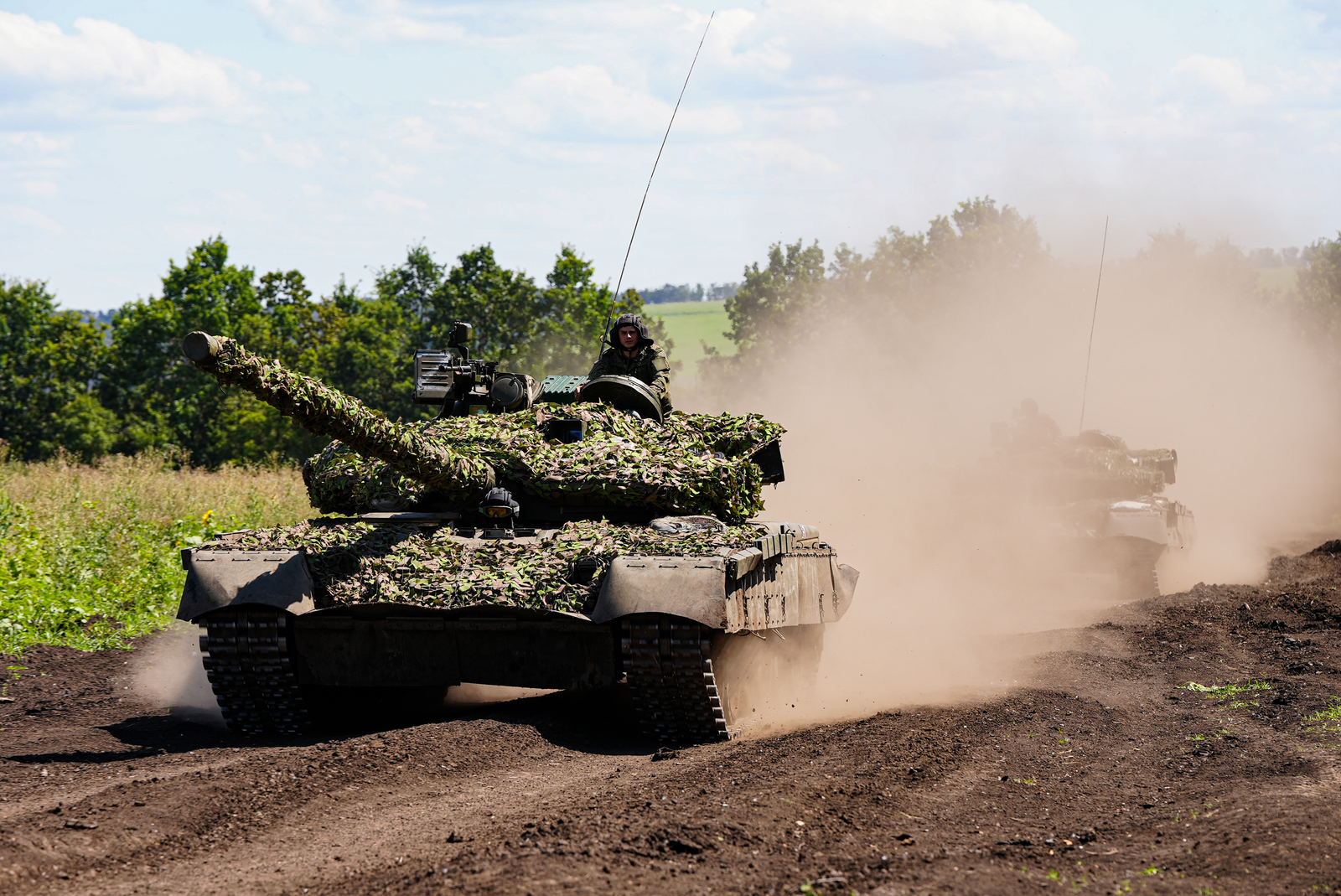
An aircraft engine is poorly suited for a tank not because of its shortcomings, but because the conditions of its operation change dramatically. An aircraft draws air from the sky, while a tank — literally from under its tracks. The turbine provides power and dynamics, but this comes at the cost of a complex and heavy air purification system, increased fuel consumption, and more expensive maintenance.
Read more on the topic:
Never miss our newsAdd this site to your preferred sources to see us more oftenAdd on Google