The PD-35 engine is designed with a gas temperature before the turbine of about 2000 K — approximately 1727 °C. For comparison, the GE9X belongs to the next level in terms of hot section capabilities, although the American company does not publicly disclose the exact temperature before the turbine.
Let's figure out how exactly the idea of Perm engine builders affects the entire design of the power plant and what its specific advantage is.
2000 K — only part of the task
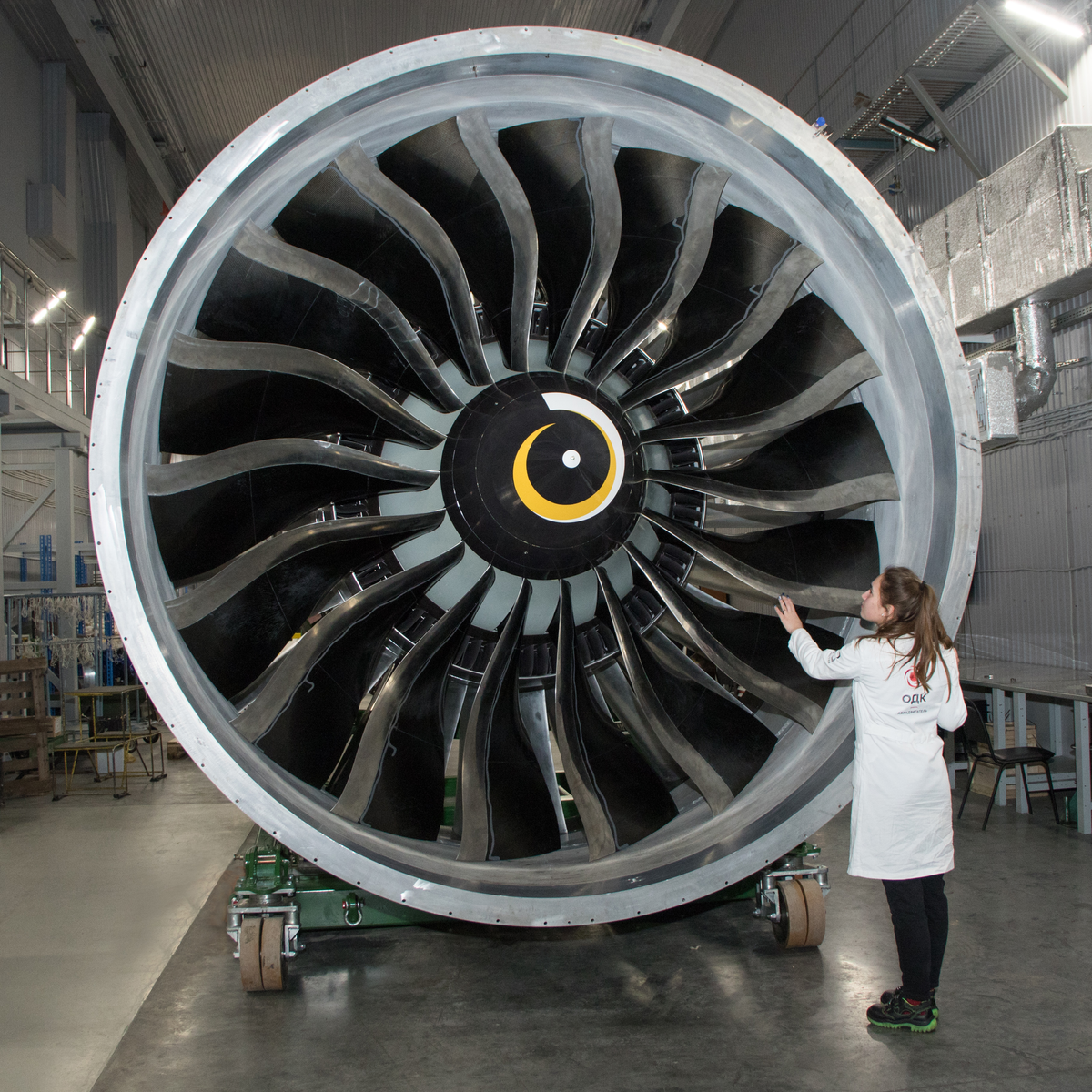
The PD-35 must develop 35,000 kgf of thrust, have a fan diameter of 3.1 m, a compression ratio of 53, and a bypass ratio of 11. ODK expects to achieve a fuel consumption in cruise mode 10–15% lower than previous generation engines (like the PS-90A) and at the level of Western analogues of the 2010s.
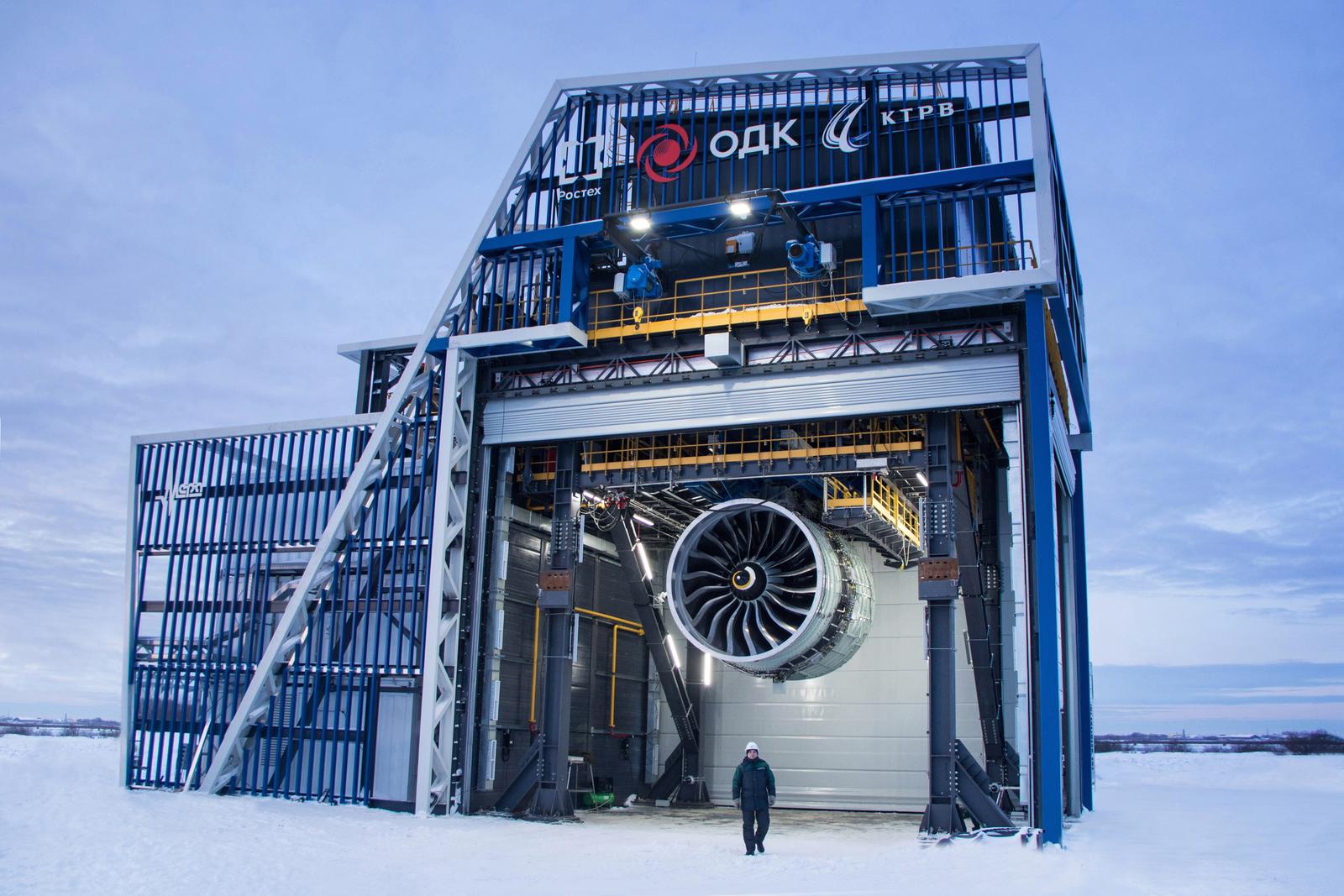
High temperature before the turbine increases cycle efficiency, but at the same time increases the load on the blades. Therefore, every additional degree must be compensated by heat-resistant alloys, coatings, and cooling.
GE9X gained an advantage due to CMC
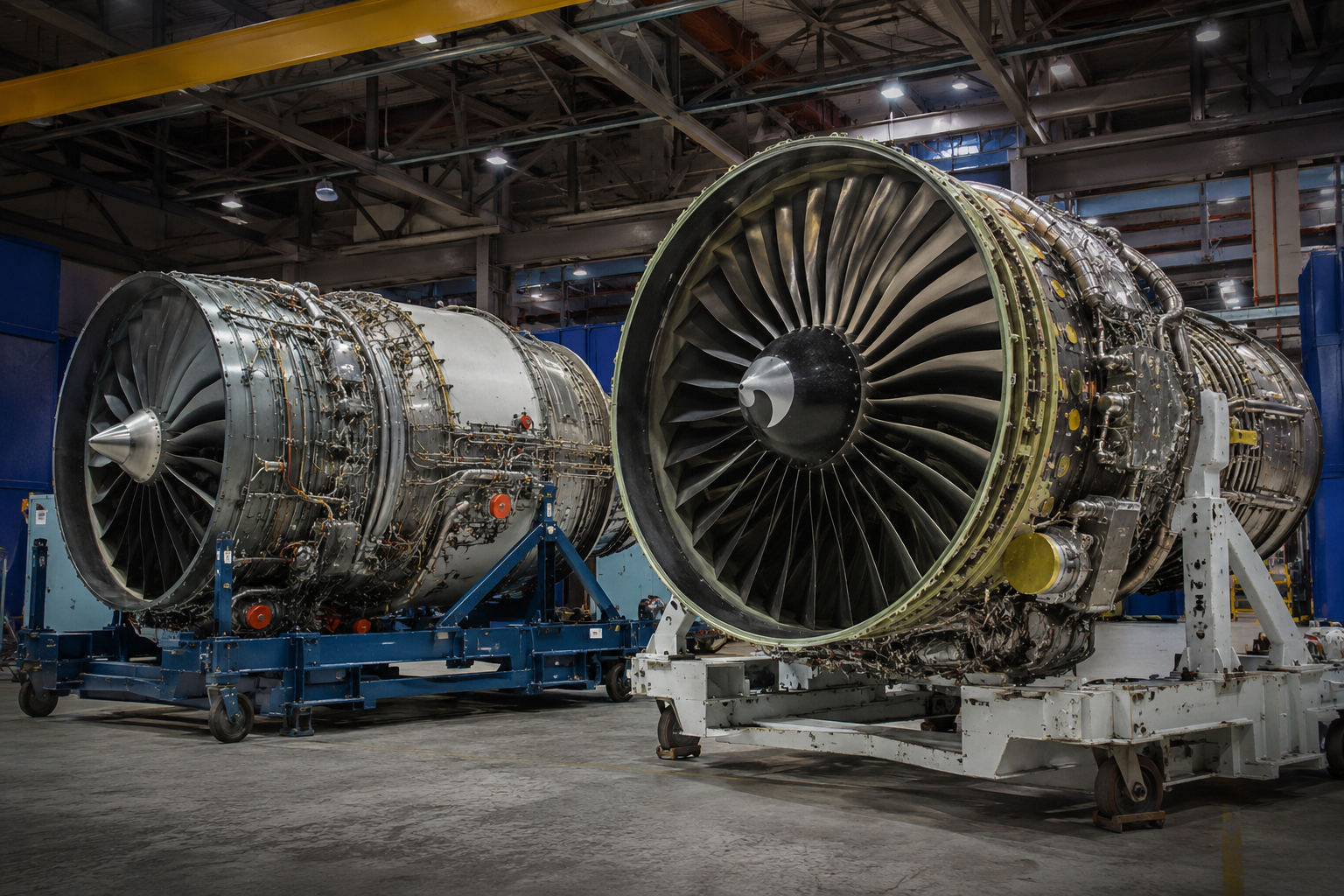
The GE9X develops about 105 thousand pounds, or 47.6 tons, and its fan has a diameter of 134 inches — 3.4 m. The engine received an 11-stage high-pressure compressor with a pressure ratio of 27:1, and the total pressure ratio reaches approximately 60:1.
The key feature of the hot section is ceramic matrix composites (CMC). GE uses them in the combustion chamber, casing elements, and nozzle guide vanes of the first turbine stages. According to the company, CMCs are approximately 3 times lighter than metal alloys and can withstand higher temperatures, requiring less cooling air.
100 degrees is not just one new material
If the difference is indeed more than 100 degrees, it's not about replacing one part. To raise the temperature before the turbine, the entire gas generator must be improved simultaneously: the combustion chamber, blades, coatings, cooling system, and compressor.
The PD-35, meanwhile, has its own serious performance margin: 35 tons of thrust, 53-fold compression, and an 11-fold bypass ratio. But the GE9X shows where modern engine building is heading: the maximum hot section temperature increasingly depends not on a single heat-resistant alloy, but on a combination of new materials, cooling, and aerodynamics.
Read more on the topic:
Never miss our newsAdd this site to your preferred sources to see us more oftenAdd on Google