Translated with AI from the Russian original.
The Il-96-400M and the Airbus A340-300 belong to the same generation of wide-body long-haul aircraft. Both received four engines, but the Russian airliner turned out to be larger inside and capable of carrying more passengers. The Airbus, in turn, was created with an emphasis on long routes and received more economical engines for its time.
"Pervyy Tekhnicheskiy" compared the two "classmates" across five key criteria and found out which one is better.
Capacity
The Il-96-400M is designed for a maximum of 370 passengers. The A340-300's typical two- or three-class layout accommodates approximately 250–300 passengers.
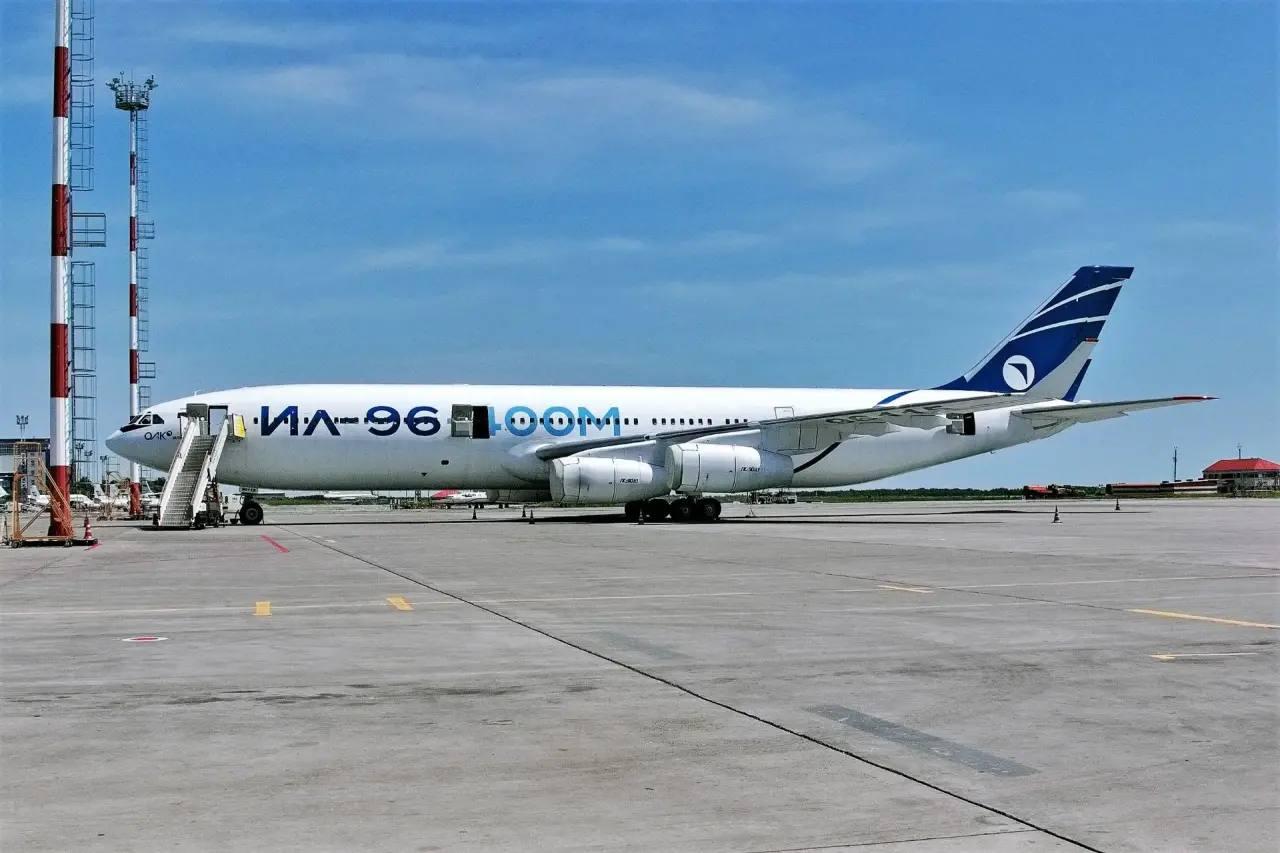
There is also a structural reason. The Il-96 fuselage is wider — about 6.08 m versus approximately 5.64 m for the A340. Therefore, the Russian airliner allows for a 3+3+3 layout, whereas the A340 typically uses a 2+4+2 scheme.
With a similar length — about 64 m — the Il-96-400M is capable of accommodating more passengers, so it wins.
Range
Here, the advantage goes to Airbus. The Il-96-400M claims a range of up to 8100 km with a commercial payload of 40 tons. The A340-300's maximum range, depending on the version, reaches approximately 13,700 km.
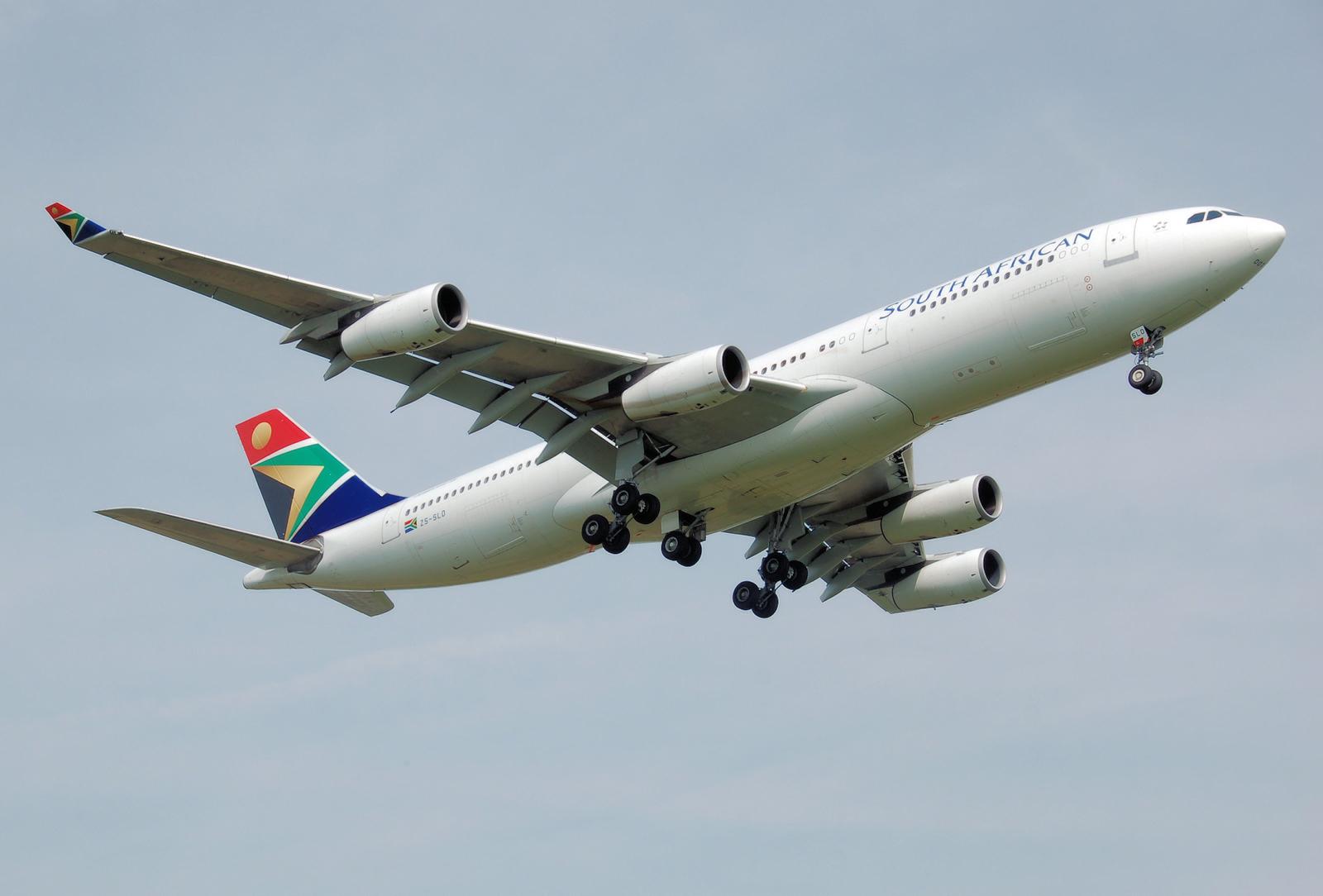
However, directly comparing maximum figures is not entirely correct: range depends on the weight of passengers, baggage, fuel, and the specific aircraft configuration.
Nevertheless, the A340-300's range is significantly greater. It allows for long intercontinental routes, for which the Il-96-400M would require limiting the commercial payload or using an intermediate stop. Here, the A340-300 looks better.
Speed
The gap here is much smaller. The cruising speed of the Il-96-400M is about 850 km/h, while the A340-300's is approximately 875 km/h.
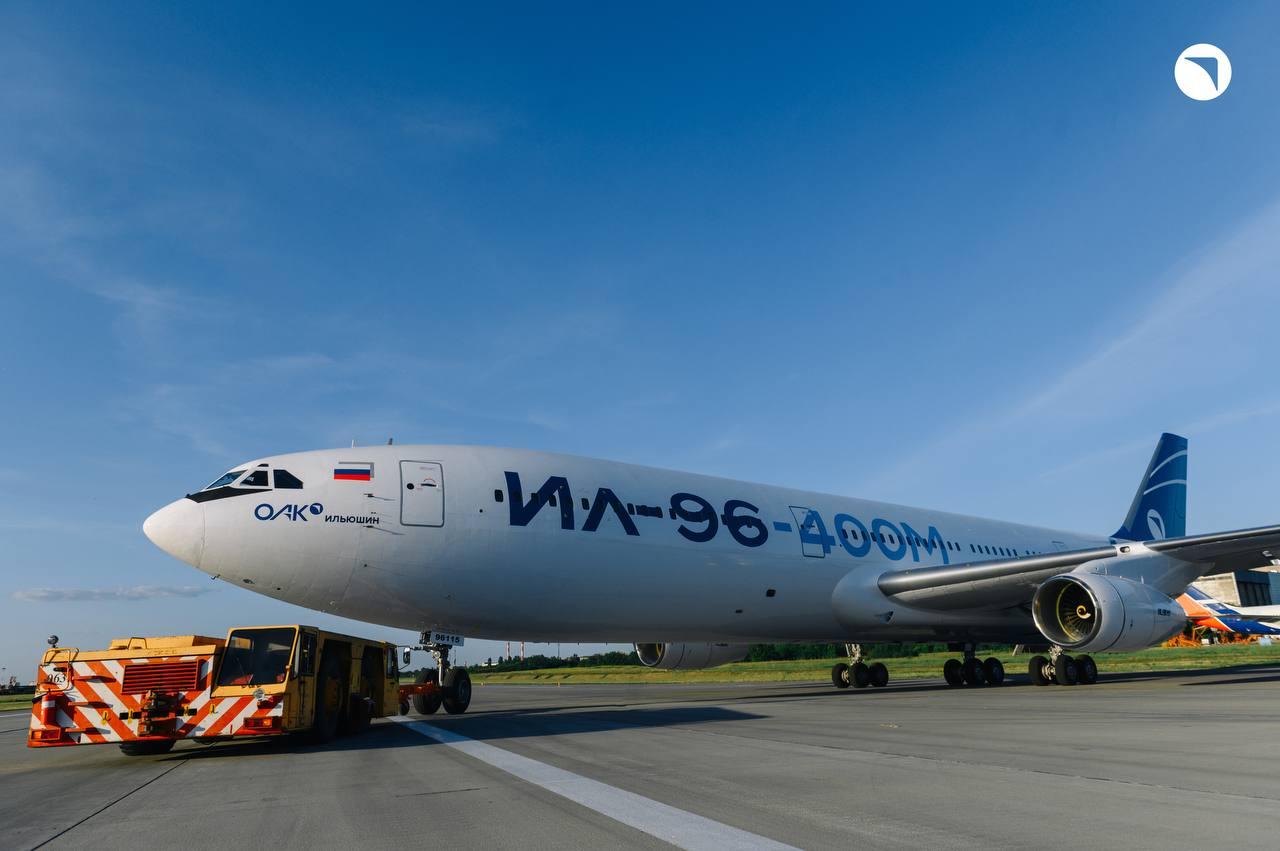
The difference is within a few percent. On a short route, it is almost imperceptible, but on a long flight, the Airbus will be able to slightly reduce flight time — we give it a point.
Weight and Payload
The maximum takeoff weight of the Il-96-400M is about 270 tons, and the maximum commercial payload reaches 58 tons.
The A340-300's maximum takeoff weight, depending on the modification, can be about 276 tons, while its commercial payload is lower — approximately 50–52 tons.
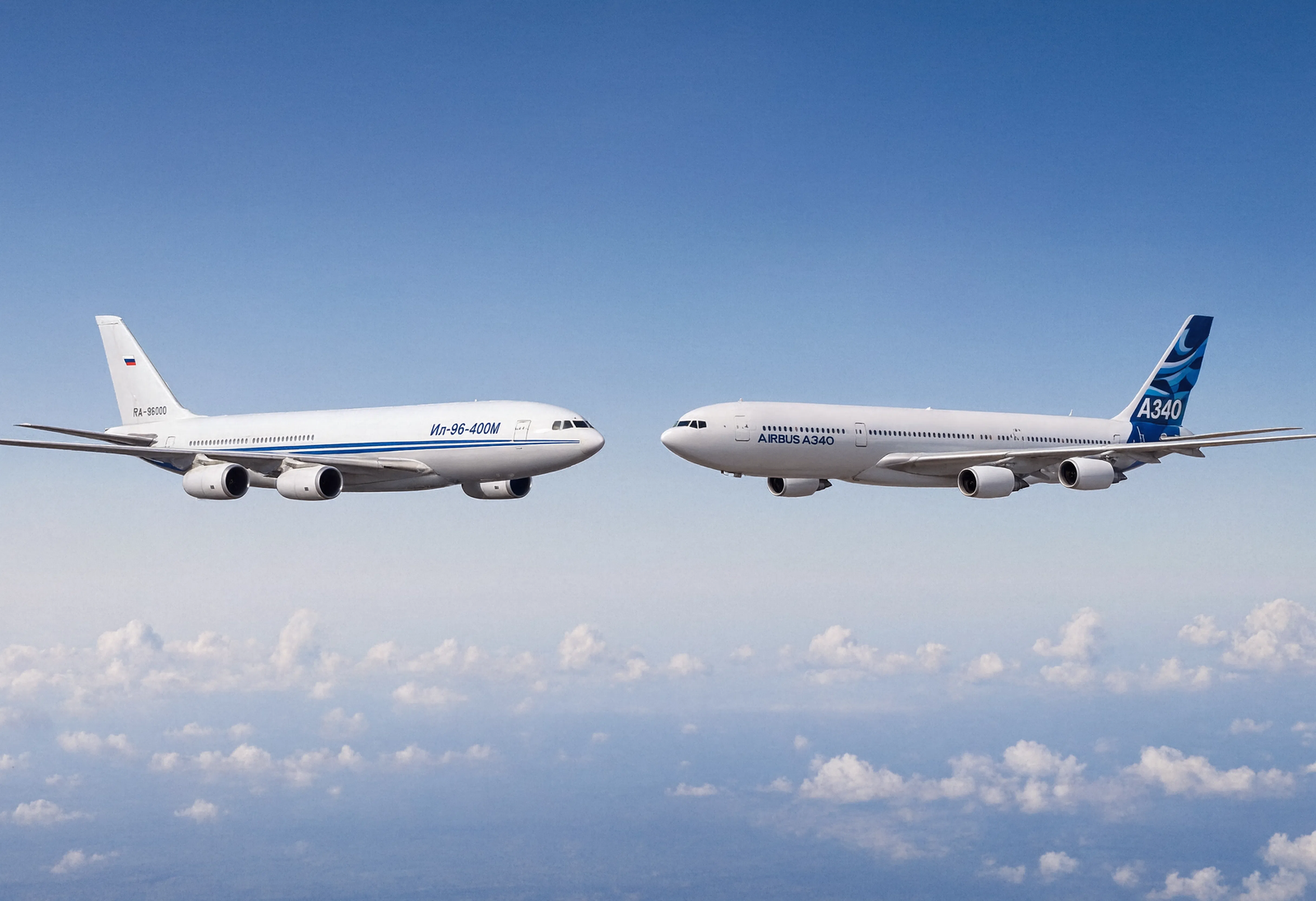
But the maximum payload does not mean the ability to simultaneously take it and fly to the maximum range. When increasing the fuel reserve, the commercial load has to be limited.
In terms of the absolute value of the maximum commercial payload, the advantage remains with the Il-96-400M.
Engines and Fuel Consumption
The Il-96-400M is equipped with four PS-90A1 engines with a thrust of about 17.4 tons each. The A340-300 received four CFM56-5C engines, with specific engine variants differing in thrust.
The main problem of the Il-96 is the four-engine scheme itself in combination with previous-generation engines. The A340 is also not considered economical by modern standards, but the CFM56 has a huge operational base and higher fuel efficiency. On the same route and with a comparable load, the A340-300 wins.
Final score — 3:2 in favor of the Airbus A340-300
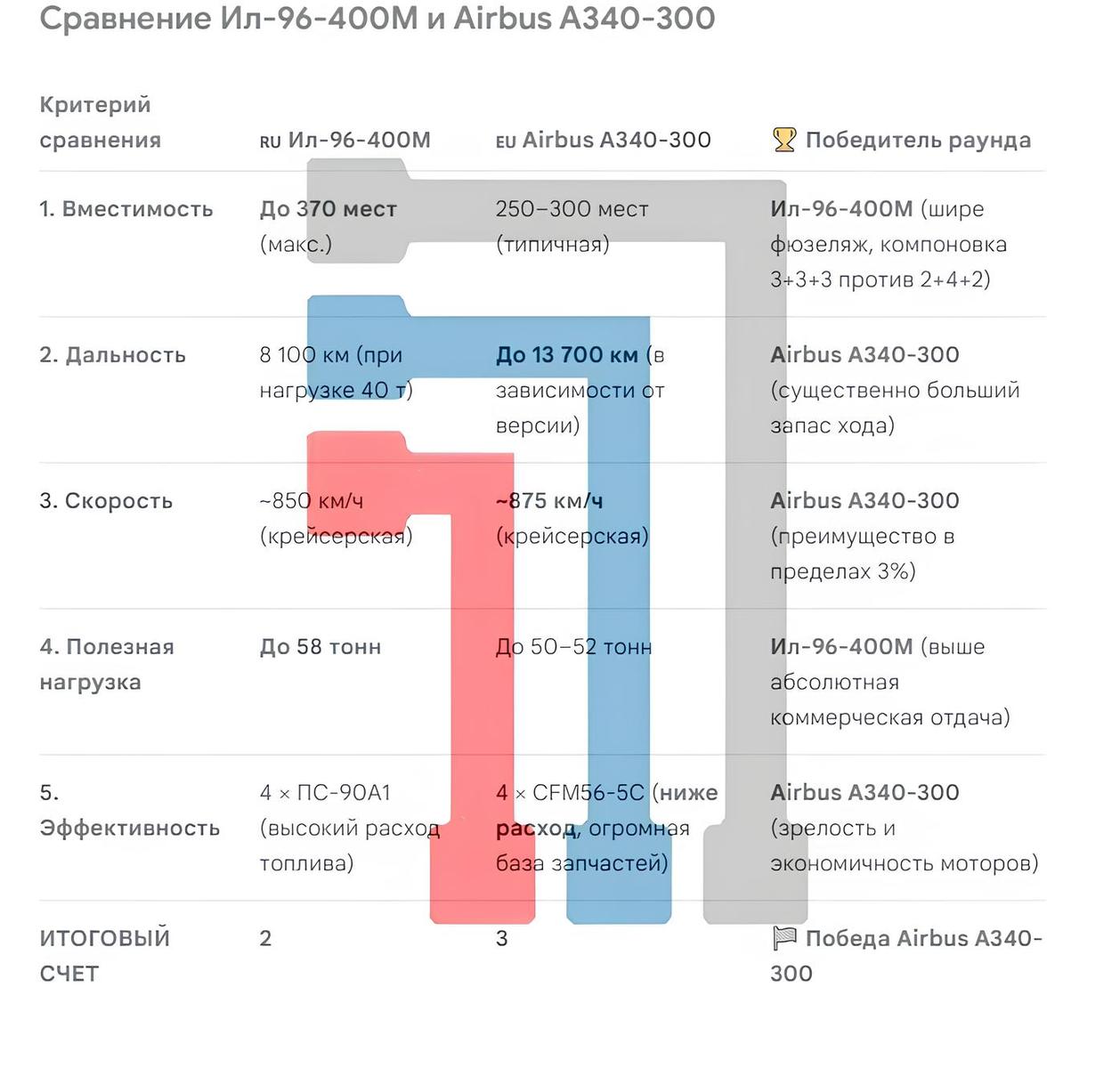
The Il-96-400M wins in terms of capacity and maximum commercial payload, but loses to the Airbus in range, speed, and power plant efficiency.
Its main limitation is the economics of the four PS-90A1 engines. This is where the A340, despite the age of its design, gains a decisive advantage.
Read more on the topic:
Never miss our newsAdd this site to your preferred sources to see us more oftenAdd on Google

















