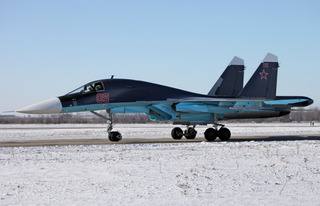
The Su-57 and F-35 are often referred to as direct competitors, although they were created under different concepts. The Russian aircraft belongs to heavy multi-role fighters, while the American F-35 is a lighter multi-role aircraft with an emphasis on stealth and reconnaissance.
Military experts and analysts often provide only one argument in favor of one fighter or another. In our analysis, we will try to identify the winner based on five key criteria that are put forward as mandatory requirements for the most modern combat vehicles.
Speed and Maneuverability
The Su-57 is capable of speeds of about M=2, while the maximum speed of the F-35 is limited to approximately M=1.6.
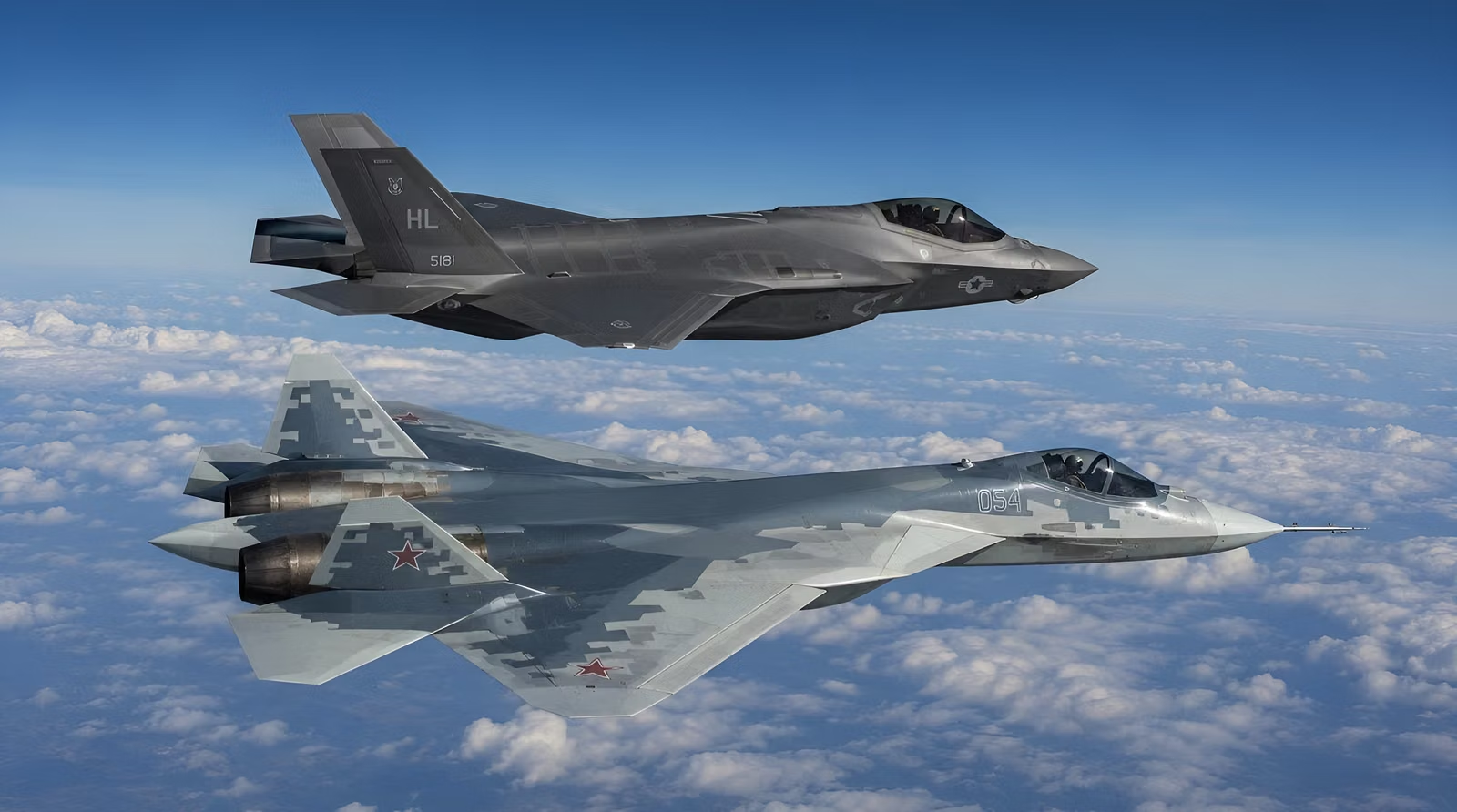
The Russian fighter also has two engines and is designed to maintain high maneuverability at high speeds, so we give the victory to the Su-57.
Stealth
Here, the advantage is on the side of the F-35. The American fighter was originally designed as an aircraft with a very low radar cross-section and received a complex of design solutions to reduce visibility.
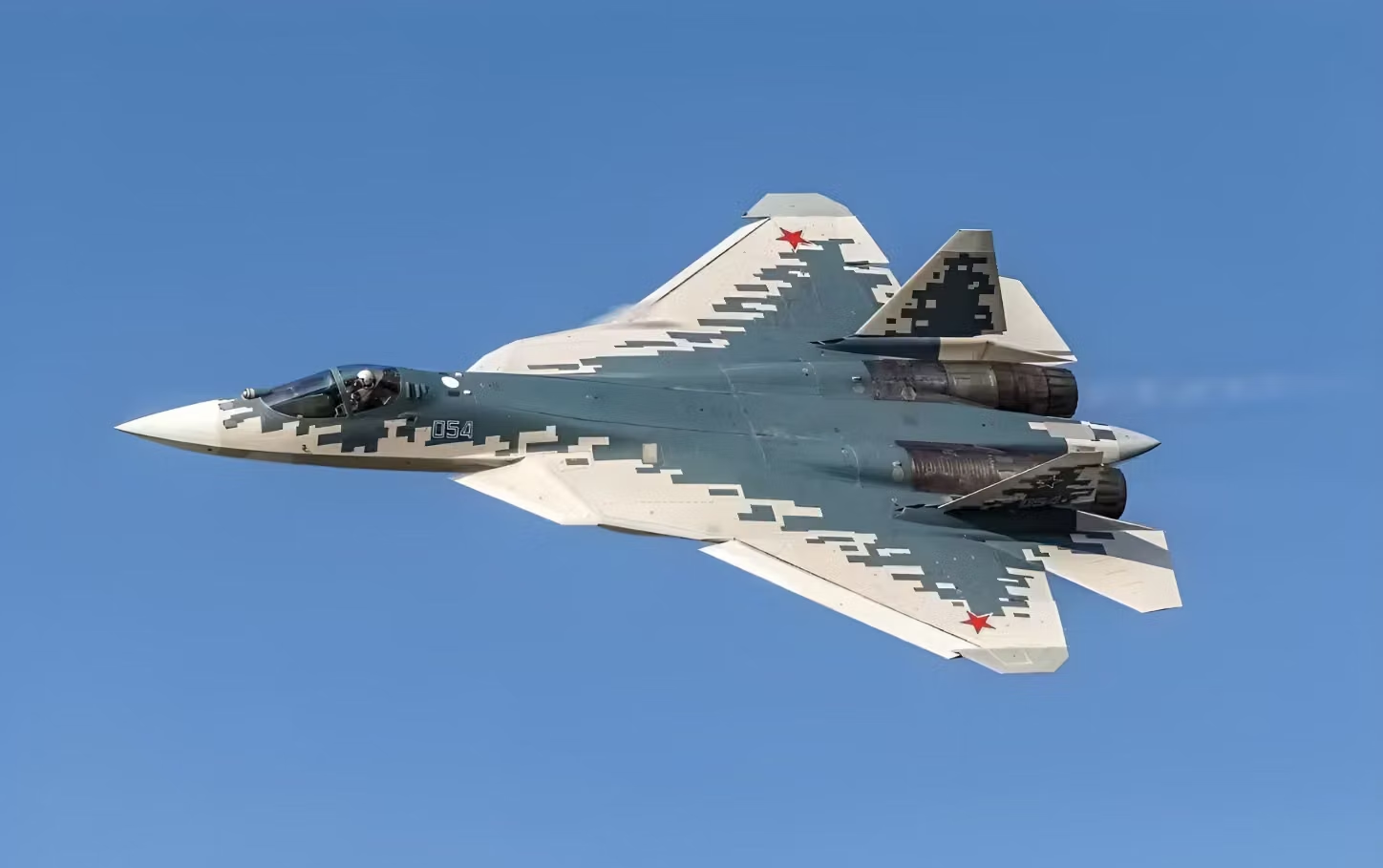
The Su-57 also uses radar cross-section reduction technologies, including a special airframe geometry, internal weapon placement, and radar-absorbing materials. However, the Russian aircraft was built as a universal platform without an emphasis on "invisibility," so we give the victory to the F-35.
By the way, the authoritative foreign publication 19FortyFive noted that the F-35 with an effective scattering area of 0.001 m allegedly surpasses the Su-57 by 1000 times in terms of stealth. The RCS of the Russian fighter was estimated from 0.1 to 1 m².
Radar and Electronics
The Su-57 is equipped with an onboard electronics complex with several radar antennas, including side-looking elements. This architecture allows for expanding the target detection sector.
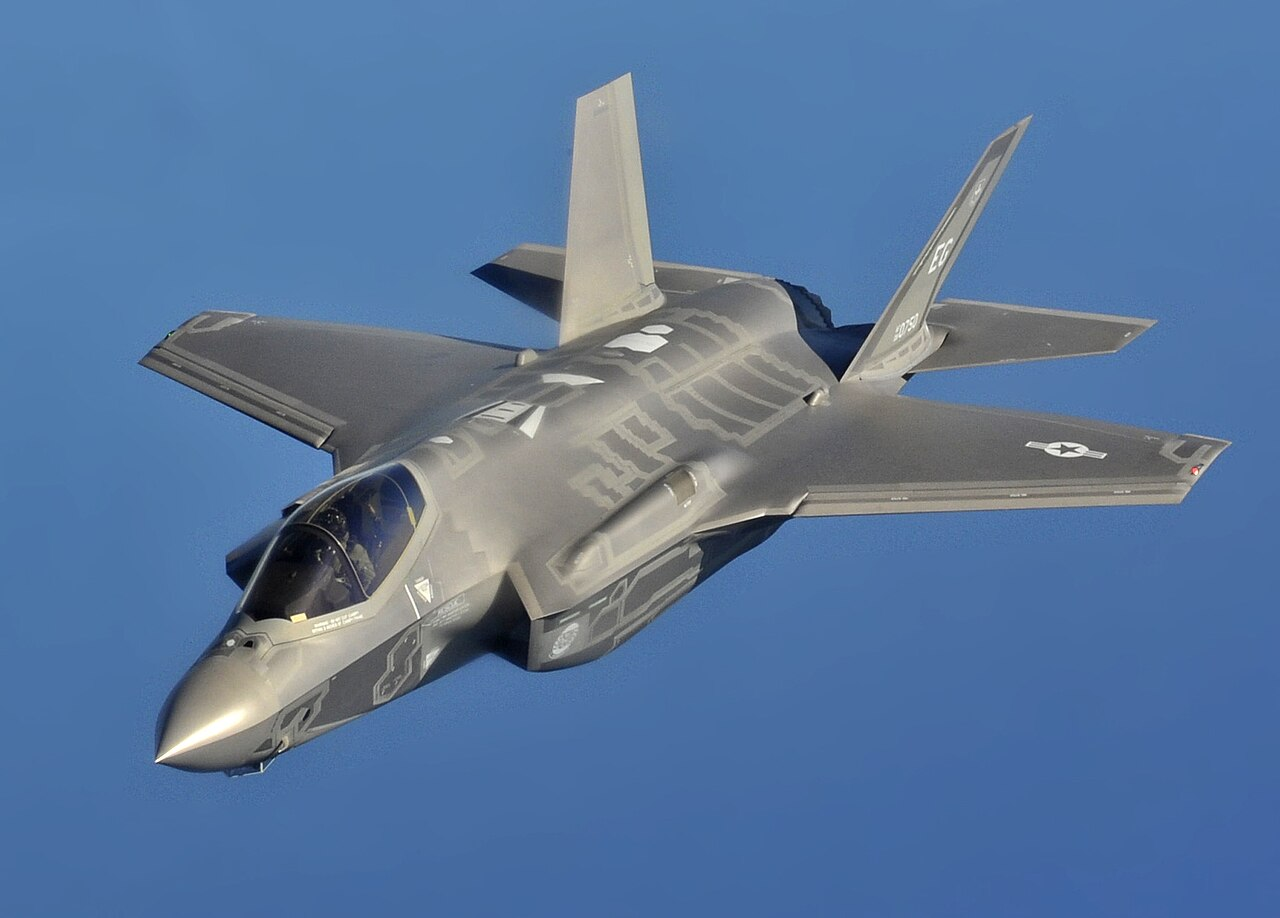
The American aircraft received the AN/APG-81 AESA radar, the EOTS electro-optical system, and the DAS distributed aperture system. One of the key advantages of the American machine is the integration of information from different sensors into a single picture for the pilot, so the F-35 is objectively stronger here.
Armament and Combat Load
The Su-57 has four internal weapon bays and is capable of using a wide range of air-to-air and air-to-surface missiles. If necessary, some weapons can be placed on external hardpoints.
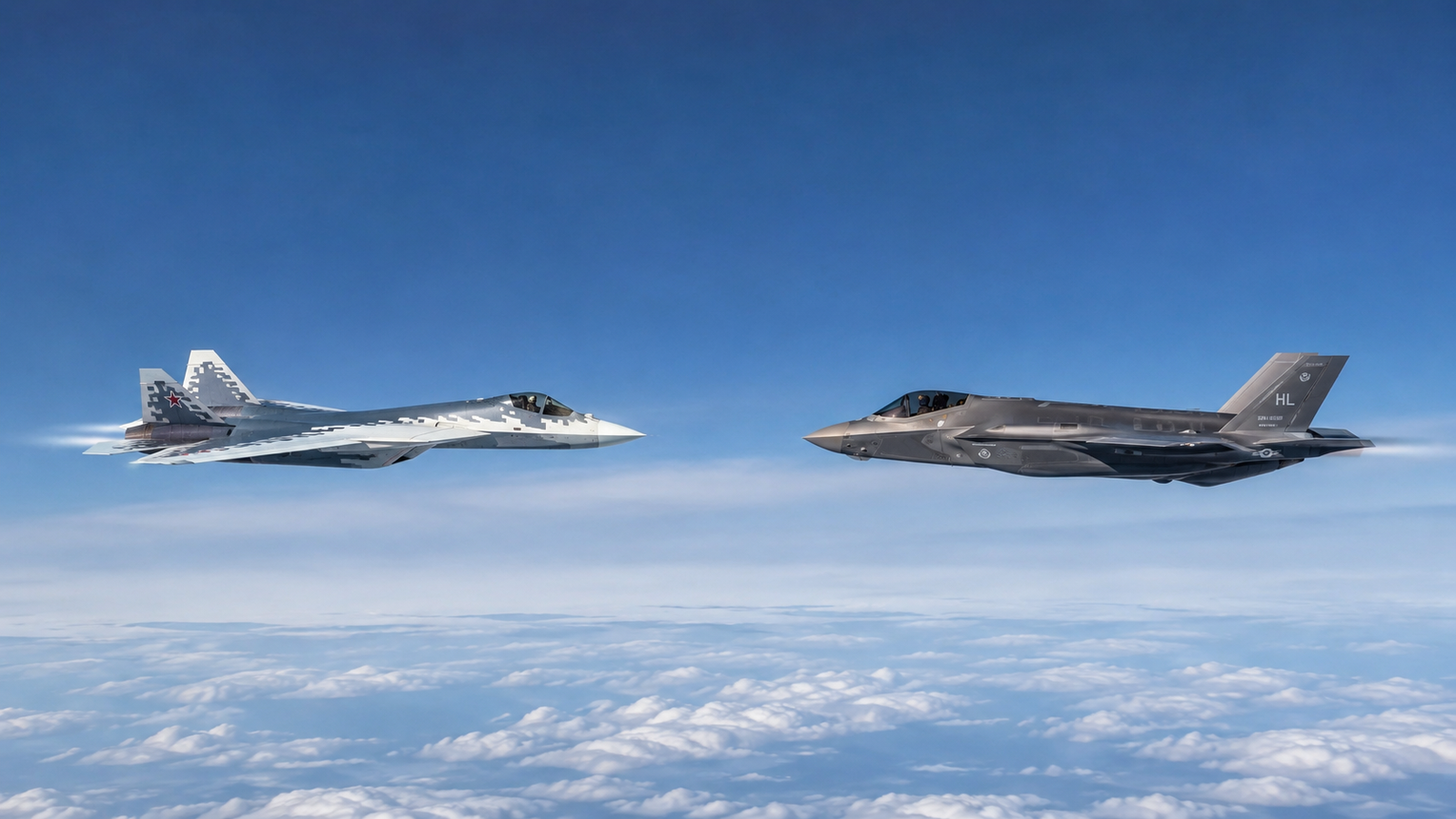
The F-35 has internal bays that allow it to maintain stealth, but their size limits the range of ammunition. With external hardpoints, the American aircraft gains a larger combat load but loses some of its stealth advantages, so the Su-57 gets a point.
Range and Operation
Thanks to its large airframe and two engines, the Su-57 has a significant fuel reserve and a declared flight range of over 3500 km without refueling.
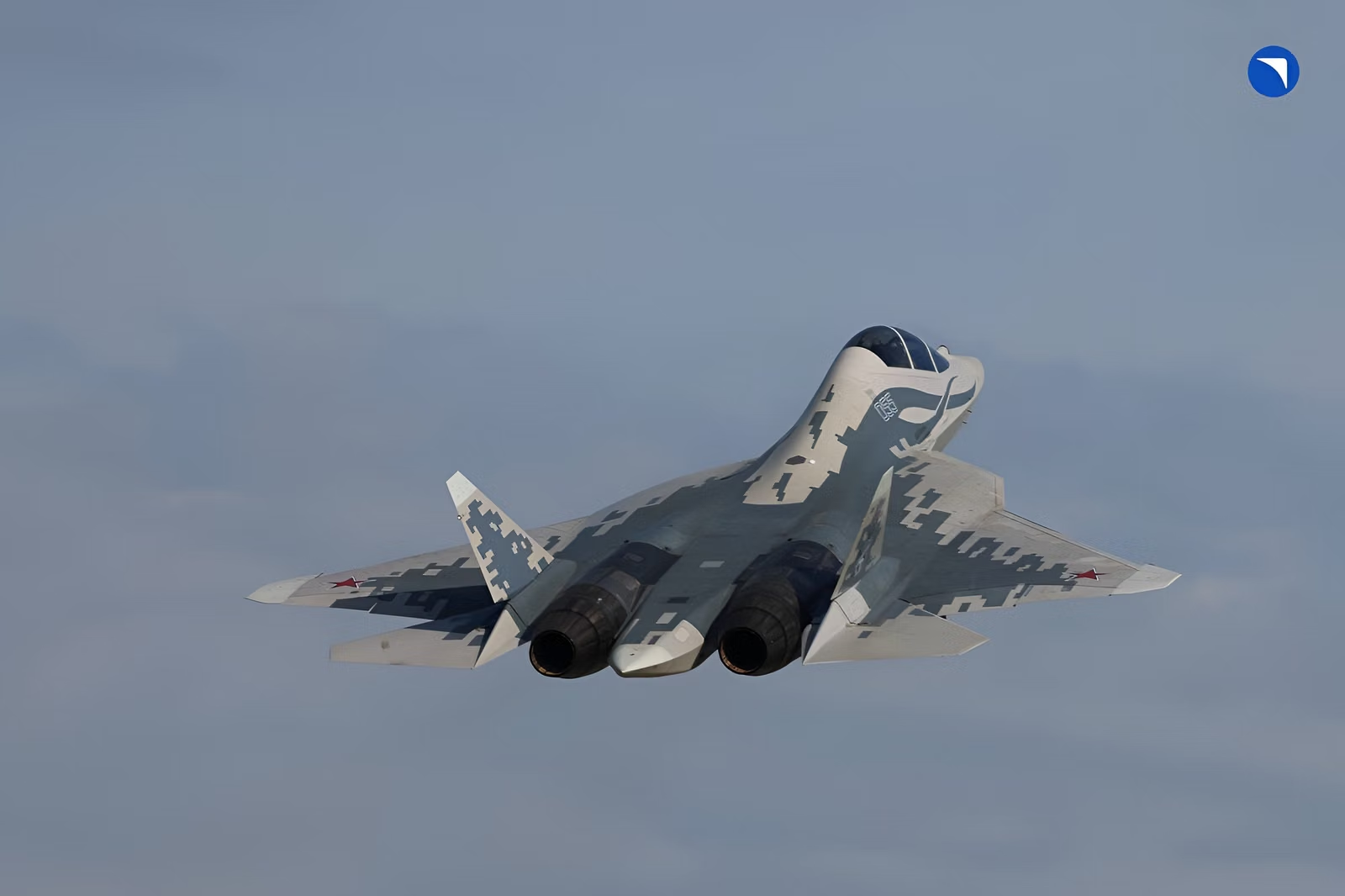
The F-35A has a declared range of about 2200 km, with a combat radius of approximately 1090 km. The American fighter compensates for its smaller fuel reserve with a developed refueling system, but only under ideal conditions. We give a point to the Su-57.
Final score – 3:2 in favor of the Su-57.
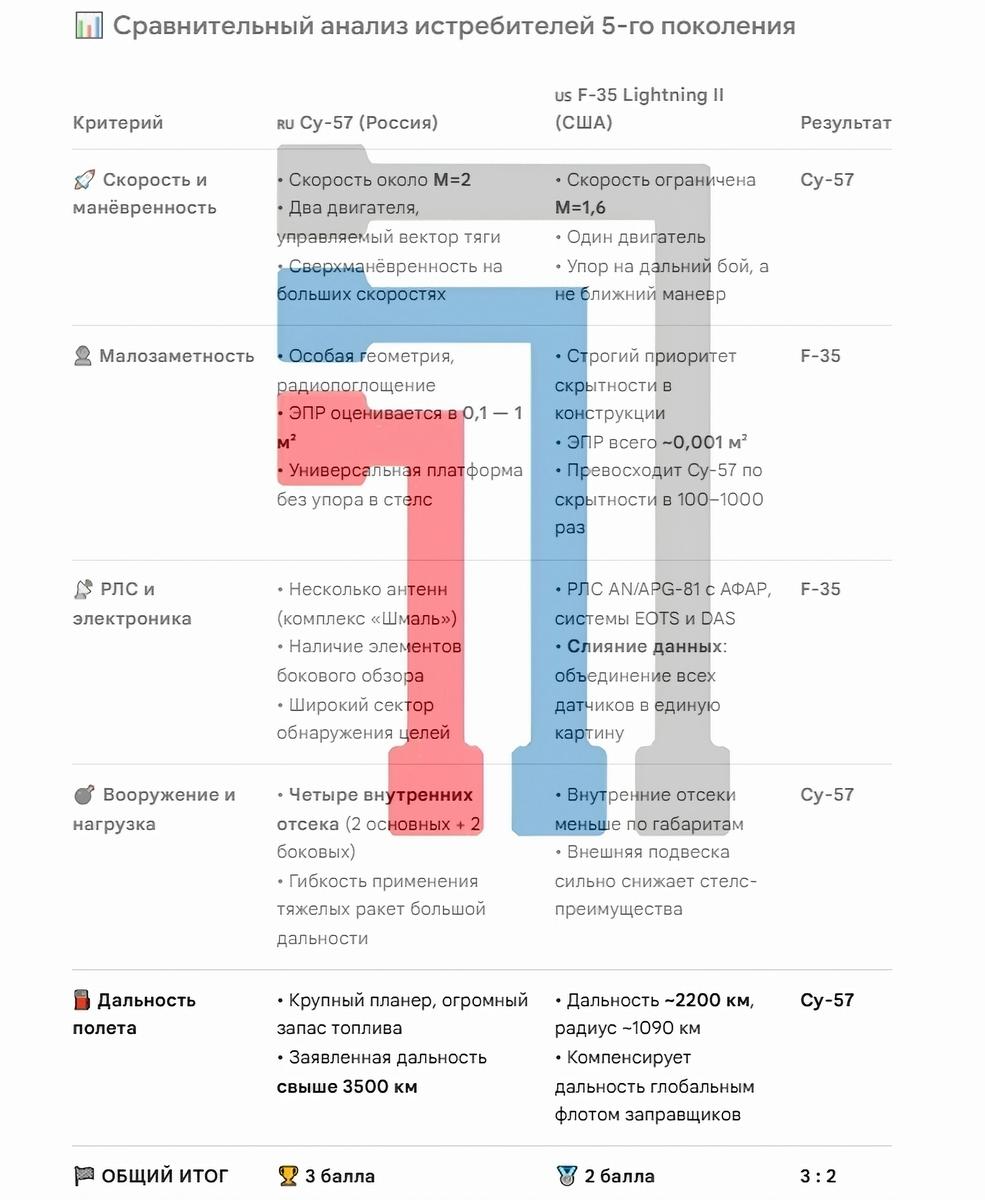
But this score does not mean the unconditional superiority of one aircraft. The Su-57 looks stronger in terms of speed, range, and weapon application flexibility. The F-35 responds with higher stealth and integration of onboard sensors.
Read more on the topic:
Never miss our newsAdd this site to your preferred sources to see us more oftenAdd on Google