Translated with AI from the Russian original.
In modern aircraft, the proportion of composites already reaches 40-50%, and in the future, they will reduce the weight of the airframe by at least 10-15%. Experts from Aerocomposit and MAI spoke about this at Aerospace Science Week.
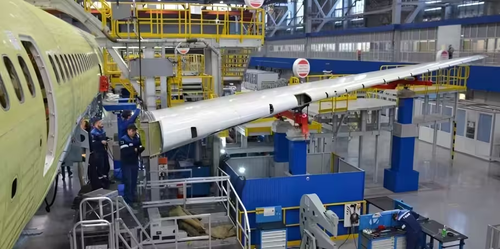
Now, composite materials are not just "light parts," but the foundation on which new generation mainline aircraft are created, noted Anatoly Gaidansky, head of JSC Aerocomposit.
According to him, the use of composites allows designing more efficient wing and fuselage shapes, reducing weight, and simplifying assembly.
In the next 20-30 years, thanks to the use of composites, it is possible to reduce the weight of the airframe by at least 10-15 percent. And most importantly, such a project really exists.
Gaidansky clarified that in the future, such materials will be more widely used in load-bearing parts, leading edges of the wing, ribs, and fasteners.
Accuracy within degrees is a critical parameter
In civil programs, the requirements for the quality of composite elements are growing. The temperature regime directly affects the strength and durability of the part - fluctuations even within ±2°C can change the properties of the material.
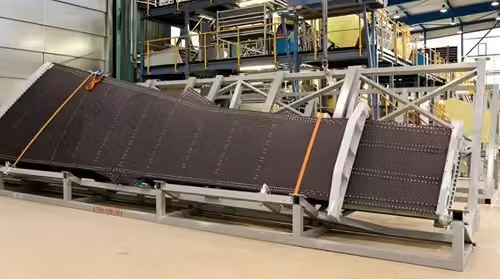
Gaidansky recalled that Russian specialists and scientists from MAI have already developed PCM and the technology for their application, which are comparable in characteristics to foreign samples.
When the structure "tells about itself"
The topic was continued by Yegor Nazarov, Director of the Center for Composite Structures at MAI. He noted that the institute's researchers use methods that are rarely used in the aviation industry - scanning microscopy and tomography, which allow studying the microstructure of the composite.
This method allows you to look inside the composite, identifying potential defects where ordinary calculations are powerless.
This approach is becoming key for the development of repair methods and resource assessment, which is relevant for the entire global aviation industry.
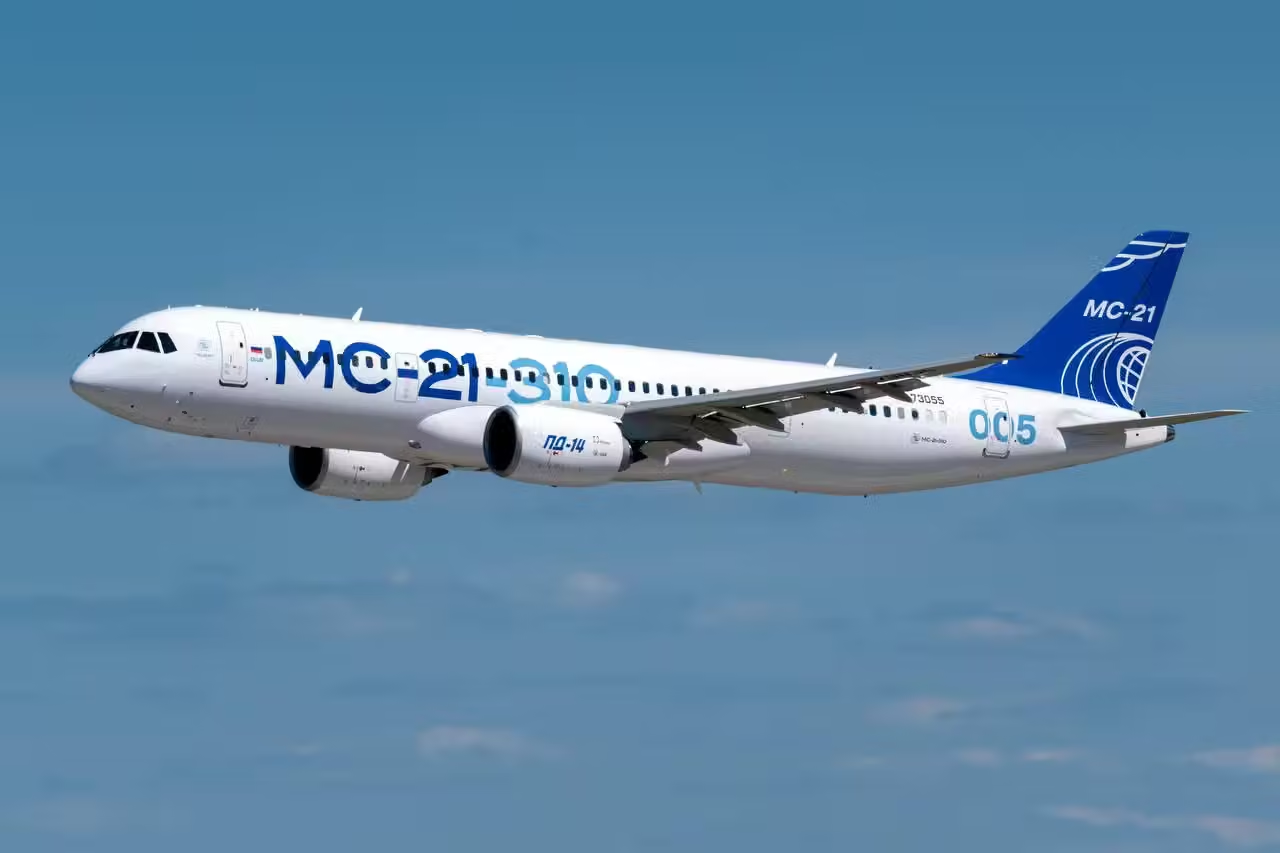
Composites are the basis of future aircraft
Composite technologies are not only about reducing corrosion and fatigue stresses, but also the ability to give the product almost any shape. That is why they are becoming a driver of civil aircraft construction, including the MC-21 aircraft program, in the design of which composites occupy a significant share.
A lighter airframe means fuel savings, increased range, and freedom for new aerodynamic solutions.
Earlier www1.ru reported that half a billion rubles were recovered from the manufacturer of PD-8, PD-15 and PD-35 aircraft engines.
Read more materials:
- Additive technologies have been implemented in all PD-8, PD-14 and PD-35 engines
Never miss our newsAdd this site to your preferred sources to see us more oftenAdd on Google

















