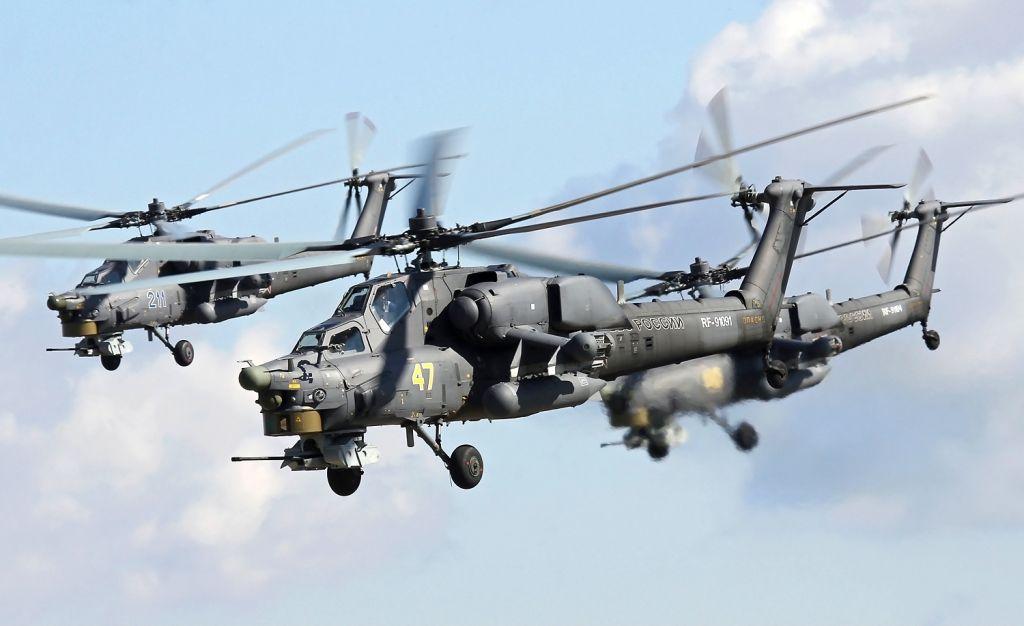
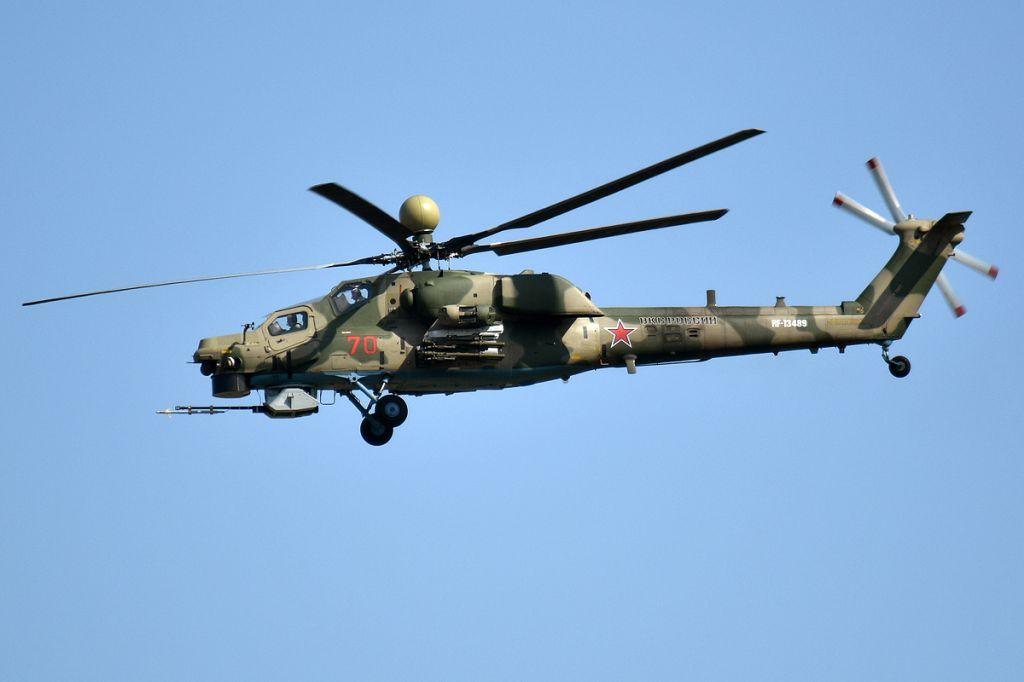
Promising twin-engine German UAV interceptors of the aircraft type from TYTAN Technologies may appear on the front. To effectively counter them, the Russian Aerospace Forces need to modernize the Mi-28NM Night Hunter helicopters, according to military expert Yevgeny Damantsev.
He noted that the maximum speed of the products can reach 300 km/h with a range of up to 20 km. Interceptors can shoot down UAVs by kinetic method - ramming.
If this UAV is equipped with small-sized combat equipment, for example, a VOG-17 grenade, it may pose a serious threat to both medium reconnaissance and strike UAVs, as well as reconnaissance and strike and multi-purpose helicopters.
Therefore, for the Mi-28NM crews to timely detect these UAVs, it will be necessary to develop the latest mast-mounted radar based on an active phased array antenna in the Ka-band, as well as its synchronization with the Vitebsk onboard defense system.
The latter should be equipped with more powerful laser-beam turrets of optoelectronic countermeasures to suppress CCD and MWIR guidance sensors of these UAVs
BKO "Vitebsk" is a Russian electronic warfare system, designed for individual protection of aircraft and helicopters from man-portable air defense systems (MANPADS) and guided missiles. Protection is carried out by creating electronic and optical interference. The first deliveries of the Vitebsk complex to the Ministry of Defense began in 2015.
Earlier www1.ru reported that the Russian Armed Forces began testing a new platform for drones "Pchelka". This is a platform for lifting many copters without catapults into the air and transferring them to the territory of the task.
Read materials on the topic:
Never miss our newsAdd this site to your preferred sources to see us more oftenAdd on Google

















