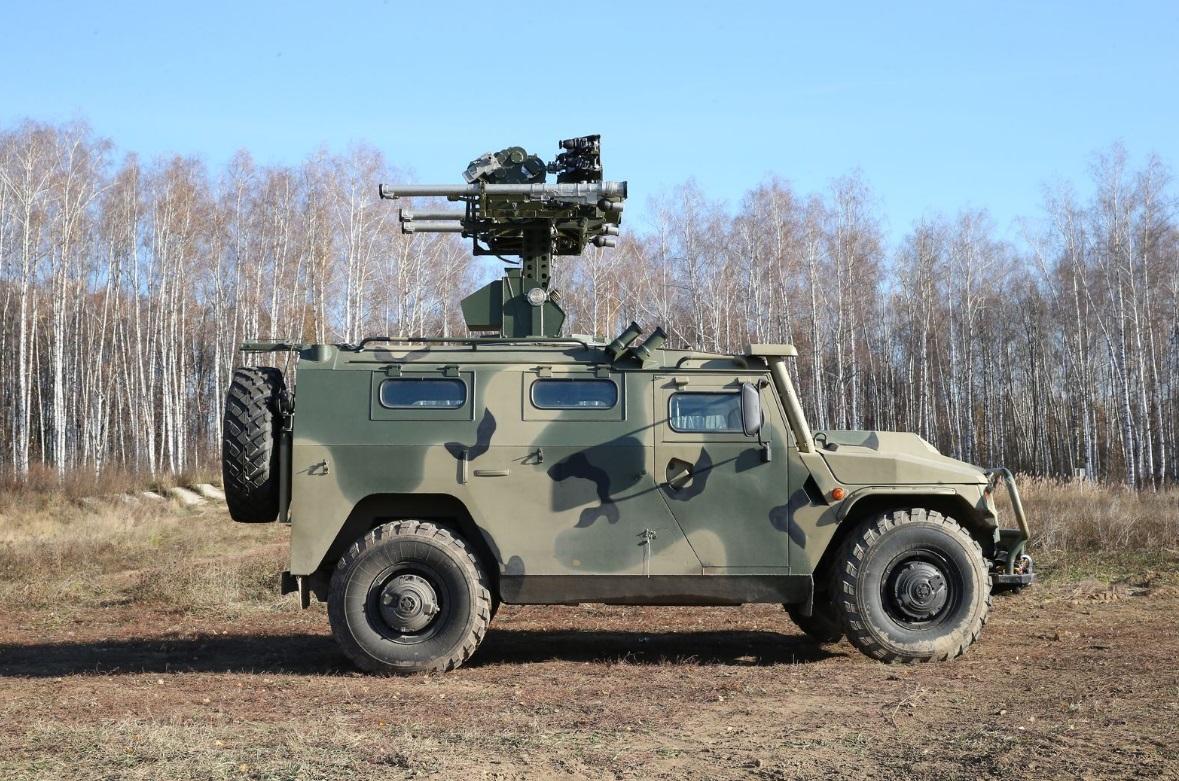
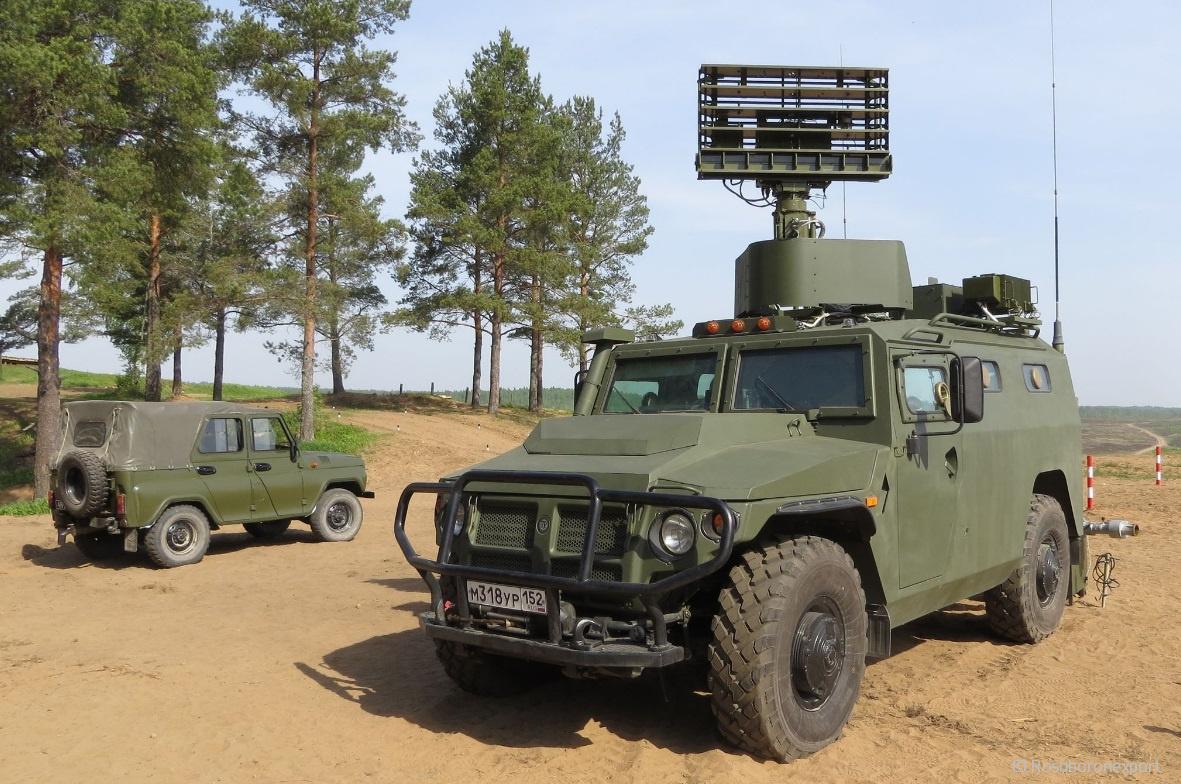
Mobile military short-range anti-aircraft missile systems "Gibka-S" continue to effectively cover units of the Russian Armed Forces from UAVs and cruise missiles of the enemy at the front. They are developed on the chassis of "Tiger" armored vehicles, as well as self-propelled multifunctional radar stations 1L122-1E "Garmon" on a similar highly mobile chassis with high cross-country ability.
Multifunctional radar L-band 1L122-1E are capable of detecting aircraft-type drones and "Baba-Yaga" class with an effective reflecting surface of 0.05 - 0.1 m² at a distance of 8-12 km and establishing their tracks.
Then, target designation is issued via a secure channel to the operator terminal of the "Gibka-S" fire unit with tracking established using a television-thermal imaging sighting system, the optical axis of which is synchronized with the optical axes of the homing heads of 9M336 anti-aircraft missiles.
These inexpensive and effective SAM systems in a stationary version can provide almost 100% coverage of large oil refineries and airbases of the Russian Aerospace Forces from massive attacks by kamikaze UAVs.
Dual-band infrared GSN SAM 9M336 are capable of capturing IR signatures of these targets at a distance of up to 2.5-4.5 km.
In addition to drones, the 9M336 SAM, with timely target designation, "Gibka-S" can also engage targets such as long-range tactical missiles R-360M "Neptune-MD" and low-observable KR SCALP-EG. "Gibka-S" complexes are capable of effectively countering massive raids by kamikaze UAVs such as "Lyuty" and A-22 "Foxbat".
Earlier www1.ru reported that Russian President Vladimir Putin instructed the government to accelerate the development of unmanned aviation in order to provide the country with technological leadership in this industry.
Read materials on the topic:
Lukashenko asked Putin for 10 "Oreshnikov" for Belarus
Never miss our newsAdd this site to your preferred sources to see us more oftenAdd on Google

















