RSC Energia has summarized the results of the second accelerator related to the development of the aerospace industry. In 2024, the accelerator was dedicated to the development of technologies that will be useful for the construction of modules for the future Russian Orbital Station (ROS). The corporation's goal was simple: to make the ROS as accessible and useful as possible for businesses and other customers interested in the development of Russian manned spaceflight.
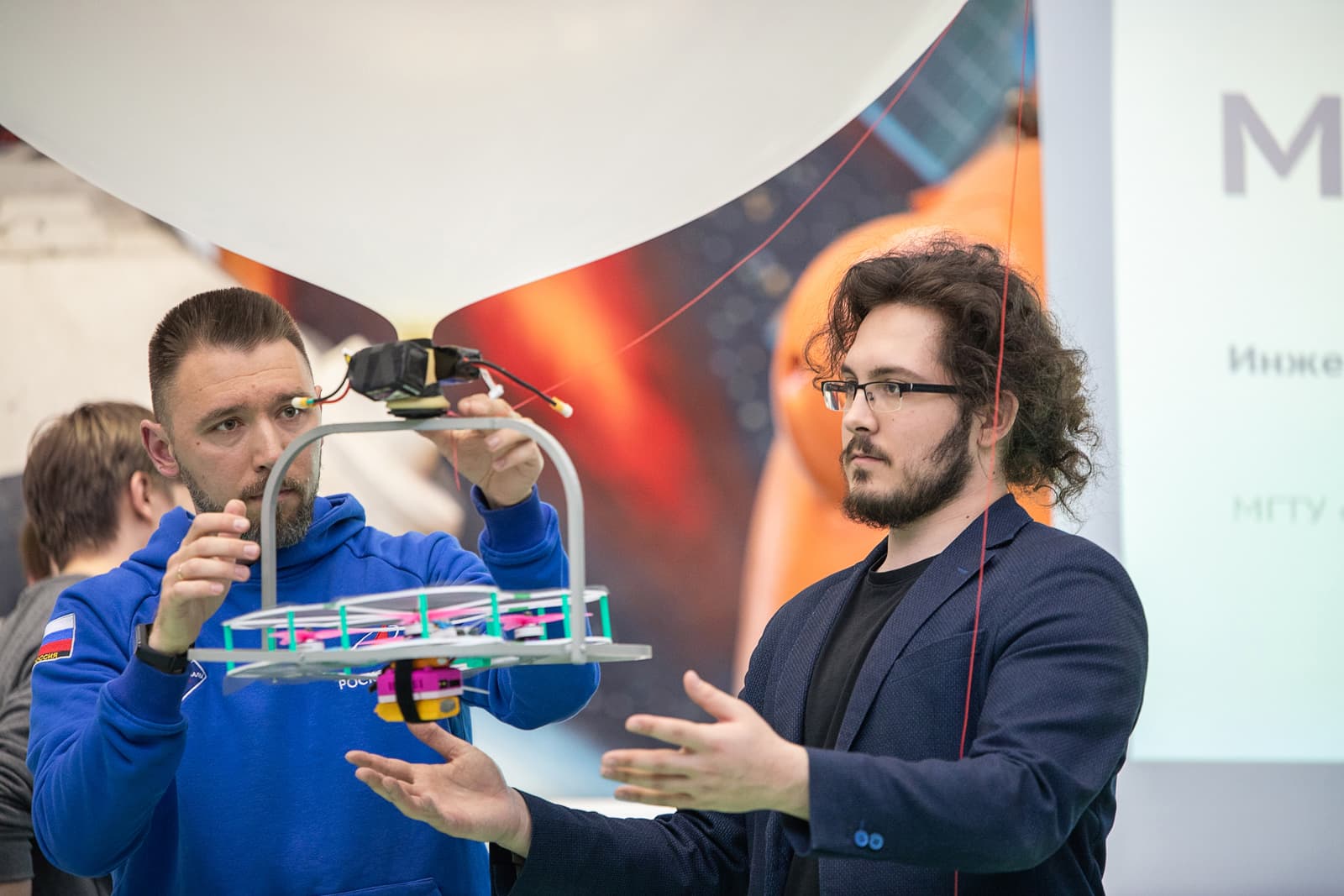
Out of more than 70 applications from startups, industry employees, students, and graduate students of technical universities, 28 suitable works were selected. Only eight of the strongest projects from Samara National University, Bauman Moscow State Technical University, St. Petersburg Polytechnic University, the Keldysh Center, and RSC Energia made it to the final of the acceleration program.
[...]Every project that has undergone acceleration is important, not only the winners, but also all the teams that plan to continue working on their ideas. All of this is designed to orient most new technologies specifically towards the development of the future Russian Orbital Station, the development of its promising modules and target payload. Thanks to the accelerator, we have achieved a certain result, and now it is important to multiply it by constantly moving forward.
The first place was taken by the project "Expanding the functionality of BUBK [onboard complex control unit, editor's note] modular-type devices for ROS and automatic spacecraft tasks." The new version of BUBK can not only control a spacecraft or ROS module, but also independently collect, analyze data, and provide a ready-made result, replacing dozens of devices. This will help to quickly manufacture and send new equipment into space. Thanks to the accelerator, funding will allow the main stage of research work for the new BUBK to be carried out without unnecessary bureaucracy.
The second place was awarded to the project "Electric arc engine on residual gases for correcting the orbit of the Russian space station." This is an engine that will run on methane — a by-product of the ROS life support system. The entire volume of saved fuel, which does not need to be transported from Earth, which is more than 500 kg, will be occupied by a useful load: equipment for research and things for the crew.
The third place was taken by the project "Small-sized descent vehicle "Zaryanka" for the delivery of scientific and industrial cargo." "Zaryanka" will allow for the rapid delivery of cargo, primarily research results, to Earth.
Also, for the first time, RSC Energia presented an award in the nomination "Choice of the конкурсной комиссии". Its laureate was the project "Aircraft for solving targeted tasks." This is a drone capable of operating in zero gravity inside the ROS.
Read related materials:
Syzran "space" all-terrain vehicles arrived at Vostochny
Disposal of elements of Russian rockets will become safer for the environment