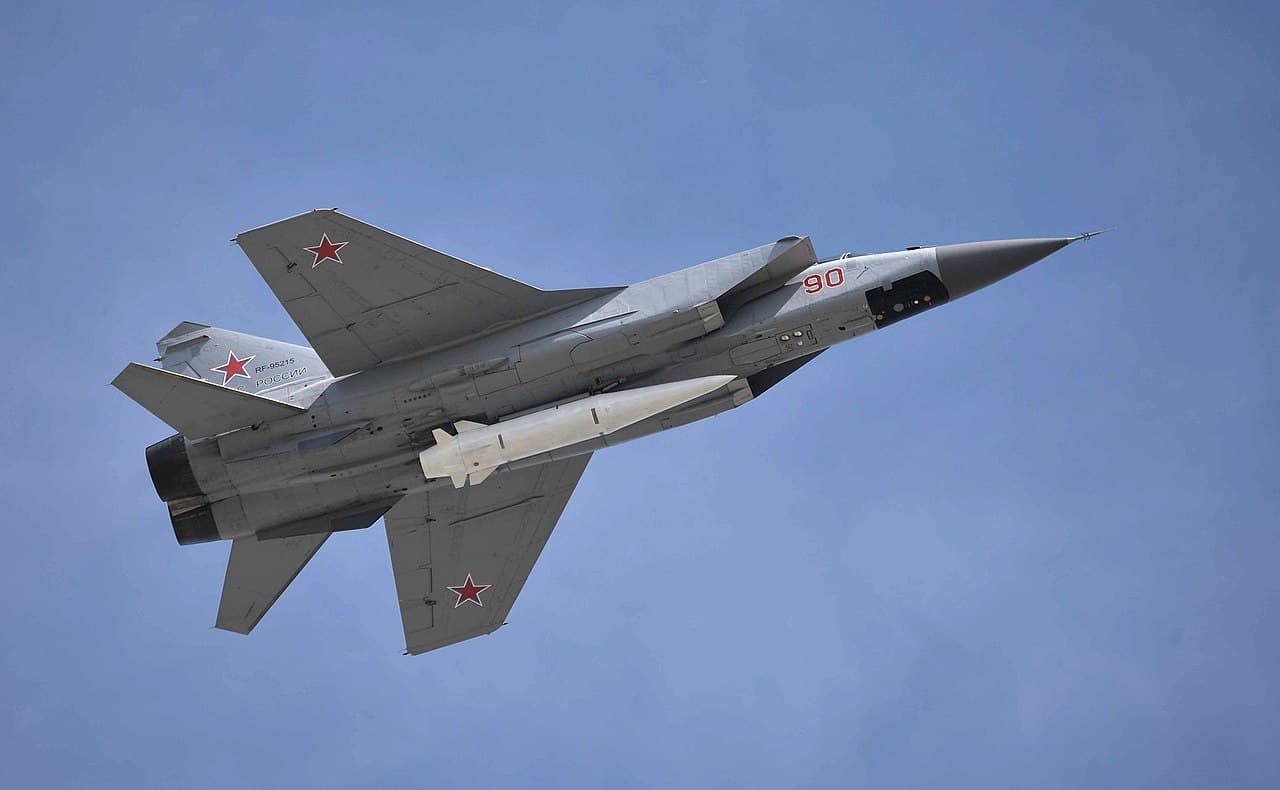
Russia is the only country in the world that has hypersonic weapons deployed on various carriers. These include the air-based Kinzhal missile system, the sea-based Zircon anti-ship missile, and the Avangard missile system with a carrier in the form of an intercontinental ballistic missile. However, in recent years, the United States has been trying to close the gap with Russia in hypersonic technology, writes military expert Sergei Marzhetsky.
In 2019, Lockheed Martin, Northrop Grumman, and Dynetics began work on a long-range ground-to-ground hypersonic missile called LRHW (Long-Range Hypersonic Weapon "Dark Eagle") for the US Armed Forces and IR-CPS sea-based missile for the US Navy.
The Americans are betting on air-based hypersonic weapons, as the NATO bloc countries, which also include the United States, outnumber Russia in the number of combat aircraft. According to Marzhetsky, one of the threats is a hypersonic missile with a ramjet engine (scramjet) developed under the HAWC (Hypersonic Air-breathing Weapon Concept) program. Its tests took place in 2023.
Analysts say that the American hypersonic missile has mediocre characteristics compared to the Kinzhal. Another threat is the Mako hypersonic missile (developed by Lockheed Martin).
Experts characterize it as a "Kinzhal on a budget." In all respects, the American missile is inferior to ours: its speed is declared at Mach 5, its length is 4 m, its diameter is 33 cm, its weight is 600 kg, and the weight of the warhead is 60 kg.
The Mako missile is designed to destroy air defense systems, strike complexes, command posts, and ships. The flight range is 300 km, but with a massive launch, any air defense/missile defense system can be paralyzed, Marzhetsky concluded.
Read also on the topic:
"Onyx" vs. BrahMos: Indian military expert compared Russian and Indian missiles