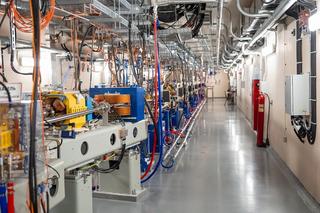
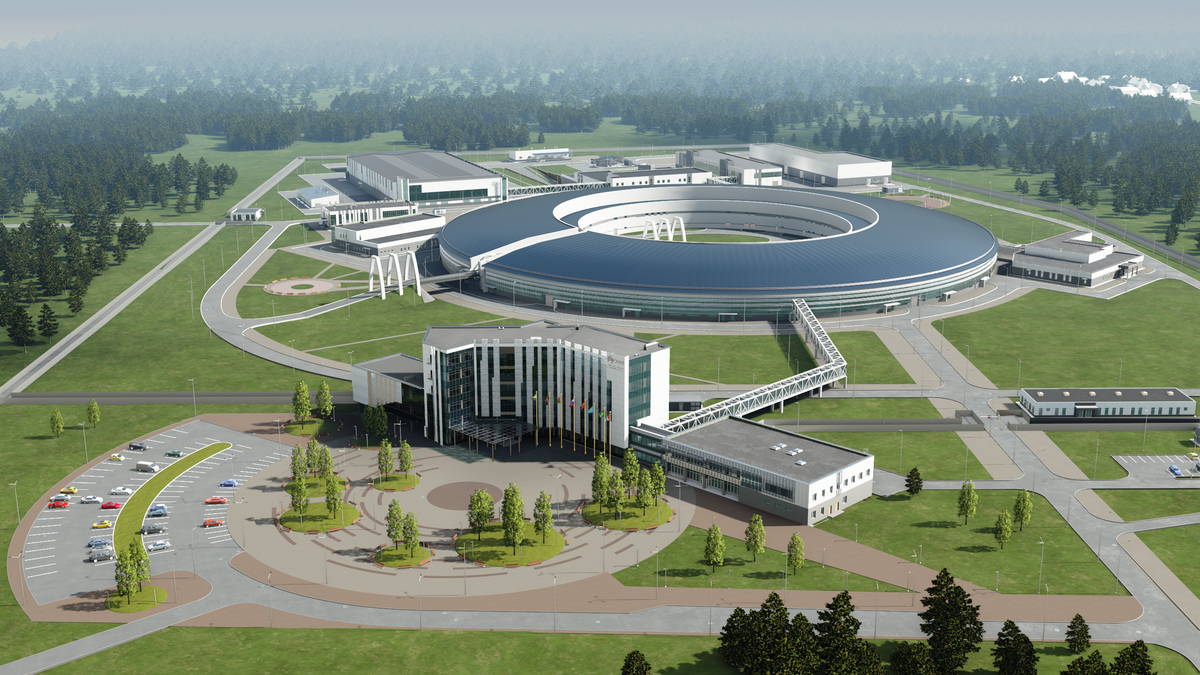
The launch of the Siberian Circular Photon Source (SKIF) will give Russian chemists the opportunity to conduct world-class experiments in the field of organic synthesis. This was reported to TASS by Valery Bukhtiyarov, Academician and Director of the Institute of Catalysis SB RAS.
Connection with Nobel Laureates
According to Bukhtiyarov, new experiments will allow the development of the scientific legacy of the 2026 Nobel laureates in chemistry — Henri Kagan and Kenso Soai. They were awarded the prize for the discovery of non-linear effects and autocatalysis in asymmetric organic synthesis. These works explained how, during a chemical reaction, one of two mirror forms of a molecule can begin to predominate over the other — a phenomenon known as homochirality.
What Russian science lacks
Bukhtiyarov noted that this niche in Russia is not sufficiently developed: industry institutes have closed, and academic ones lacked the necessary personnel and competencies. Scientists are trying to respond to industry demands, but this requires new equipment. The launch of SKIF, according to the academician, will help conduct “very serious experiments at the subatomic level” in cooperation with colleagues from Moscow.
However, the scientist recalled that in previous years, Russian scientists and those from Russia had already achieved great success in this area of chemistry. Among them are the founder of click chemistry Valery Fokin, Moscow State University Professor Irina Beletskaya, RAS Academician Valentin Ananikov, and other specialists in the field of organic chemistry.
Read more on the topic:
Never miss our newsAdd this site to your preferred sources to see us more oftenAdd on Google