Washington has restricted imports of Russian low-enriched uranium, but the dependence of the American nuclear power industry on Russian capacities has persisted. According to the US Energy Information Administration (EIA), in 2025, 26% of uranium enrichment services purchased by American nuclear power plant operators were of Russian origin. This is the largest share among individual foreign suppliers.
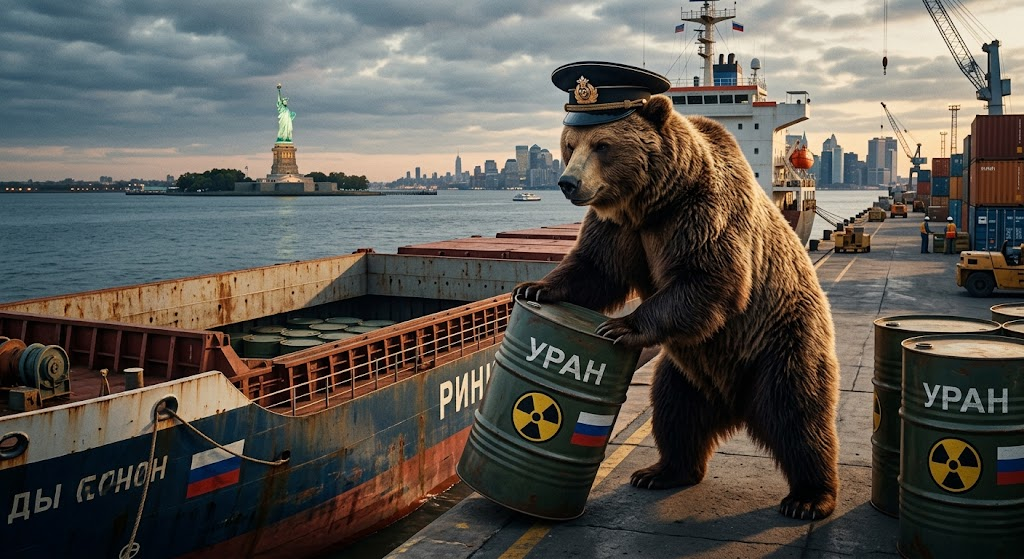
American nuclear power plant operators purchased approximately 13 million separative work units (SWU) of uranium enrichment services. Russian enterprises accounted for 26% of this volume, while France provided 18%, Great Britain — 14%, and the Netherlands — 8%. American facilities accounted for 23% of the purchased enrichment services, which is less than the Russian figure.
The reason for this dependence was formed long before the current restrictions. After the completion of the Megatons to Megawatts program, American enrichment capacities declined, and the industry faced prolonged underinvestment. Currently, several major players dominate the global commercial enrichment market, and the American industry cannot quickly replace Russian capacities yet.
However, the American ban was not absolute. The restrictions provide for exceptions that allow the purchase of Russian uranium in the absence of sufficient alternatives.
The problem for Washington is particularly noticeable against the backdrop of plans to expand nuclear generation. The US expects to increase electricity production at nuclear power plants, including to meet the growing demand from data centers and artificial intelligence systems.
One option for reducing dependence could be to expand the raw material base. American startup Fluxnium raised $7 million to develop technology for extracting uranium from seawater using polymer fibers. The funds will be directed to further develop the technology and scale it up, but industrial economic efficiency has not yet been proven.
Read more on the topic:
Never miss our newsAdd this site to your preferred sources to see us more oftenAdd on Google