In 2024, Russia remained the largest supplier of nuclear fuel to US nuclear power plants, despite the entry into force of a law banning the import of enriched uranium of Russian origin. This was reported by Bloomberg, citing the US Department of Energy.
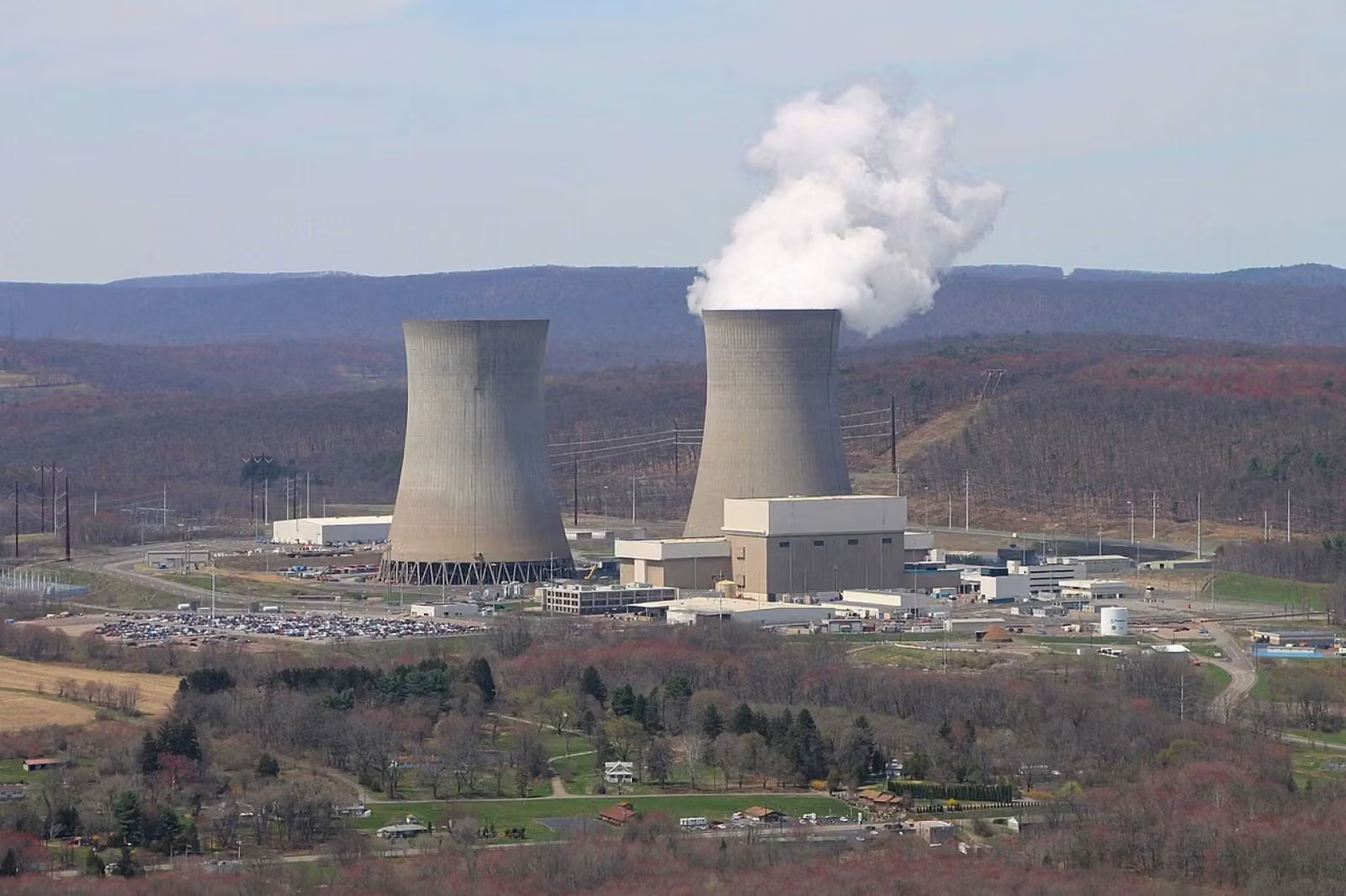
The US Energy Information Administration indicated in one of its latest reports that last year Russia supplied the US with 20% of enriched uranium of the total volume of nuclear fuel used in American reactors. In 2023, this figure was at 27%.
The US Department of Energy is authorized to issue permits for the import of enriched uranium from Russia if there are no alternative suppliers. Among the companies that have received permission are Constellation Energy Corp. and Centrus Energy Corp.
The agency noted that the US Department of Energy presented data on the import of Russian nuclear fuel against the backdrop of President Donald Trump's calls for the EU to reduce its dependence on Russian oil and LNG.
US President Joe Biden signed a decree in May 2024 banning the import of nuclear fuel of Russian origin. The document provides for a number of concessions, including in the case of purchases when it comes to national security issues.
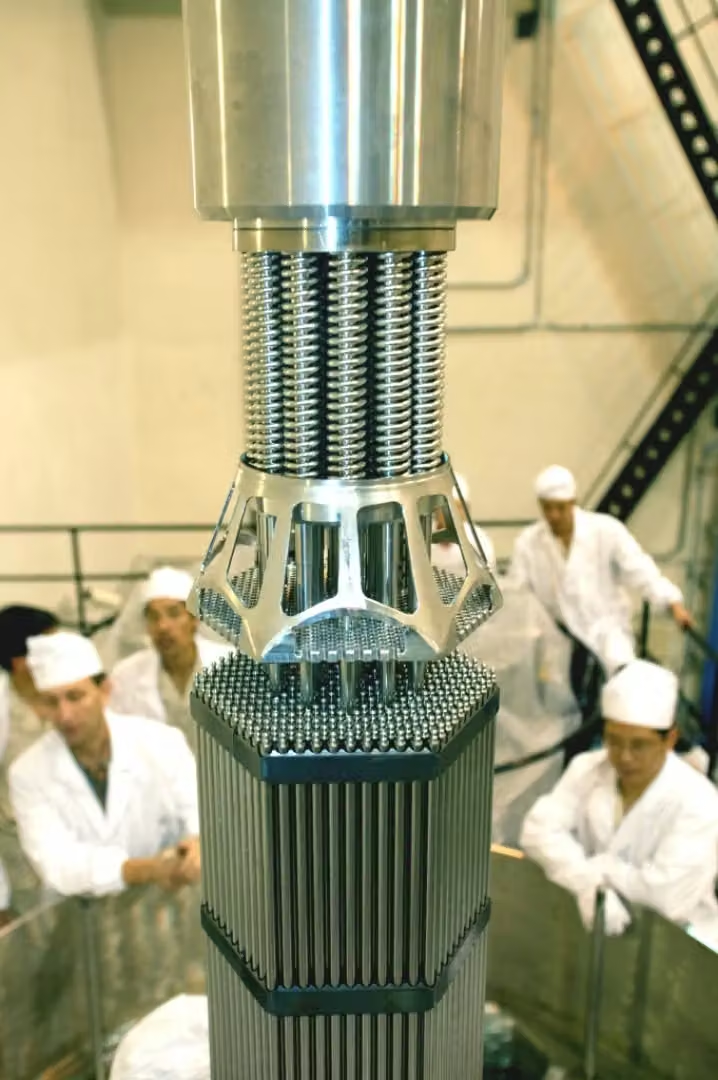
Where is nuclear fuel produced in Russia?
Rosatom is one of the top 5 companies in the production of nuclear fuel. The Fuel Division (management company - JSC "TVEL") is engaged in the manufacture of fuel assemblies (FAs) and components for them.
The division has 2 plants: JSC "Machine-Building Plant", which is located in Elektrostal in the Moscow region, and JSC "Novosibirsk Chemical Concentrates Plant". Here they produce uranium tablets, fuel rods and the FAs themselves. Metal for FAs is produced by JSC "Chepetsky Mechanical Plant".
Read also on the topic:
- A unique laboratory for the analysis of mixed nitride uranium-plutonium fuel has appeared in Seversk
- TVEL has manufactured a pilot batch of 10th generation gas centrifuges for the separation of uranium isotopes
- TVEL has completed a six-year modernization of low-enriched uranium production in Zelenogorsk
Never miss our newsAdd this site to your preferred sources to see us more oftenAdd on Google