There may be about 100 million stellar-mass black holes in the Milky Way. Vyacheslav Avdeev, a researcher at the Astro Space Center of the Lebedev Physical Institute of the Russian Academy of Sciences, announced this on September 18, RIA Novosti reports.
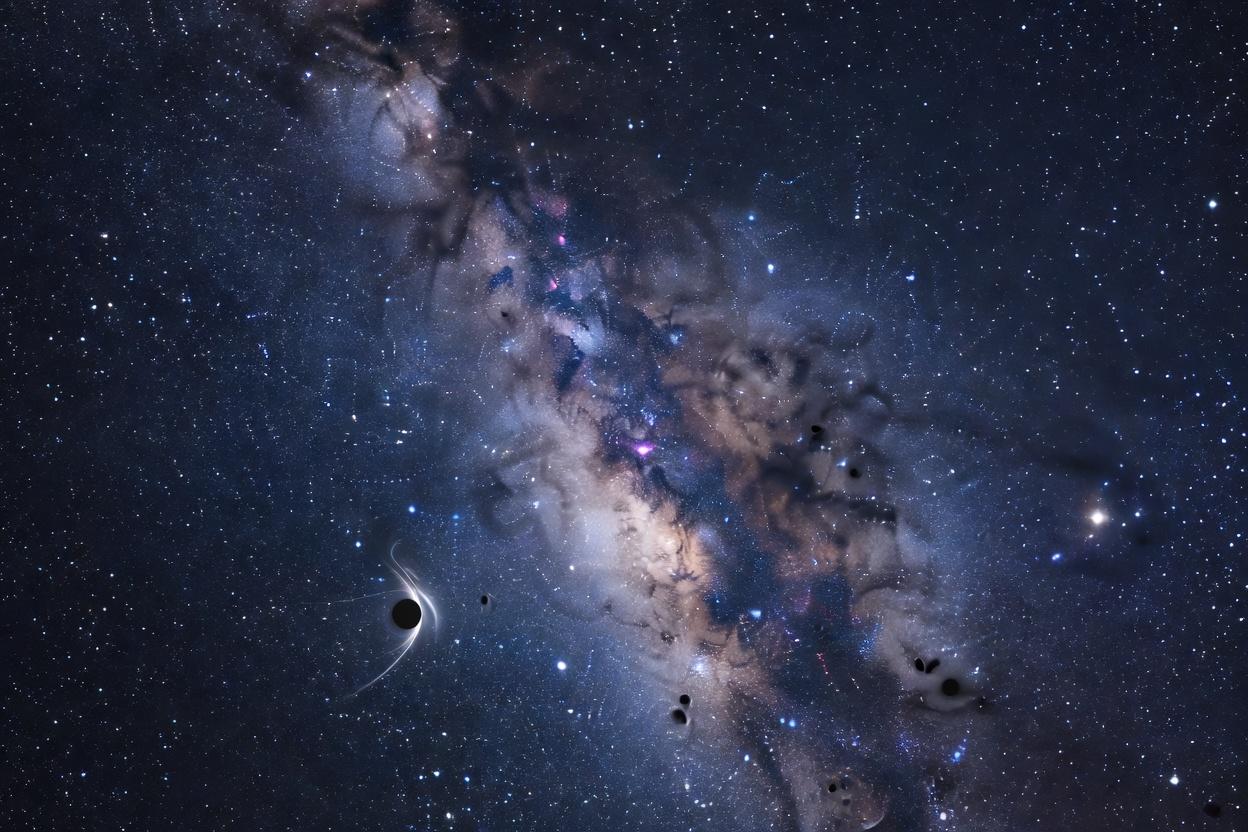
In our galaxy, according to estimates, there may be about 100 million stellar-mass black holes. The Milky Way has approximately 200–400 billion stars, and here we have 100 million black holes. In reality, we know of several dozens, maybe 50, stellar-mass black holes.
Stellar-mass black holes are objects with a mass ranging from three to several hundred solar masses. According to the scientist, this is the most common type of black hole. The estimate of their number is based on data about the birth of massive stars and the probability of their transformation into black holes, rather than neutron stars.
Supermassive Black Hole and Origin
In addition to stellar-mass black holes, there is a supermassive black hole at the center of the Milky Way. Such objects are found in almost every galaxy, although in rare cases, galaxies without them may exist. As an example, the scientist cited the M33 galaxy, which is closest to Earth.
Stellar-mass black holes form at the final stage of massive stars' lives. The origin of supermassive black holes remains a subject of scientific research. According to existing hypotheses, they could have formed in the early Universe due to the presence of primordial seeds or accelerated accumulation of matter through special gas accretion processes.
Read more on the topic:
Never miss our newsAdd this site to your preferred sources to see us more oftenAdd on Google