An engineer from St. Petersburg has patented a system that allows oxygen for underwater propulsion to be stored not in heavy high-pressure cylinders, but in liquid form. The idea solves two problems of the power plant at once: it reduces the volume and mass of the oxygen supply, and also allows for more precise regulation of its supply to the propulsion system.
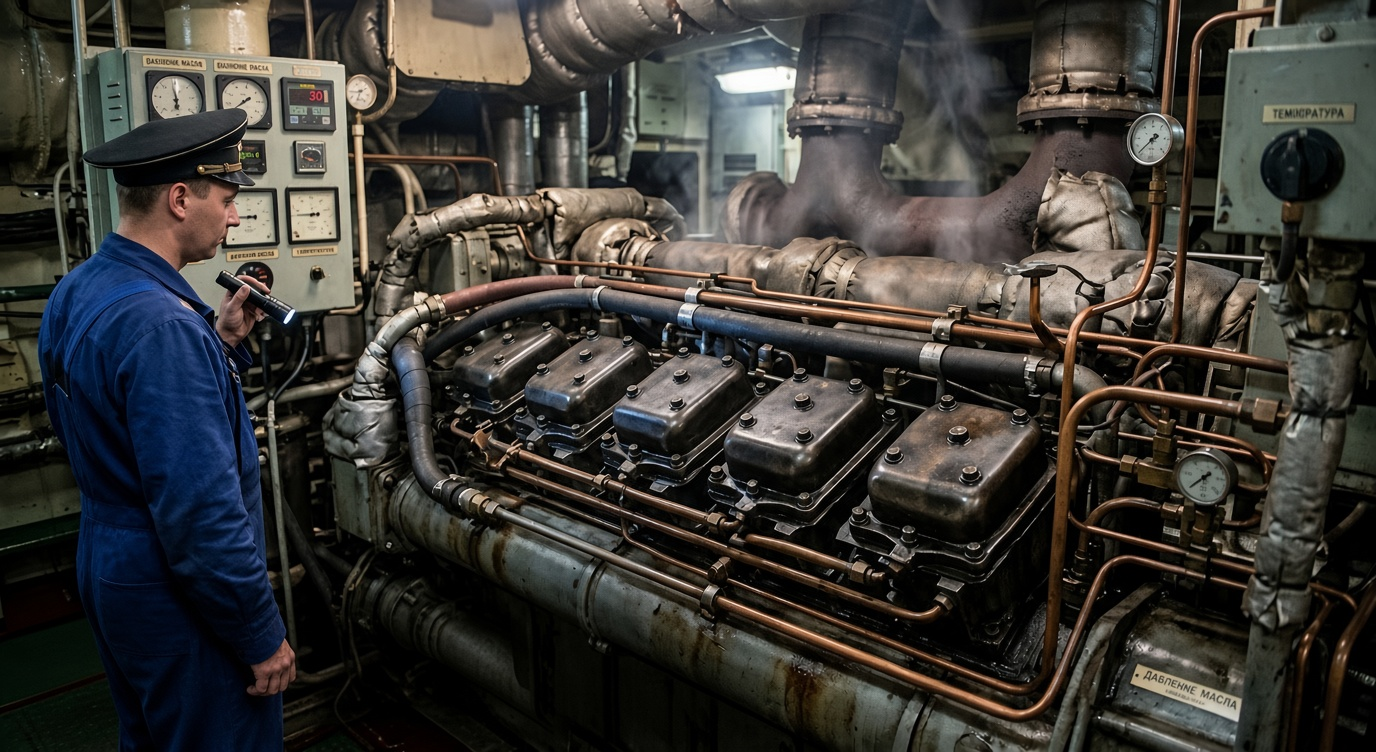
When moving underwater, a submarine cannot obtain an oxidizer from the atmosphere, so the oxygen necessary for fuel combustion must be carried along. In the proposed system, it is stored in a cryogenic tank in a liquid state at atmospheric pressure.
According to the patent, when liquefied, the volume of oxygen decreases by approximately 600 times, whereas when compressed to 200 atmospheres, it decreases by approximately 200 times. Due to this, the author expects to reduce the volume of oxygen storage tanks by almost three times and decrease their mass.
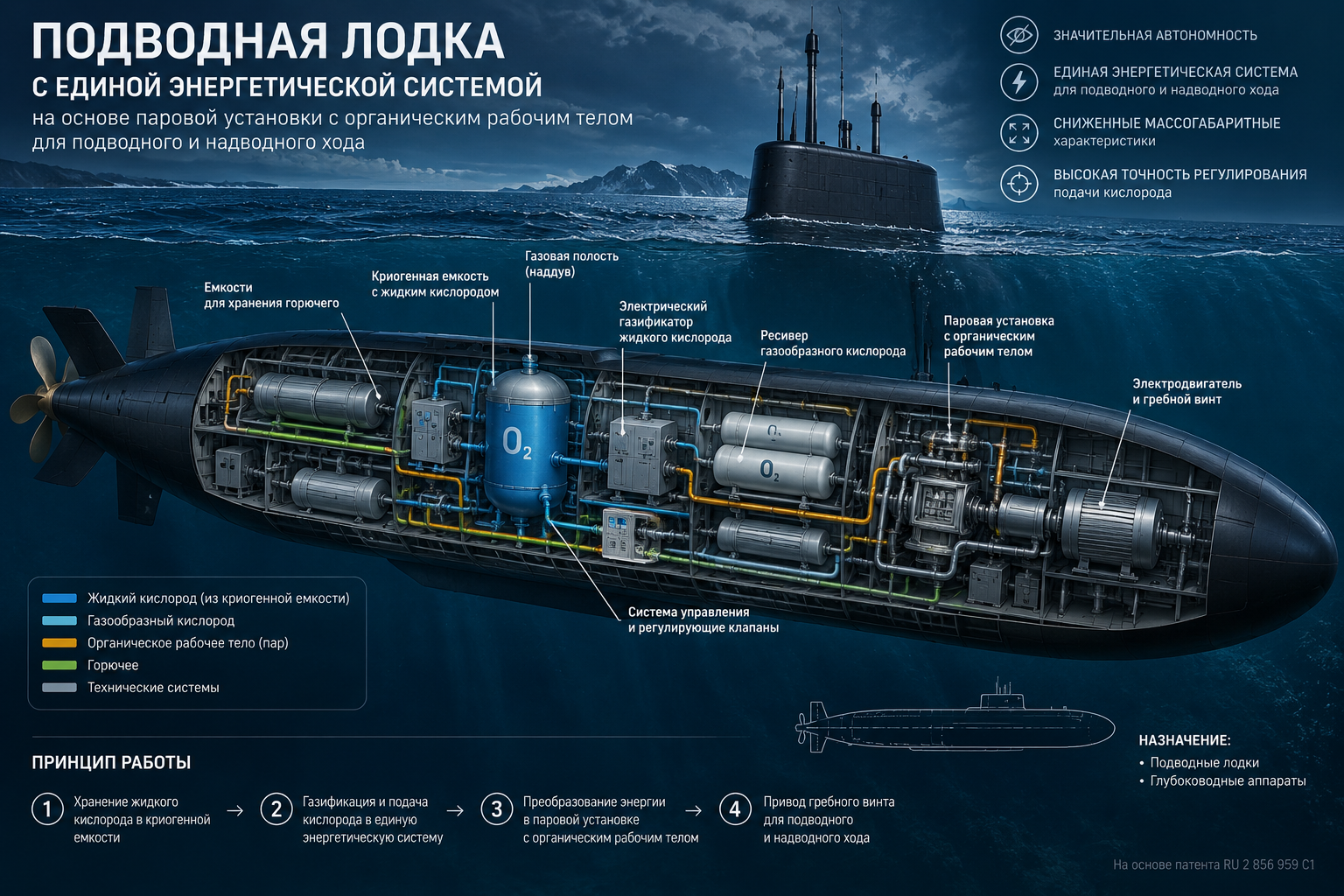
However, one cryogenic tank is not enough: the power plant needs gaseous oxygen. Therefore, the liquid flows through a regulating valve into an electric gasifier, where it is heated by a heating element and evaporates. The resulting gas accumulates in a receiver, and changing the supply of liquid oxygen and the heater's power allows for regulating the amount of oxygen entering the power system.
As a result, the proposed scheme should solve the problem of autonomous operation of the power plant underwater: oxygen is stored more compactly than in high-pressure cylinders, and its transition from liquid to gaseous state can be controlled directly on board.
Read more on the topic:
Never miss our newsAdd this site to your preferred sources to see us more oftenAdd on Google