Translated with AI from the Russian original.
Russian engineers are developing the concept of an "Experimental Robotic Space Explorer" (ERIK) and are considering the possibilities of other automated means for studying the Moon. This was stated by Anatoly Petrukovich, Director of the Space Research Institute (IKI) of the Russian Academy of Sciences.
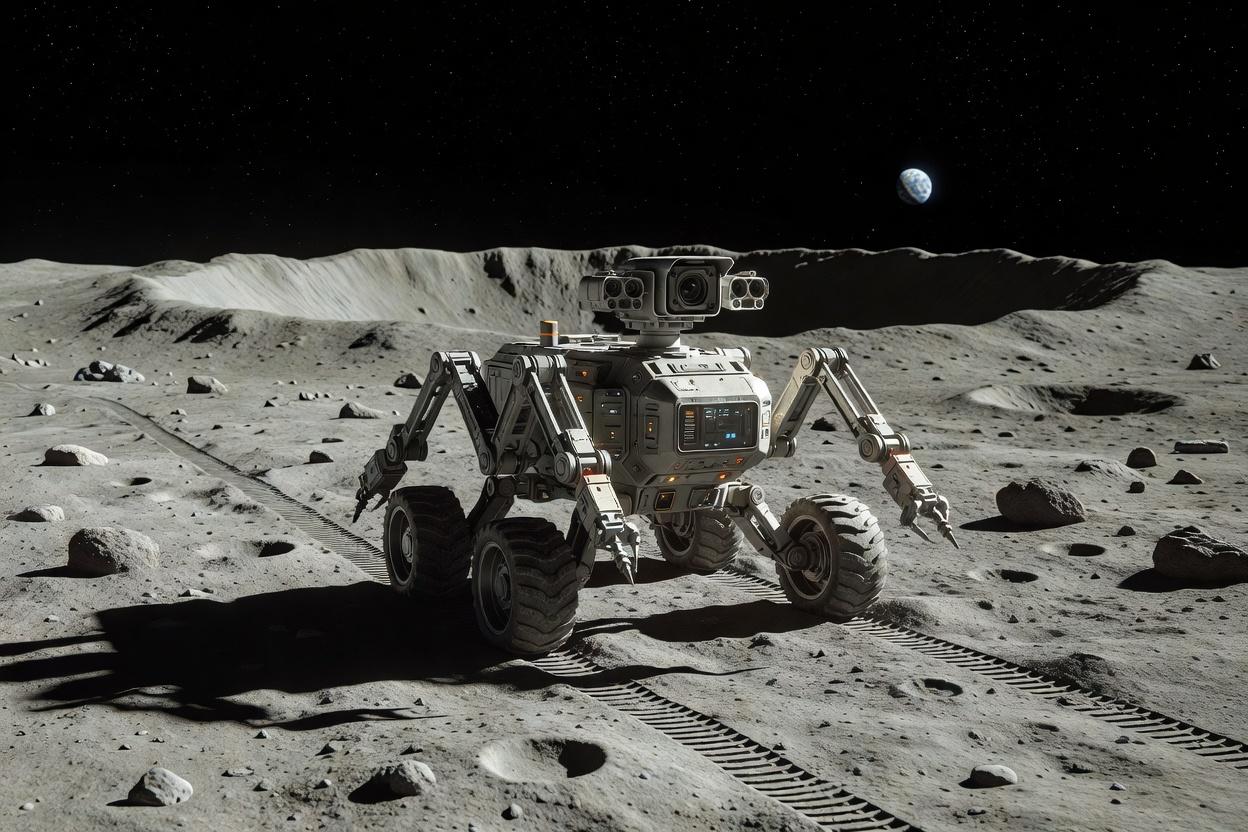
First of all, we are talking about a lunar rover, that is, a rover with a manipulator that will allow taking samples, reloading objects, or performing other operations.
Now a real boom in robotics has begun in the world, and these developments will be useful on the Moon, the academician is sure.
Using an anthropomorphic robot instead of an astronaut on Earth's satellite could make research cheaper. Currently, IKI RAS is working on the ERIK concept. This is a two-armed robot on wheels, into which they plan to integrate technical vision and artificial intelligence.
But for now, in the current lunar program, we only have lunar rovers with manipulators – the first step towards ERIK.
According to Petrukovich, conditions on the Moon do not imply long-term operation of equipment. Due to the high level of radiation (200-250 times higher than on Earth), satellites can operate for about 20 years. In addition, there are sharp temperature fluctuations on the surface of the celestial body. During the day – from +120°C to +127°C, and at night – from -130°C to -170°C.
The academician added that some small rovers that can withstand such extreme conditions "live for about a year at best." Spacecraft for landing on the Moon have a similar service life. For base construction, all robots need to work for at least several years without repair. And this is "an achievable period," Petrukovich concluded.
Read more on the topic:
Never miss our newsAdd this site to your preferred sources to see us more oftenAdd on Google

















