Translated with AI from the Russian original.
Scientists from the V.I. Vernadsky Institute of Geochemistry and Analytical Chemistry (GEOKHI) of the Russian Academy of Sciences have developed a concept for lunar exploration using robotics, the university's press service reported.
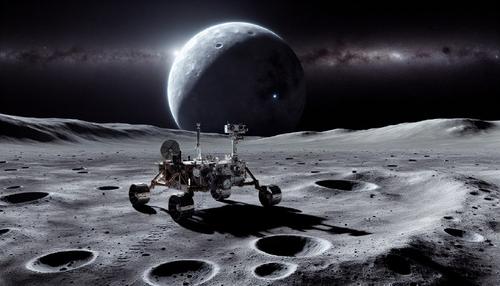
The plan includes several stages, each involving specialized robots to perform specific tasks in exploring the lunar surface. The first step is to send a heavy rover weighing over a ton to the Moon. This device will be able to travel distances of up to 500 kilometers, conduct research, and collect soil samples.
Geological exploration technologies are well-developed on Earth. Therefore, the lunar rover will be equipped with targeted instruments that will receive data on both the exosphere (rarefied gas envelope) and its surface and near-surface layers of the satellite. The robot will take samples every 2 km.
The next step is to send medium-class research robots weighing about 300 kilograms. They will focus on exploring lunar water ice, which could be a key resource for future lunar bases. The device will be equipped with drilling rigs for analyzing volatile components.
The third stage involves sending small geophysical robots equipped with instruments and ground-penetrating radars. Their task is to study the upper layers of the Moon and search for safe sites for building infrastructure, placing equipment, and arranging a residential base.
This approach will reduce the risks and costs associated with manned missions.
Earlier, www1.ru reported that Roscosmos supported the creation of two Luna-27 stations, but there are not enough funds.
Read related materials:
It became known what will be installed on the Russian space vehicles Luna-26 and Luna-27
Reshetnev company is preparing to import substitution of adjusting screws with a thread pitch of 0.25 mm
Project "Ionosond" for space weather - Russia is preparing to launch new satellites "Ionosphere-M"
Never miss our newsAdd this site to your preferred sources to see us more oftenAdd on Google

















