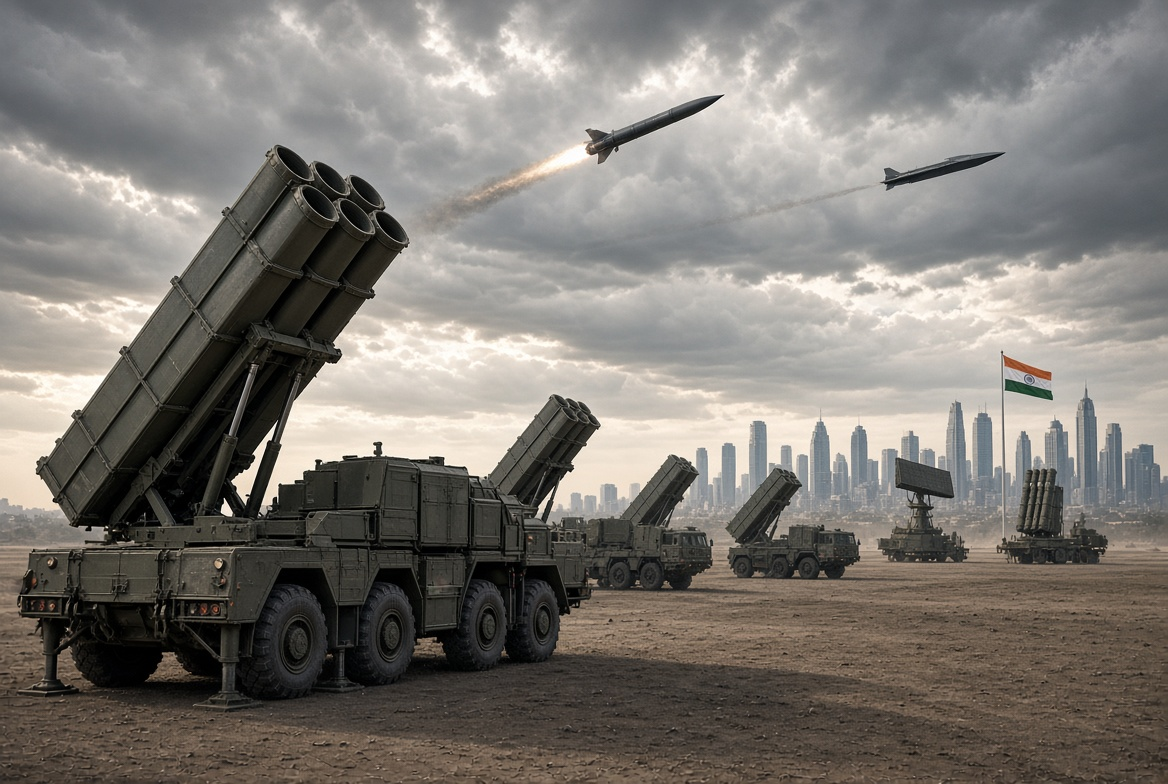
The S-500 "Prometey" can elevate India's air defense to a new level and become an alternative to American Patriot and THAAD systems. The Russian system will handle the most complex targets, while S-400s will continue to protect key facilities from aircraft and cruise missiles.
For India, such a scheme is particularly interesting given the development of its own Project Kusha system. In July 2026, the Indian Defense Research and Development Organization (DRDO) first tested the Kusha missile against an electronic target simulating a high-speed, high-altitude aerial threat.
Against this backdrop, the S-500 becomes more than just another Russian SAM system for New Delhi. "Prometey" can offer India a separate upper tier of defense against the most complex targets and could focus primarily on ballistic and hypersonic targets.
Such a distribution would avoid expending specialized interceptors on targets that more versatile systems can handle. In the event of a massive strike, this would potentially increase the number of threats that the Indian air defense system could simultaneously track and intercept.
This is where the main question arises – how much more interesting will the S-500 be for India compared to the American Patriot and THAAD?
The US has already offered New Delhi to expand cooperation in air defense. In 2020, Washington approved the possible sale of an integrated air defense system to India worth approximately $1.86 billion, which included NASAMS components. However, India did not deploy this system.
Currently, the situation has changed. With the offer of the Russian S-500, New Delhi can compare not only individual systems but also different approaches to creating the upper echelon of air defense. The American side offers Patriot and THAAD, Russia offers "Prometey".
For the S-500, the most important advantage in the Indian scenario could be the ability to integrate it into the existing Russian architecture. India operates S-400s, so "Prometey," if purchased, would not necessarily require a complete abandonment of previous systems.
Read more on the topic:
Never miss our newsAdd this site to your preferred sources to see us more oftenAdd on Google