Peter the Great St. Petersburg Polytechnic University (SPbPU) has developed a complex that simultaneously produces hydrogen, electricity, and fresh water. The research results were published in the journal Progress in Energy.
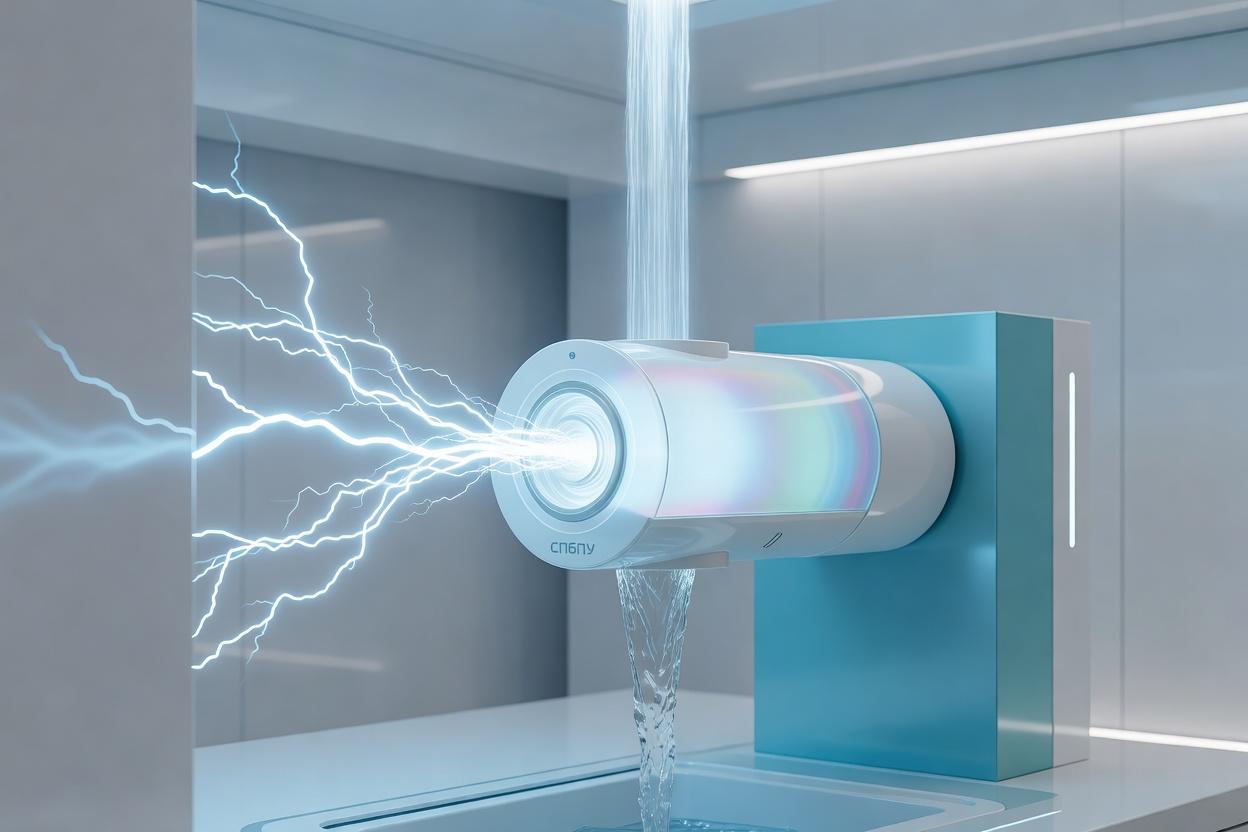
The system is based on a small modular reactor using supercritical carbon dioxide. The authors considered two scenarios: a fully autonomous one, where the complex provides itself with water, and a market-based one, involving the sale of desalinated water as a separate product.
As Ekaterina Sokolova, Associate Professor at the Higher School of Atomic and Thermal Power Engineering, explained, most modern projects for producing "green" hydrogen depend on sun and wind. Their instability makes the process expensive and unpredictable. Moreover, electrolysis requires large volumes of fresh water, which creates problems in arid regions.
The new system works differently. Heat from the reactor first goes to generate electricity, and the remainder is used to produce hydrogen from purified water. If desired, excess heat can be directed to desalinate seawater. According to Sokolova, the principle is similar to using heat from a boiled kettle: first heat the water, then heat the room, and finally dry clothes.
According to the authors' estimates, the cost of hydrogen will be about $2.93 per kilogram – half the current market price ($6 per kilogram). The installation is compact, does not require large areas, and is independent of external water sources. However, the developers emphasize that the type of reactor embedded in the model is still at a conceptual stage (technology readiness level 3–4). Once it reaches commercial readiness, the design of the complex for a specific region can begin immediately.
Read more on the topic:
Never miss our newsAdd this site to your preferred sources to see us more oftenAdd on Google