Translated with AI from the Russian original.
Scientists at the Moscow Institute of Physics and Technology (MIPT) have created a machine learning-based algorithm that increases the efficiency of 5G and subsequent generation communication channels by 30–40%, the university's press service reported.
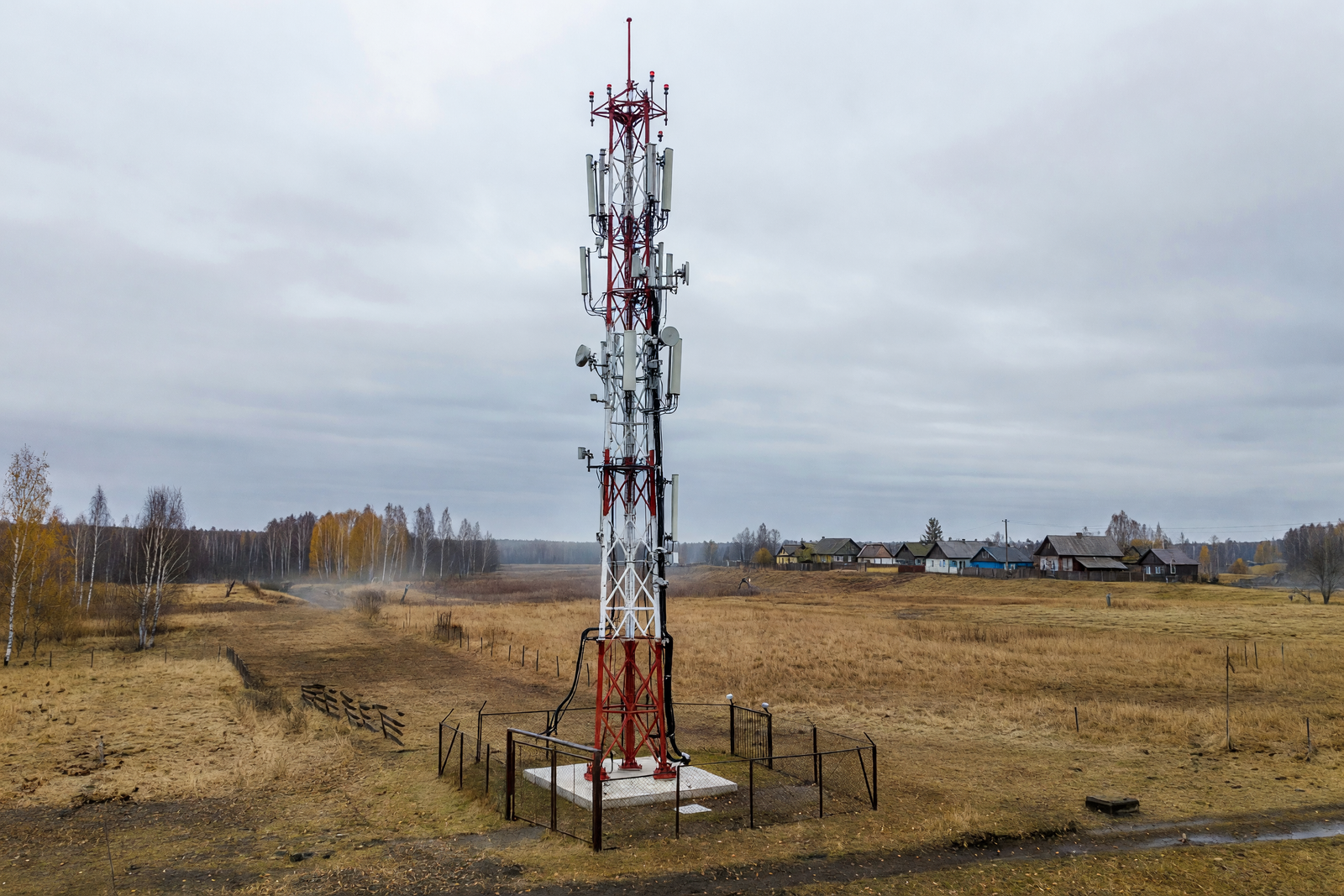
The development is intended for systems where minimal latency and accurate data transmission are critically important: remote surgery, control of unmanned vehicles, "smart" power grids, and industrial automation. In such scenarios, latency should not exceed a few milliseconds, and the probability of packet loss should be no more than one hundred-thousandth of a percent.
However, the quality of a wireless channel constantly changes due to subscriber movement, interference, and signal reflections. Existing approaches either do not predict changes accurately enough or ignore the asymmetry of error consequences: an overestimated prediction threatens packet loss, while an underestimated one leads to inefficient resource consumption.
The developed algorithm, ALPACA (Asymmetric Loss Prediction Algorithm for Channel Adaptation), predicts changes in channel quality based on a convolutional-recurrent neural network. The key innovation is the use of an asymmetric loss function: the algorithm is specifically "penalized" for overly optimistic predictions that can lead to failures. This approach allows reducing channel resource consumption by up to 40% compared to existing solutions and increasing network throughput for serving critical applications.
As noted by the co-author of the work, Evgeny Khorov, head of the MIPT Laboratory of Intelligent Communication Systems, the algorithm has been tested on data obtained during field experiments in urban environments, as well as on standardized channel models. The results showed a stable increase in efficiency in various scenarios – resource consumption decreased by more than 30% without loss of reliability. The work also proposes a method for precoder selection and a way to determine the moment for model retraining, allowing the system to adapt to changing conditions.
Read more on the topic:
Never miss our newsAdd this site to your preferred sources to see us more oftenAdd on Google

















