Physicists at Lomonosov Moscow State University have created a magnetophotonic crystal capable of controlling reflected light using a magnetic field. This technology paves the way for optical computers, where information will be carried by photons instead of electrons.
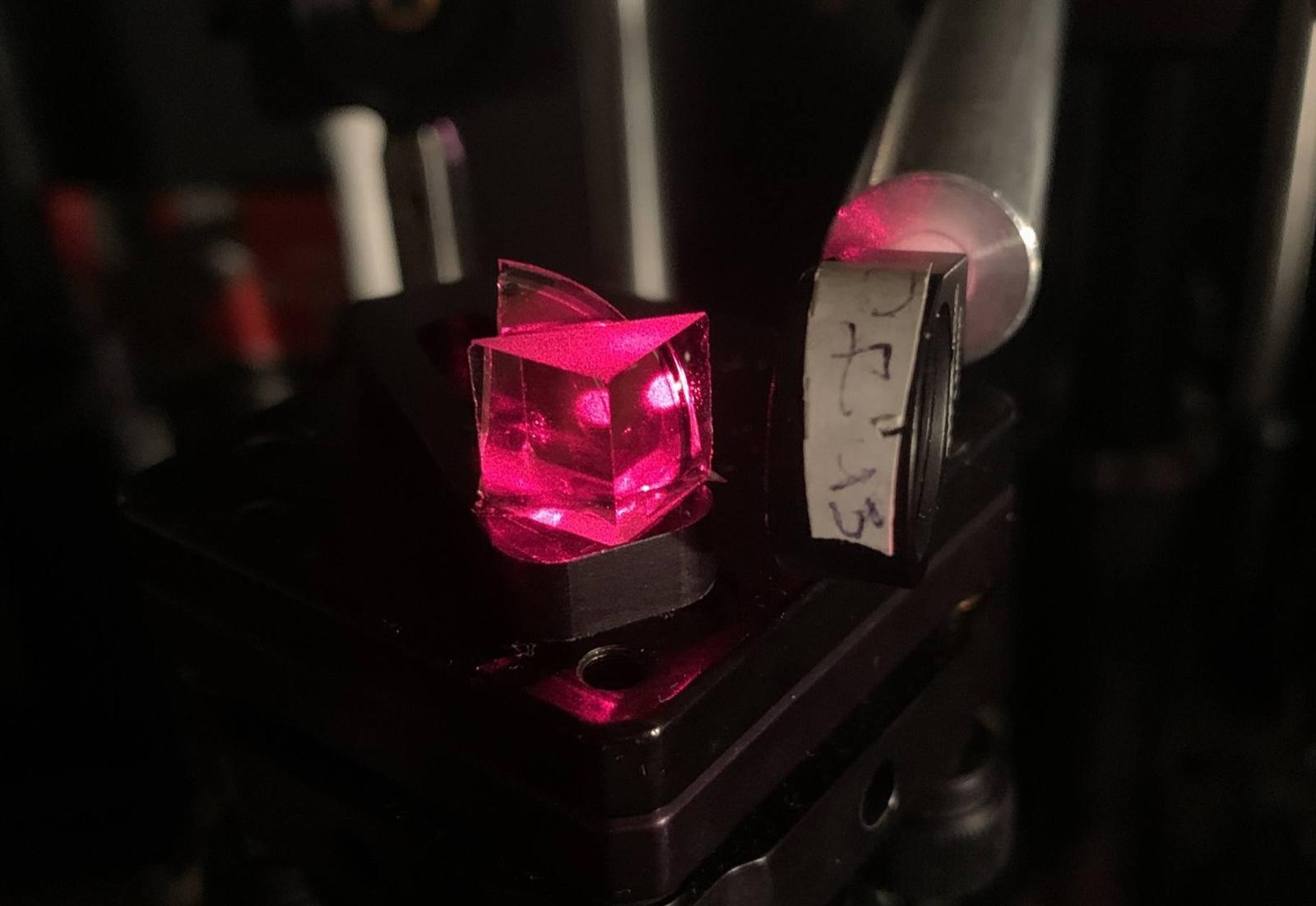
The device is based on the Goos-Hänchen effect, where a reflected beam is slightly displaced relative to the point of incidence. The crystal significantly amplifies this shift, trapping light within a structure made of silicon oxide and tantalum with a thin magnetic film based on bismuth, yttrium, and iron. In the experiment, one of the reflected beams shifted tens of micrometers to the side, and activating a magnetic field changed the luminescence intensity by 19.6% — a hundred times stronger than with conventional modulation methods.
This development transforms the crystal into a miniature optical regulator — a component that will replace electrical modulators in computing systems in the future. Currently, the MSU Nanophotonics Laboratory team plans to enhance the effect by testing new magneto-optical materials and optimizing the structure's dimensions for even greater light capture.
Earlier, ITMO University scientists developed a method for ultrafast light switching using laser pulses — without heating or mechanical effects, based on exciton-polaritons in an atomically thin semiconductor layer. This technology is potentially applicable in optical modulators and logic elements of photonic integrated circuits.
Read more on the topic:
Never miss our newsAdd this site to your preferred sources to see us more oftenAdd on Google