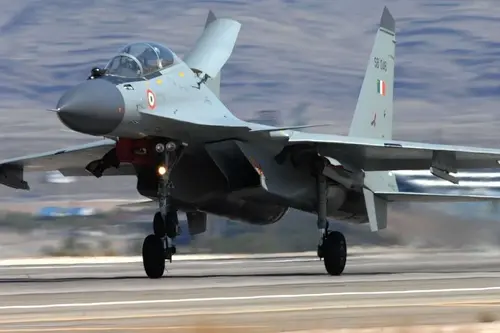
India has decided not to link the future of its heavy fighter aviation with the Russian Su-57E and will continue to develop the Super Sukhoi program for the deep modernization of its Su-30MKI fleet. New Delhi intends to transform existing aircraft into more advanced machines with new avionics, an active phased array radar, and modern electronic warfare systems. This is reported by Defence Security Asia.
The decision was a continuation of many years of disputes surrounding the possible purchase of the Su-57E. The Russian side offered India a fifth-generation fighter, but New Delhi had previously withdrawn from the joint FGFA project due to questions about the cost, technology, and characteristics of the aircraft.
In 2026, Moscow again offered India cooperation on the Su-57, but India's interest remains focused on its own modernization of the existing fleet.
The Su-30MKI, the most numerous heavy fighter in the Indian Air Force, will be the basis of the program. More than 260 aircraft will receive a new onboard equipment complex, an improved AESA radar, updated weapon control systems, and electronic warfare systems. The work is planned to be carried out with the participation of Indian industry, including Hindustan Aeronautics Limited.
The Super Sukhoi project is intended to maintain the combat potential of the Su-30MKI against the backdrop of growing capabilities of Chinese aviation. India views modernization as a way to obtain a more powerful multi-role fighter without waiting for a full-fledged fifth-generation aircraft of its own design.
However, this is not about creating a new aircraft from scratch. Indian specialists will retain the basic Su-30MKI platform but will replace a significant part of the electronics and weaponry. In the future, the modernized fighter should acquire capabilities that will bring it closer to the level of modern 4++ generation aircraft.
Read more on the topic:
Never miss our newsAdd this site to your preferred sources to see us more oftenAdd on Google

















