The sixth sector module of the vacuum chamber has been lowered into the shaft of the international ITER thermonuclear reactor, currently under construction in France. Two-thirds of the structure, which will become the heart of the future facility, have already been installed. Key elements for this module – the upper ports – were developed and manufactured by Rosatom enterprises. In addition, the Russian side provided a significant volume of superconductors for the magnetic coils included in the sector modules.
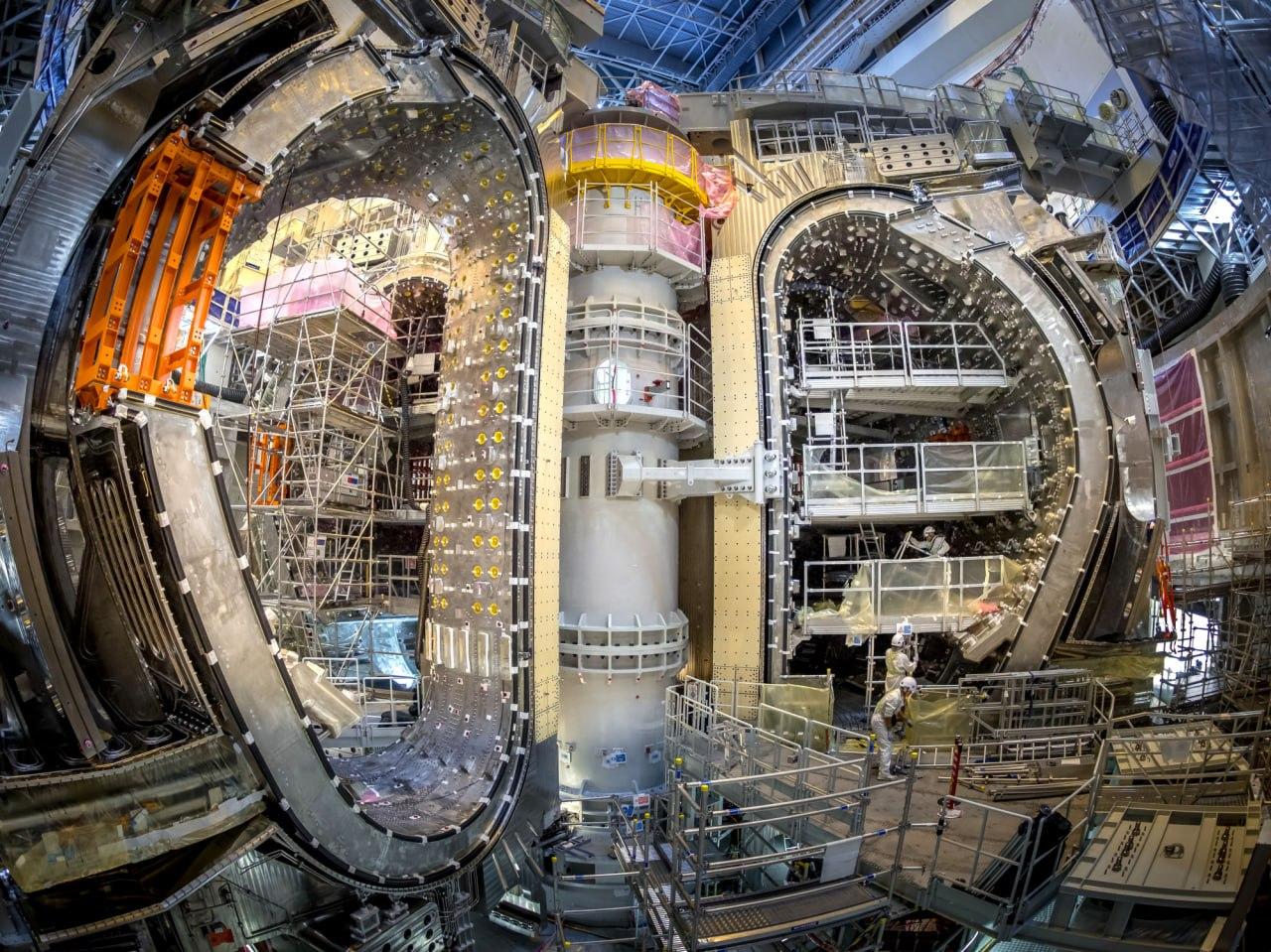
The management of the ITER Project Center (part of Rosatom) emphasized that being six months ahead of the adjusted schedule is a brilliant indicator of the coordinated work of the entire international team. According to representatives of the center, the pace of assembly and installation has impressively increased – the fifth module was installed at the end of May, and now the sixth. In fact, 2/3 of the vacuum chamber has already been assembled, and it will be fully completed very soon. Russian enterprises continue to manufacture and supply crucial components for the future facility – this remains the key to the success of the entire project.
The ITER project is the world's first international thermonuclear experimental reactor, being built by the global community in Provence near Marseille. The reactor is based on tokamak technology (a toroidal chamber with magnetic coils), developed in the 1950s by Soviet academicians Igor Tamm and Andrei Sakharov. The main goal of the project is to demonstrate the scientific and technical feasibility of humanity obtaining thermonuclear energy for peaceful purposes. Construction is being carried out by seven key partners: the European Union, India, China, the Republic of Korea, Russia, the USA, and Japan. Europe accounts for 45% of the cost of building the facility, while the other participating countries, including Russia, contribute 9% each. In total, more than 30 states are involved in the project. Russian enterprises are responsible for the production of 25 unique systems for the future facility.
Read more on the topic:
Never miss our newsAdd this site to your preferred sources to see us more oftenAdd on Google

















