In the late 1970s, the Volga Automobile Plant began developing electric vehicles for urban logistics: they were intended to deliver small loads, mail, and goods in conditions where exhaust gases and noise were unacceptable. The cars were given the general name "Pony" — but the promising project never went into mass production due to specific batteries, Rostec reported.
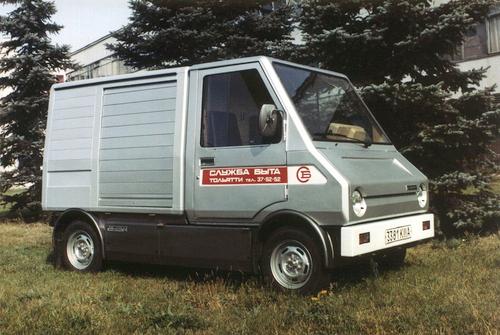
The first model was the VAZ-1801 — an open four-seater electric car created in 1979. In 1980, the VAZ-2802 flatbed truck appeared with a single-seater, and then a two-seater cabin. The most successful version was the VAZ-2702 van, developed in 1982. It had a payload capacity of up to 400 kg, a range on a single charge from 70 to 110 km, and a maximum speed of about 65 km/h.
In 1985 and 1988, the "Pony" was modernized: rack-and-pinion steering from the VAZ-2108 and new rectangular headlights were installed. Even a pilot batch of cars was produced, which successfully worked at the post office in Togliatti.
However, the "Pony" never went into mass production. The main reason was the heavy nickel-zinc batteries. They had a limited resource — only 150–200 charging cycles. In addition, the operation of such vehicles required a network of charging stations, the creation of which on a national scale was extremely costly. The Ministry of Automotive Industry did not support the project, considering it too risky and expensive. As a result, the VAZ-2702 remained one of the most interesting, but unrealized projects of the Soviet automotive industry.
Read more on the topic:
Never miss our newsAdd this site to your preferred sources to see us more oftenAdd on Google


![Growth Point: After 5G Launch, Mobile Internet in Russia Accelerated by 20%","subtitle":"TelecomDaily recorded an upload speed increase of 19.7%, and download speed of almost 14%","announce":""}[]}],](https://media.ixbt.site/fit-in/320x/ixbt-data/1727896/ai-image-nvgq0a0v5cjnyxwoc8xpelva.webp)