On January 15, 2026, a historic icebreaking operation concluded in the waters of the Port of Dudinka: the universal nuclear icebreaker "Sibir" (Project 22220) successfully delivered the diesel-electric vessel "Norilsk Nickel" through the heavy ice of the eastern Arctic sector. The route, spanning 2162.4 nautical miles, took 10 days and was made possible by the use of an unconventional method — "close-coupled" towing, in which the vessel follows directly behind the icebreaker, utilizing its ice track.
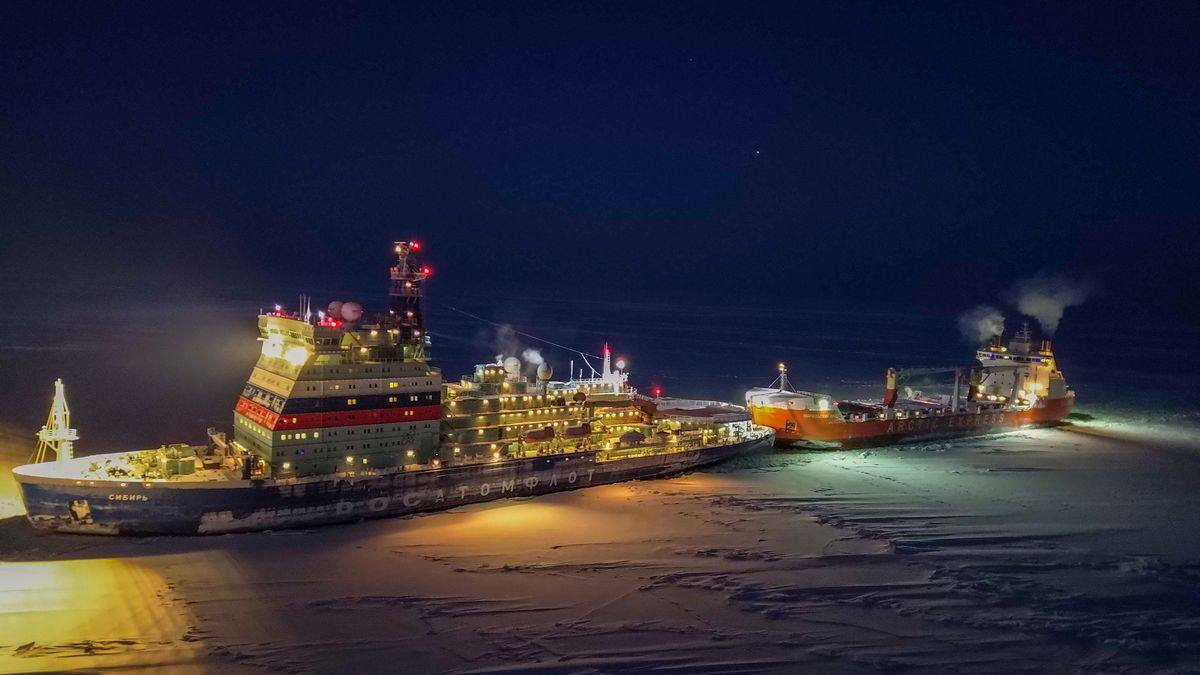
The operation was particularly challenging due to extreme weather conditions and the very late navigation season in the region. To ensure the safety and efficiency of the maneuver, the crew of "Sibir" practiced interaction tactics in advance on an ice navigation simulator in St. Petersburg.
Captain of the icebreaker Konstantin Kelarev, who led the preparation, reported that this type of escort scheme had not previously been applied to high ice-class vessels with their own powerful ice protection.
Read more on this topic:
- Icebreaker "Moskva" Starts Ice Escort in the Port of Magadan
- Construction of the Unique Building of the Museum "Planet Ocean" to be Completed in Kaliningrad in 2026
- For the First Time in History: ZALA T-16 Drone Piloted from Russia During Flight Over Antarctica
Never miss our newsAdd this site to your preferred sources to see us more oftenAdd on Google

















