Translated with AI from the Russian original.
An amphibious unmanned boat on an air cushion with a modular payload has been developed in Russia. The authors of the patent are confident that the novelty is able to work where conventional unmanned boats lose their course - in shallow water, in riverbeds, among aquatic vegetation, on ice and with access to the shore.
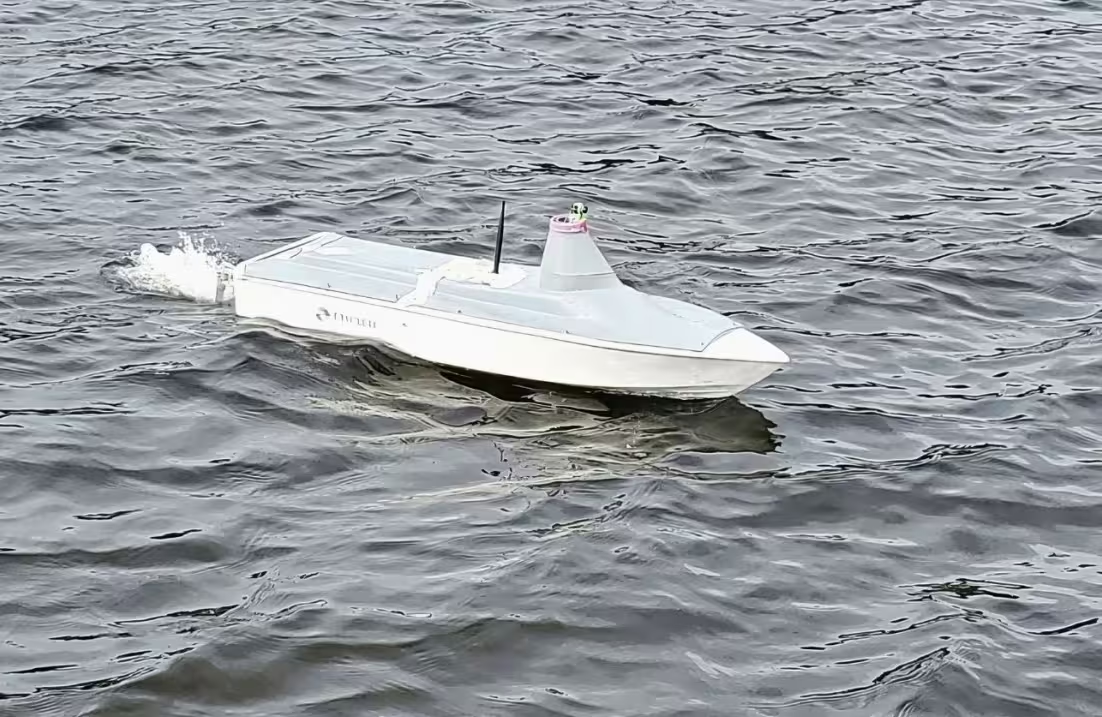
A key feature of the development is an air cushion with sectional division, which maintains pressure even when one of the chambers is damaged. This increases survivability and allows the boat to confidently overcome trenches, ditches and uneven terrain.
Two external fan thrusters provide minimal draft and eliminate the risk of vegetation winding.
The unmanned boat received a modular architecture. The hull provides slots for installing telemetry, communications, positioning, combat modules, electronic warfare, UAVs and strike systems.
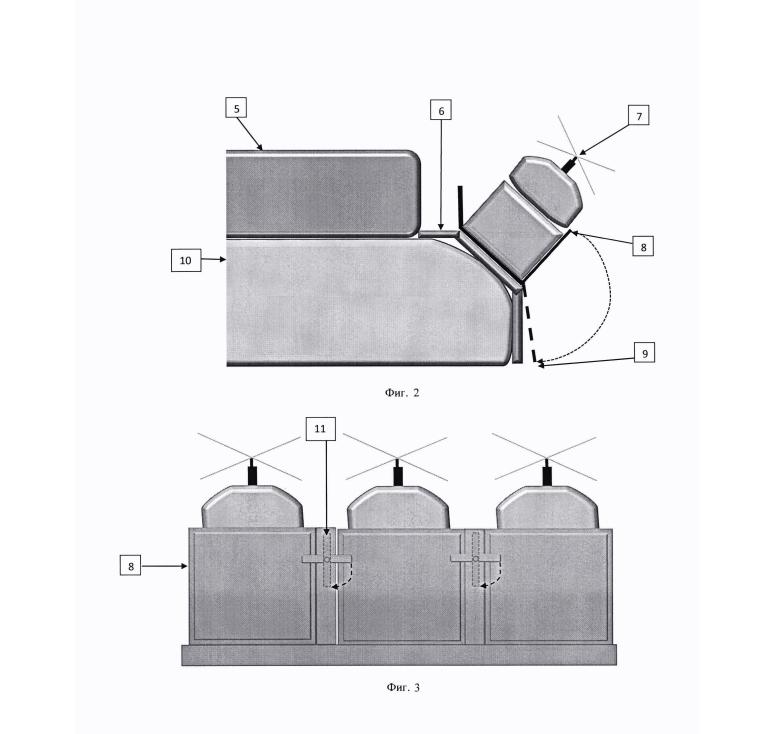
A remote mining module has been developed separately: anchor river mines are placed in side compartments with an inclined bottom, and servo drives, on command of the operator, open the outer wall and accurately drop the mine at a given point. Geopositioning is provided by a telemetry module.
Armored screens are provided to protect the equipment. A block for firing unguided S-5 missiles is also declared as a strike load - a light aviation module that allows you to deliver salvo strikes on targets without losing maneuverability.
Read more materials on the topic:
- Fire control outside the vehicle: a new module for armored vehicles has been patented in Russia
- A key element for a supersonic passenger aircraft was invented in Russia
- A fighter with a double wing for short takeoff and landing was invented in Russia
Never miss our newsAdd this site to your preferred sources to see us more oftenAdd on Google

















