Translated with AI from the Russian original.
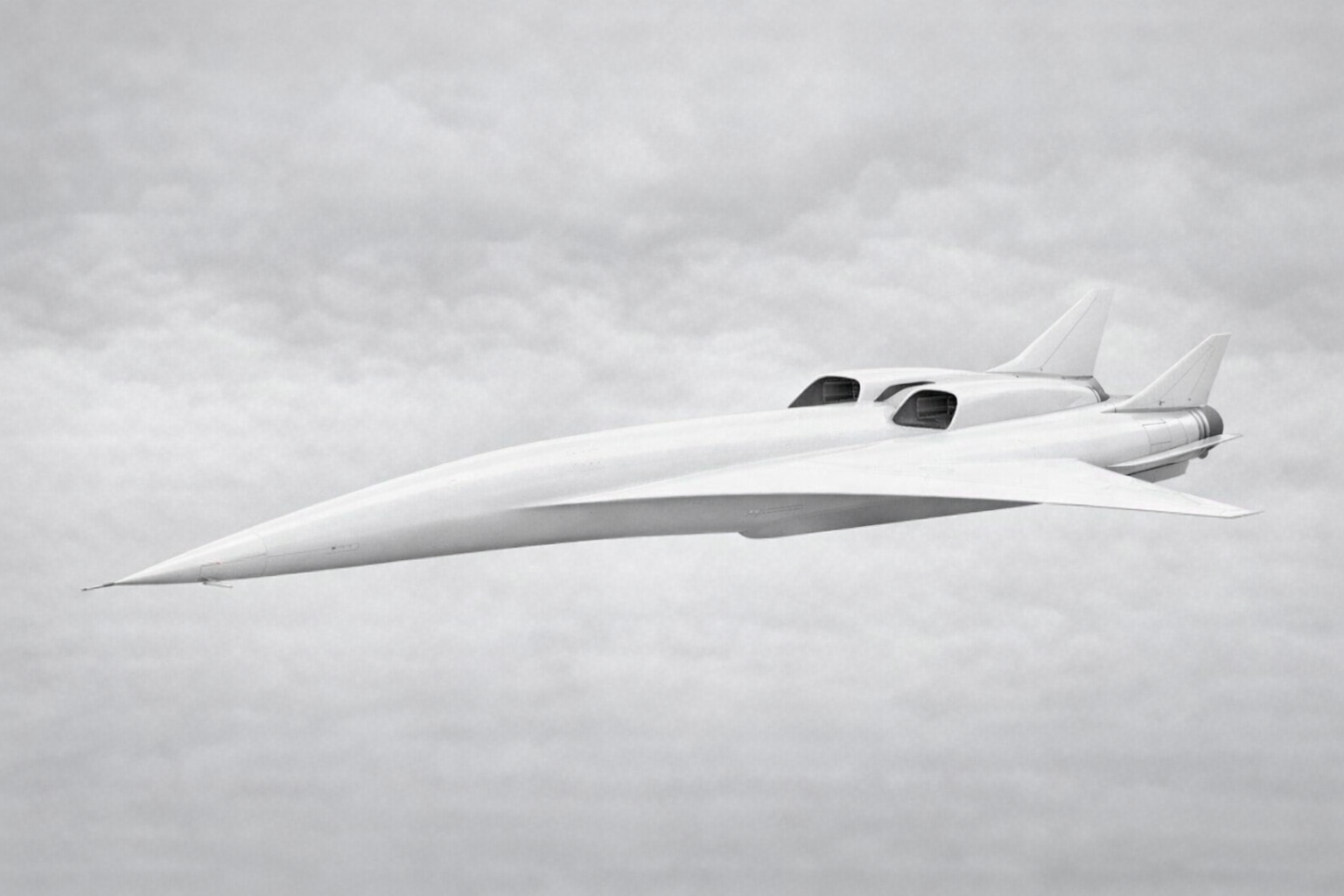
In Russia, a new over-the-wing air intake has been patented for a supersonic civil aircraft, which increases the efficiency and gas-dynamic stability of the powerplant during cruise supersonic operating modes. The development was published in the FIPS database.
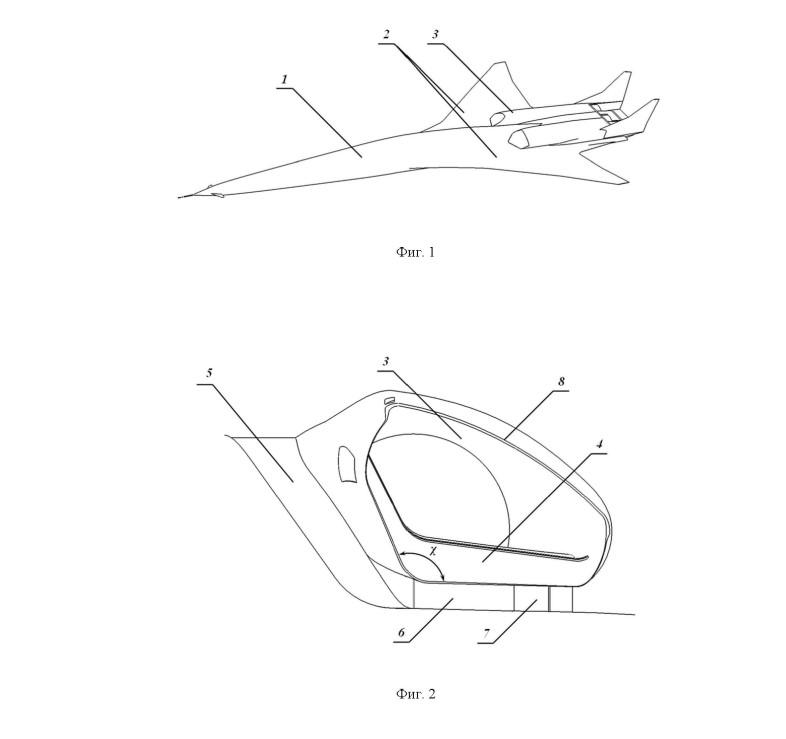
The key feature of the design is a fixed deceleration surface in the form of a dihedral angle with smooth blending of the planes. Unlike previously proposed solutions, the air intake received a teardrop-shaped inlet adapted to the airframe geometry, which ensures smooth mating of the duct with the engine and reduces the risk of flow separation.
The developers eliminated one of the main problems of the over-the-wing layout: the ingress of a thick boundary layer into the engine inlet. To achieve this, the air intake was equipped with an advanced boundary-layer control system.
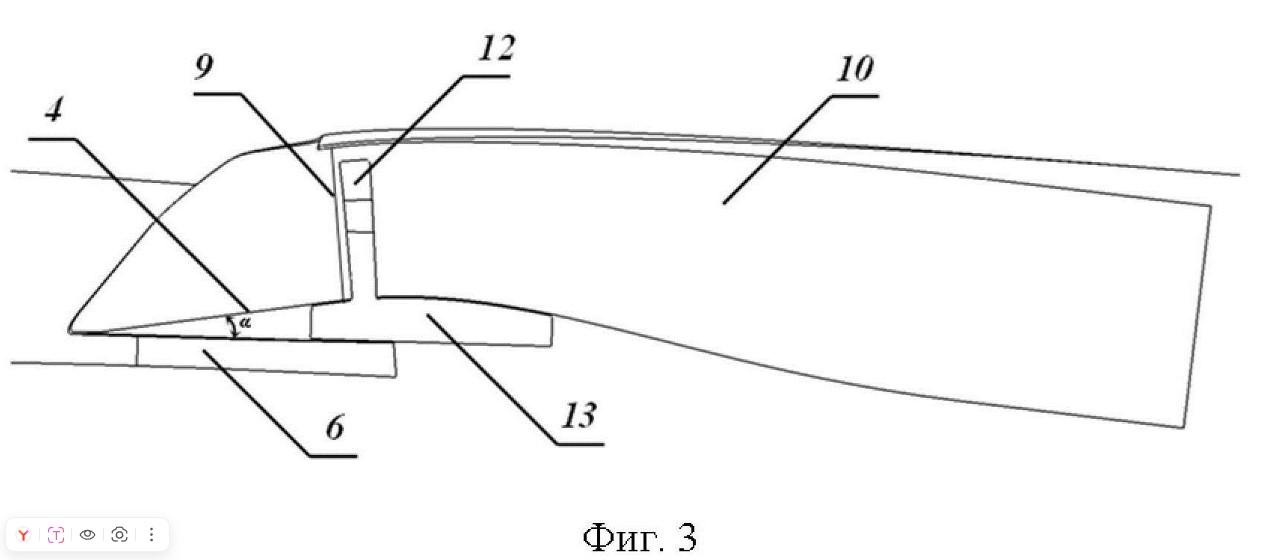
It includes a transverse slot in the throat area, an under-panel cavity, and windows for discharging low-energy air into the external flow from the wing and fuselage sides.
A separate solution by the designers is the trimming of the upper part of the cowl, performed parallel to the front of the closing shock wave. This prevents boundary-layer separation at supersonic speed and reduces total pressure losses ahead of the engine.
The new air intake provides a total pressure recovery coefficient no lower than that of classical layouts, while maintaining low flow non-uniformity at the engine inlet. This directly indicates stable operation of the powerplant during supersonic flight.
Andrei Kozlov, General Director of the P. I. Baranov Central Institute of Aviation Motors (CIAM), predicted that the first supersonic aircraft in Russia may appear no earlier than the 2040s. He also stated that Russia is three years ahead of the United States in work on an engine for supersonic civil aviation.
Aviation expert Roman Gusarov told "Pervomu Tekhnicheskomu" that the new supersonic aircraft could be equipped with the 177S engine, originally developed for tactical aviation.
Read more materials on the topic:
- "Dark cockpit," cameras, and AI: details of a supersonic aircraft in Russia revealed
Never miss our newsAdd this site to your preferred sources to see us more oftenAdd on Google

















